Top 18 Birds With Long Legs in The World (With Images)
Did you know that a flamingo can use its long legs like a built-in radiator to control its body temperature? Across the world, many birds have evolved remarkably long legs, especially the wading birds that hunt in shallow water. These lanky limbs let them stride through marshes, spear fish without getting wet, run at high speed, and watch for danger over open ground.

In this guide, we’ll explore the top 18 birds with long legs, uncovering how their impressive limbs work and why they are so useful for survival.
List of Birds With Long Legs
| Rank | Animal | Scientific Name |
|---|---|---|
| 1 | Ostrich | Struthio camelus |
| 2 | Greater Flamingo | Phoenicopterus roseus |
| 3 | Grey Heron | Ardea cinerea |
| 4 | Sarus Crane | Antigone antigone |
| 5 | Black-necked Stilt | Himantopus mexicanus |
| 6 | Wood Stork | Mycteria americana |
| 7 | Great Egret | Ardea alba |
| 8 | Emu | Dromaius novaehollandiae |
| 9 | Jabiru | Jabiru mycteria |
| 10 | American Avocet | Recurvirostra americana |
| 11 | Secretary Bird | Sagittarius serpentarius |
| 12 | Roseate Spoonbill | Platalea ajaja |
| 13 | Greater Rhea | Rhea americana |
| 14 | Jacana | Jacana jacana |
| 15 | White-faced Ibis | Plegadis chihi |
| 16 | Marabou Stork | Leptoptilos crumenifer |
| 17 | Whooping Crane | Grus americana |
| 18 | Grey Crowned Crane | Balearica regulorum |
Ostrich
Scientific Name: Struthio camelus
Class: Aves
Diet: Omnivore
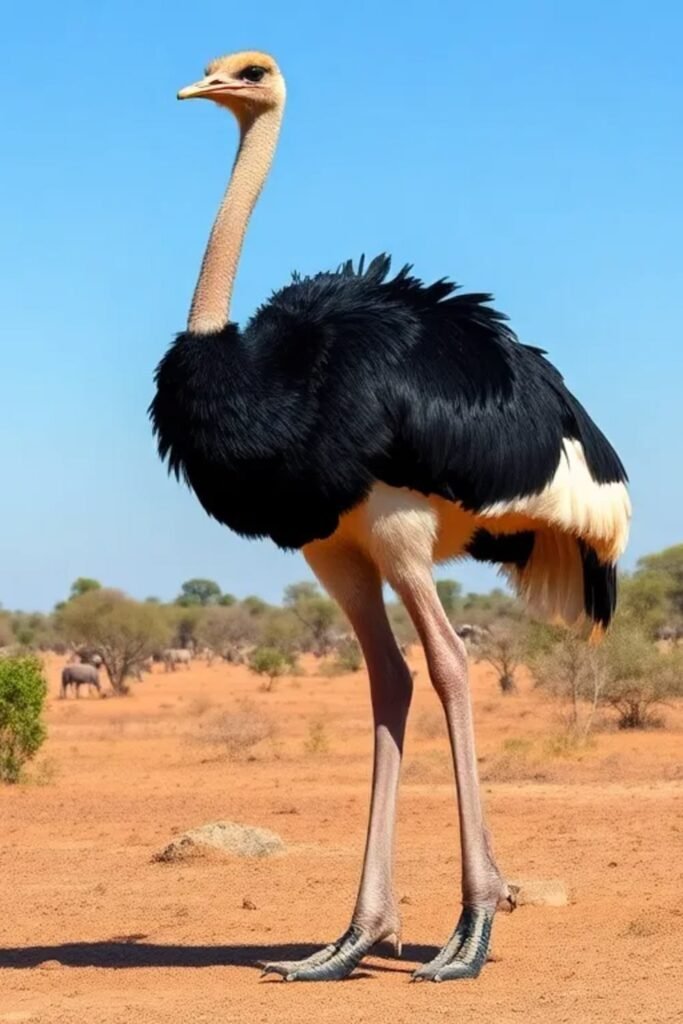
The ostrich has the longest and most powerful legs of any bird, each measuring around four feet. These legs make it the fastest bird on land.
Interestingly, the ostrich’s long legs let it sprint up to 43 miles per hour, taking strides of up to 16 feet. Each leg also ends in a sharp claw used for defense.
Ostriches inhabit the savannas and deserts of Africa, feeding on plants, seeds, and insects.
As large omnivores, ostriches help disperse seeds and control insects. Currently of Least Concern, they still face pressure in some regions.
Fun Fact: An ostrich’s kick is powerful enough to seriously injure or even kill a lion.
Greater Flamingo

Scientific Name: Phoenicopterus roseus
Class: Aves
Diet: Omnivore
The greater flamingo is famous for its long, thin, stilt-like legs that let it wade into deep water. These legs are among the most iconic in the bird world.
Moreover, the flamingo’s long legs help it feed where other birds cannot reach. It also uses them to regulate body heat and often stands on one leg to conserve warmth.
Flamingos gather in large flocks across shallow lakes and lagoons in Africa, the Americas, Europe, and Asia.
As filter feeders, flamingos help regulate algae and shrimp populations. Pollution and habitat loss threaten some colonies.
Fun Fact: A flamingo’s knees don’t actually bend backward; what looks like its knee is really its ankle.
Grey Heron
Scientific Name: Ardea cinerea
Class: Aves
Diet: Carnivore
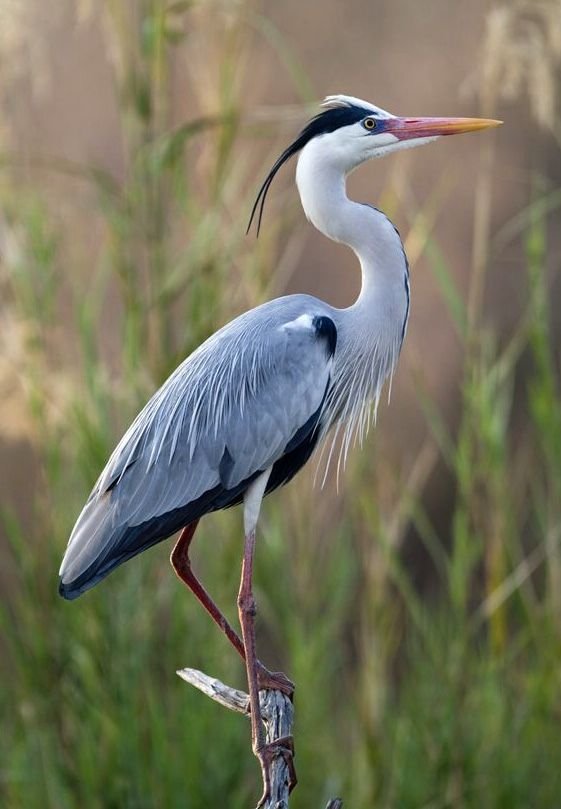
The grey heron is a tall wading bird with long, stilt-like legs perfect for hunting in shallow water. Its legs keep its body dry as it fishes.
Interestingly, the heron stands motionless on its long legs, then strikes with lightning speed to spear fish. Its legs let it patrol wetlands where prey gathers.
Grey herons inhabit rivers, lakes, and wetlands across Europe, Asia, and Africa, feeding on fish, frogs, and small animals.
As predators, herons help balance wetland ecosystems. Widespread and adaptable, they are of Least Concern.
Fun Fact: A grey heron can fold its long legs beneath its body and tuck its neck into an S-shape while flying.
Sarus Crane
Scientific Name: Antigone antigone
Class: Aves
Diet: Omnivore
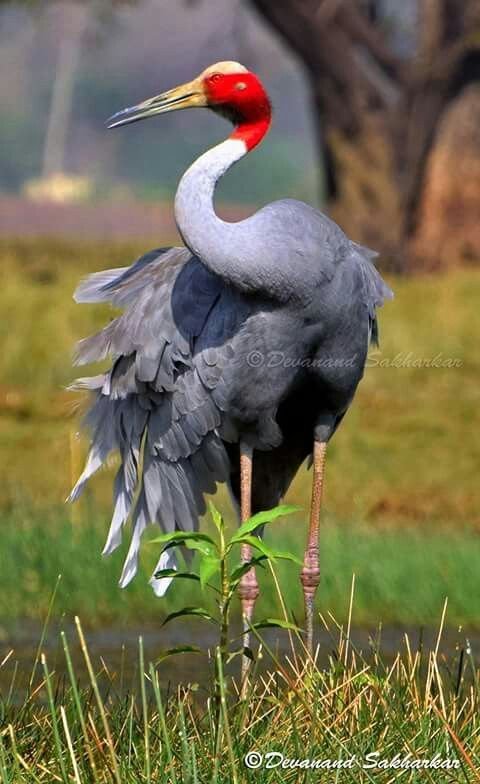
The sarus crane is the tallest flying bird in the world, standing up to six feet tall on its long legs. Its towering height is unmatched among flying birds.
Moreover, the crane’s long legs let it wade through wetlands and stride across fields for food. They also feature in its graceful, leaping courtship dances.
Sarus cranes inhabit the wetlands and farmlands of the Indian subcontinent, Southeast Asia, and Australia, feeding on plants, insects, and small animals.
As wetland dwellers, sarus cranes help balance their ecosystems. Habitat loss has made them Vulnerable.
Fun Fact: Sarus cranes mate for life and are celebrated in many cultures as symbols of lasting love.
Black-necked Stilt
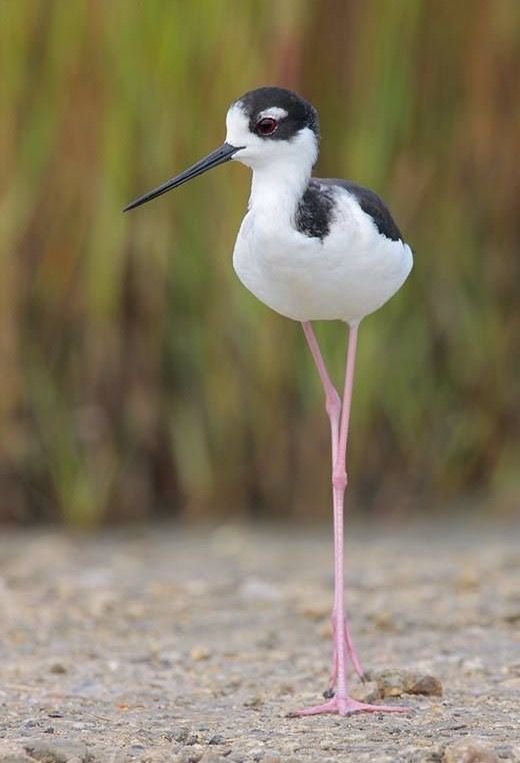
Scientific Name: Himantopus mexicanus
Class: Aves
Diet: Carnivore
The black-necked stilt has some of the longest legs relative to body size of any bird. Its bright pink, stick-thin legs are its most striking feature.
Interestingly, the stilt uses its extraordinarily long legs to wade into deeper water than most shorebirds. This lets it hunt for insects and small creatures rivals cannot reach.
Black-necked stilts inhabit shallow wetlands, marshes, and mudflats across the Americas, feeding on insects and small aquatic animals.
As waders, stilts help control insect and invertebrate populations. Widespread across their range, they are of Least Concern.
Fun Fact: The black-necked stilt has the second-longest legs relative to its body of any bird, after the flamingo.
Wood Stork
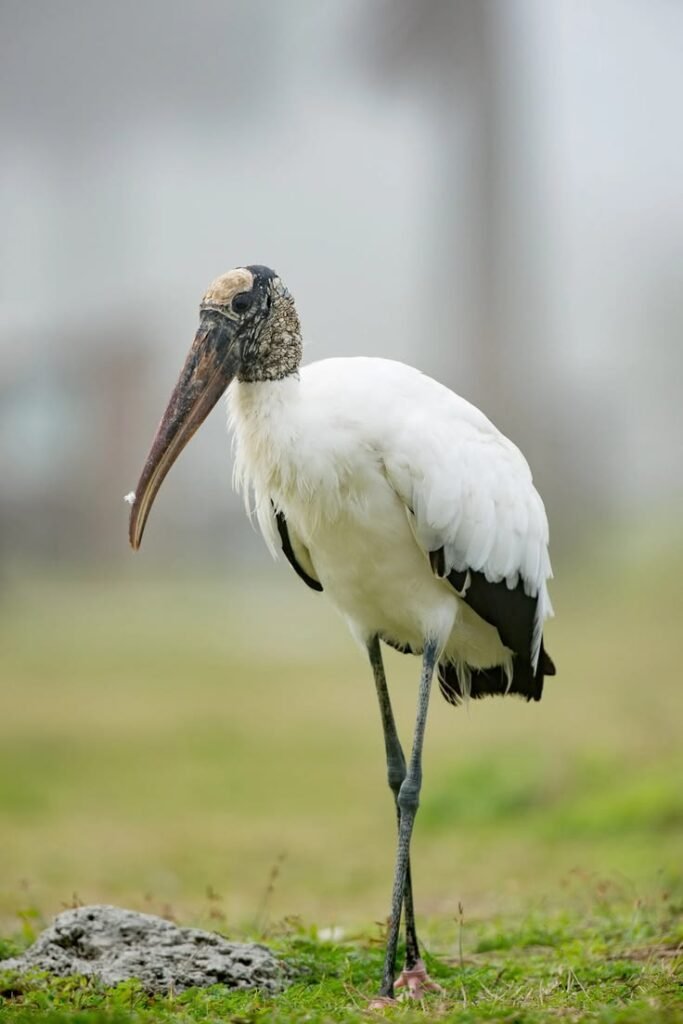
Scientific Name: Mycteria americana
Class: Aves
Diet: Carnivore
The wood stork is a large wading bird with long legs, and it is the only stork that breeds in North America. Its legs suit a life in southern wetlands.
Moreover, the wood stork wades through shallow water, feeling for fish with its bill. Its long legs let it hunt in deeper pools than smaller waders.
Wood storks inhabit the wetlands and swamps of the southeastern United States and Central and South America, feeding on fish and amphibians.
As waders, wood storks help balance wetland ecosystems. Habitat loss has caused declines, though numbers are recovering.
Fun Fact: A wood stork snaps its bill shut in as little as 25 milliseconds when it feels a fish, one of the fastest reflexes of any vertebrate.
Great Egret
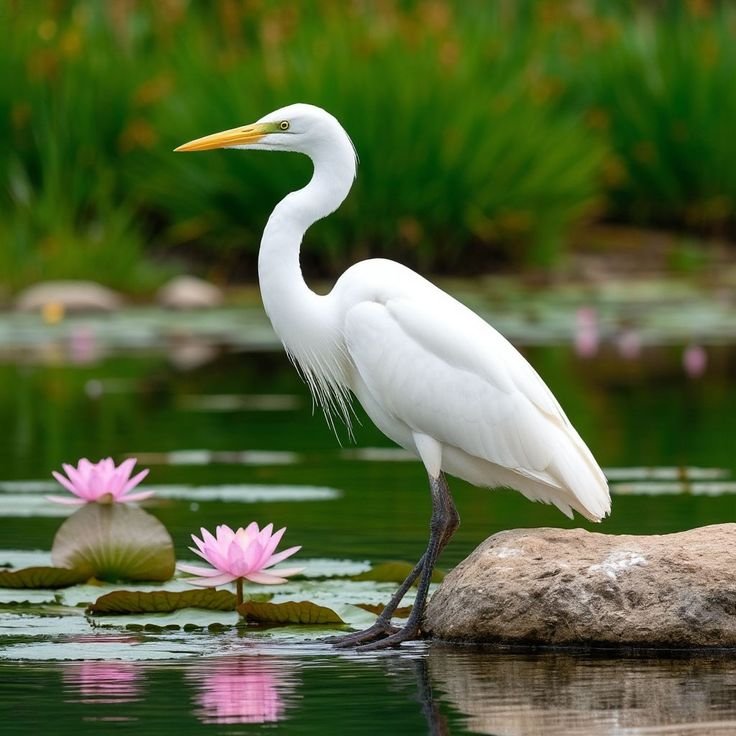
Scientific Name: Ardea alba
Class: Aves
Diet: Carnivore
The great egret is a tall, elegant wading bird with long, slender legs. These legs let it hunt gracefully in shallow water.
Interestingly, the egret stands still on its long legs, then strikes with sudden speed to snatch fish. Its long reach lets it catch prey without disturbing the water too soon.
Great egrets inhabit wetlands, marshes, and shorelines across much of the world, feeding on fish, amphibians, and small animals.
As predators, egrets help balance wetland ecosystems. Once hunted for their feathers, they have recovered and are of Least Concern.
Fun Fact: The great egret was once hunted nearly to extinction for its elegant plumes used in fashion.
Emu
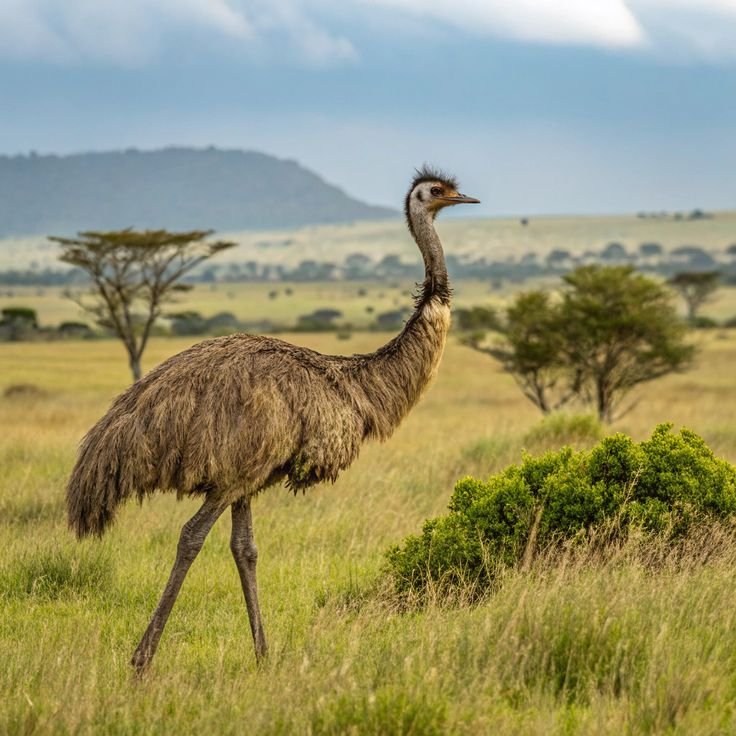
Scientific Name: Dromaius novaehollandiae
Class: Aves
Diet: Omnivore
The emu is the second-tallest bird in the world, standing on long, powerful legs built for speed. These strong limbs make it a formidable runner.
Moreover, the emu can sprint up to 30 miles per hour, using its long legs to cover great distances. Each leg delivers a powerful, defensive kick.
Emus inhabit the grasslands and forests of Australia, feeding on plants, seeds, fruit, and insects.
As large omnivores, emus help disperse seeds across their range. Widespread across Australia, they are of Least Concern.
Fun Fact: An emu can only move its long legs forward, so it is physically unable to walk backward.
Jabiru
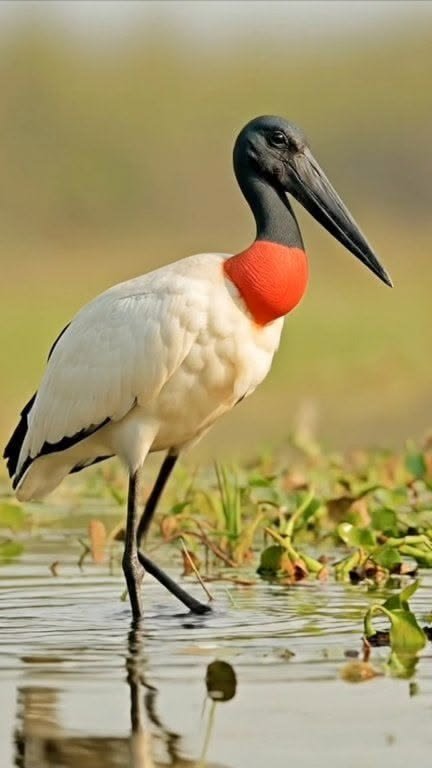
Scientific Name: Jabiru mycteria
Class: Aves
Diet: Carnivore
The jabiru is a massive stork with long legs and a powerful bill, one of the tallest flying birds in the Americas. It towers over most wetland birds.
Interestingly, the jabiru wades through shallow water on its long legs, hunting fish, frogs, and reptiles. Its great height lets it fish in deeper pools.
Jabirus inhabit the wetlands and marshes of Central and South America, feeding on fish, amphibians, and small animals.
As waders, jabirus help balance wetland ecosystems. Widespread across their range, they are of Least Concern.
Fun Fact: The jabiru’s name comes from a native word meaning “swollen neck,” referring to its red throat pouch.
American Avocet
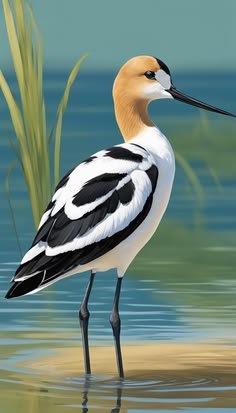
Scientific Name: Recurvirostra americana
Class: Aves
Diet: Carnivore
The American avocet is a striking shorebird with long, slender legs and an upturned bill. It wades gracefully through shallow wetlands.
Moreover, the avocet uses its long legs to walk through water while sweeping its curved bill side to side. This lets it filter tiny invertebrates from the mud.
American avocets inhabit the wetlands and shallow lakes of North and South America, feeding on insects and small crustaceans.
As waders, avocets help balance wetland ecosystems. Widespread across their range, they are of Least Concern.
Fun Fact: The avocet’s bill curves upward, which it sweeps through water like a scythe to catch food.
Secretary Bird
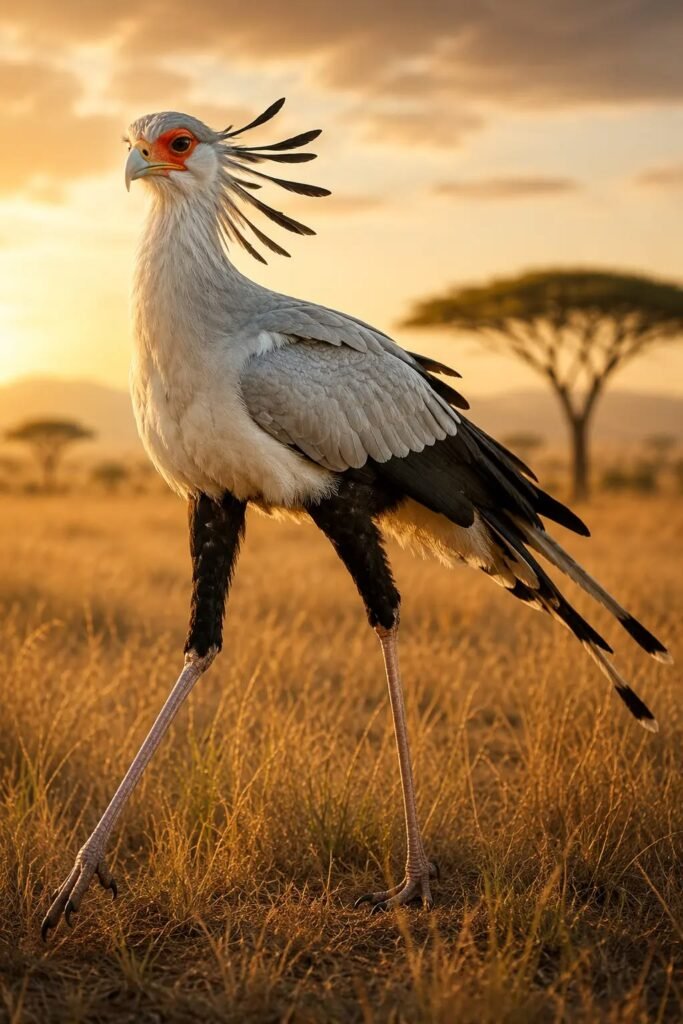
Scientific Name: Sagittarius serpentarius
Class: Aves
Diet: Carnivore
The secretary bird is unique as the only raptor with long, crane-like legs. Unlike most birds of prey, it hunts almost entirely on foot.
Interestingly, the secretary bird uses its powerful long legs to stomp on prey. It delivers rapid, crushing kicks strong enough to kill venomous snakes.
Secretary birds inhabit the savannas and grasslands of sub-Saharan Africa, hunting snakes, insects, and small mammals.
As predators, secretary birds help control snake and rodent populations. Habitat loss has made them Endangered.
Fun Fact: A secretary bird can strike prey with its long legs in just a few hundredths of a second.
Roseate Spoonbill
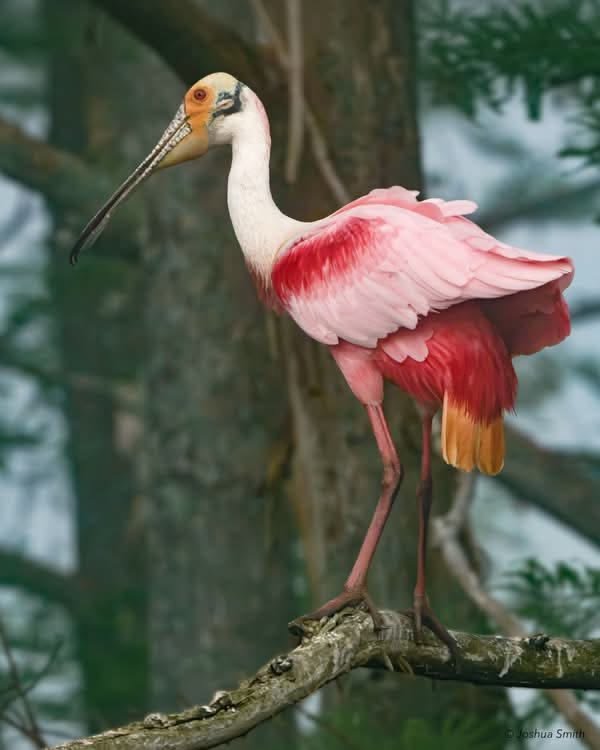
Scientific Name: Platalea ajaja
Class: Aves
Diet: Carnivore
The roseate spoonbill is a striking pink wading bird with long legs and a spoon-shaped bill. Its legs let it feed in shallow wetlands.
Moreover, the spoonbill wades on its long legs, sweeping its open bill side to side through the water. When it feels prey, it snaps the bill shut to catch fish and shrimp.
Roseate spoonbills inhabit the coastal and freshwater wetlands of the Americas, feeding on fish, shrimp, and insects.
As waders, spoonbills help balance wetland ecosystems. Widespread across their range, they are of Least Concern.
Fun Fact: Like the flamingo, the roseate spoonbill gets its pink color from the shrimp and crustaceans it eats.
Greater Rhea
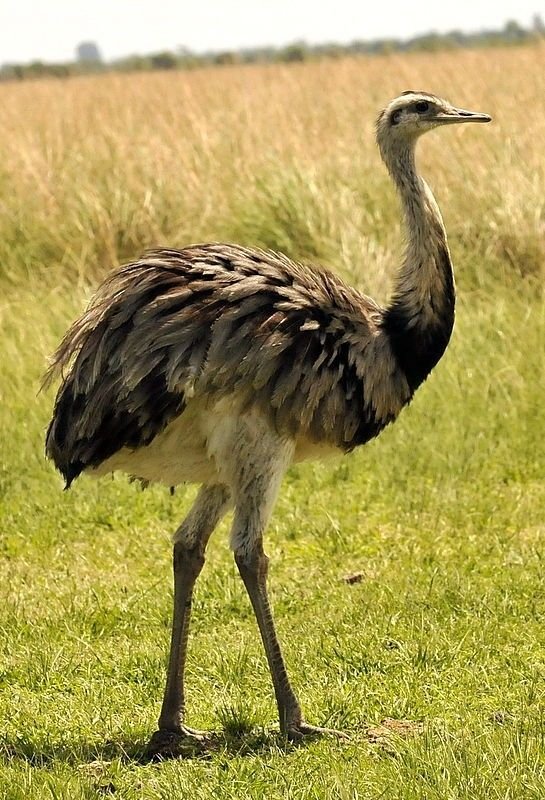
Scientific Name: Rhea americana
Class: Aves
Diet: Omnivore
The greater rhea is a large flightless bird with long, muscular legs built for running. It is the biggest bird in the Americas.
Interestingly, the rhea uses its long legs to sprint across open grasslands. When running, it spreads its wings for balance, zigzagging to escape predators.
Greater rheas inhabit the grasslands and open plains of South America, feeding on plants, seeds, and insects.
As large omnivores, rheas help disperse seeds across their range. Habitat loss has made them Near Threatened.
Fun Fact: Male rheas raise the chicks alone, leading and guarding the young on their long legs.
Jacana
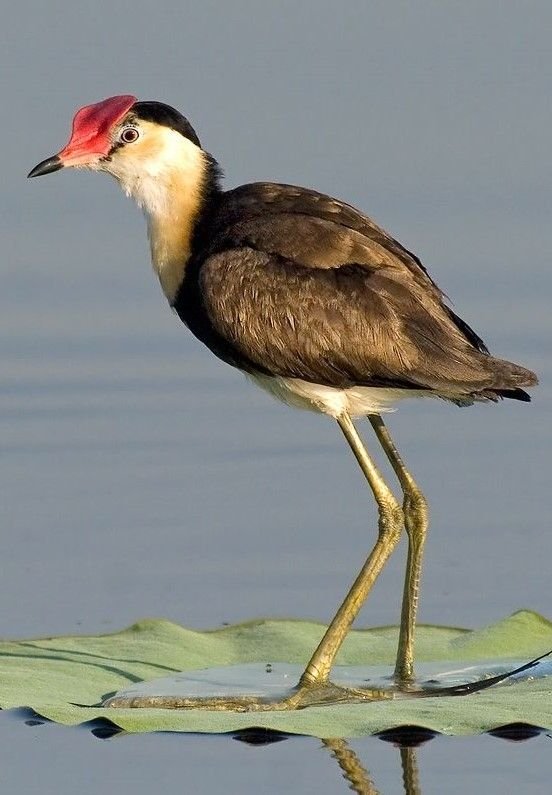
Scientific Name: Jacana jacana
Class: Aves
Diet: Omnivore
The jacana has long legs tipped with extraordinarily long toes, giving it an almost magical ability. It can appear to walk on water.
Moreover, the jacana’s long legs and huge toes spread its weight across floating plants. This lets it stroll across lily pads to feed without sinking.
Jacanas inhabit the freshwater wetlands and lakes of tropical regions worldwide, feeding on insects and small aquatic creatures.
As waders, jacanas help control insect populations. Most species are widespread and of Least Concern.
Fun Fact: The jacana is nicknamed the “Jesus bird” for its ability to walk across floating leaves as if on water.
White-faced Ibis
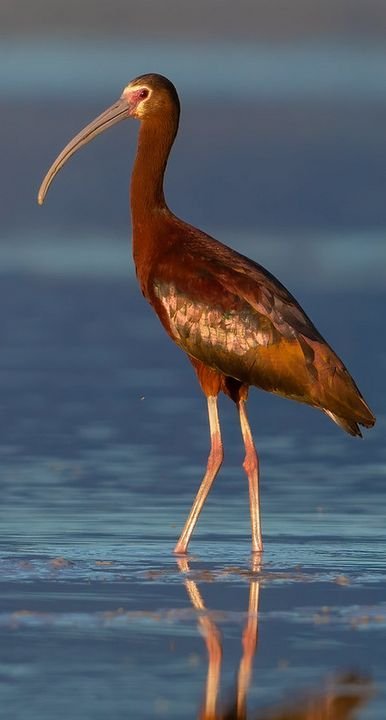
Scientific Name: Plegadis chihi
Class: Aves
Diet: Carnivore
The white-faced ibis is a wading bird with long legs and a long, downcurved bill. It uses both to hunt in shallow wetlands.
Interestingly, the ibis strides through the shallows on its long legs, probing mud with its curved bill. It feels for insects, worms, and small creatures hidden below.
White-faced ibises inhabit the marshes and wetlands of the Americas, feeding on insects, crustaceans, and small animals.
As waders, ibises help balance wetland ecosystems. Widespread across their range, they are of Least Concern.
Fun Fact: In breeding season, the white-faced ibis’s feathers shimmer with iridescent bronze, green, and purple.
Marabou Stork
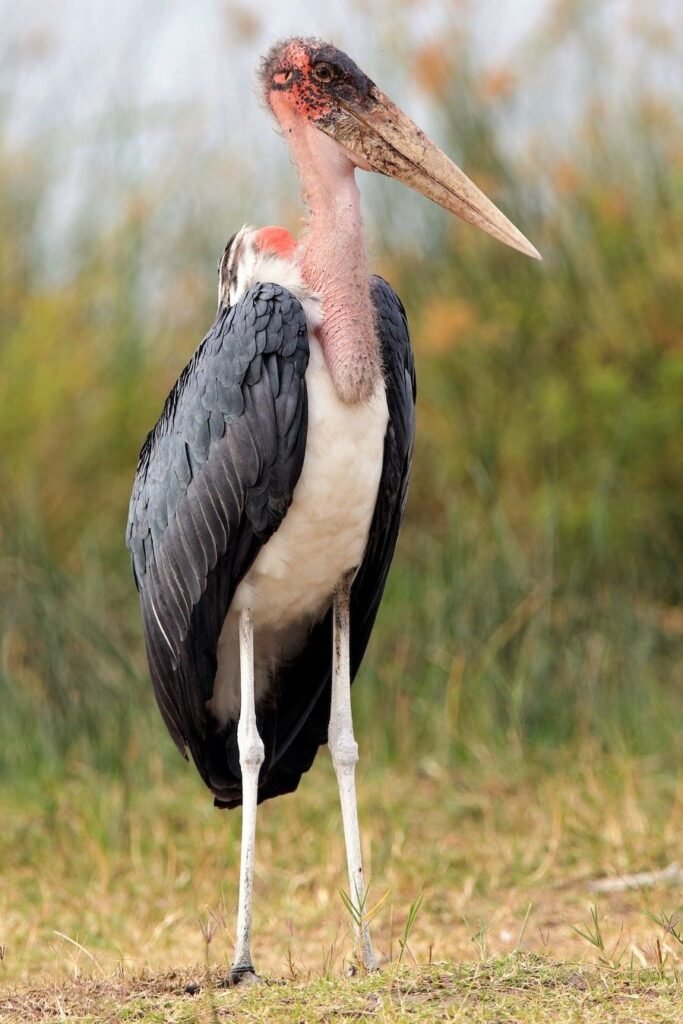
Scientific Name: Leptoptilos crumenifer
Class: Aves
Diet: Carnivore
The marabou stork is a huge scavenging bird with long, thin legs that lift its towering body high off the ground. It is among the tallest of all storks.
Moreover, the marabou’s long legs let it stride across open ground and wade into shallows to feed. It often appears at carcasses, using its height to spot food.
Marabou storks inhabit the savannas, wetlands, and open areas of sub-Saharan Africa, feeding on carrion, fish, and scraps.
As scavengers, marabou storks help clean up carcasses and limit disease. Widespread across their range, they are of Least Concern.
Fun Fact: The marabou stork often whitens its own long legs with droppings, which may help it stay cool.
Whooping Crane
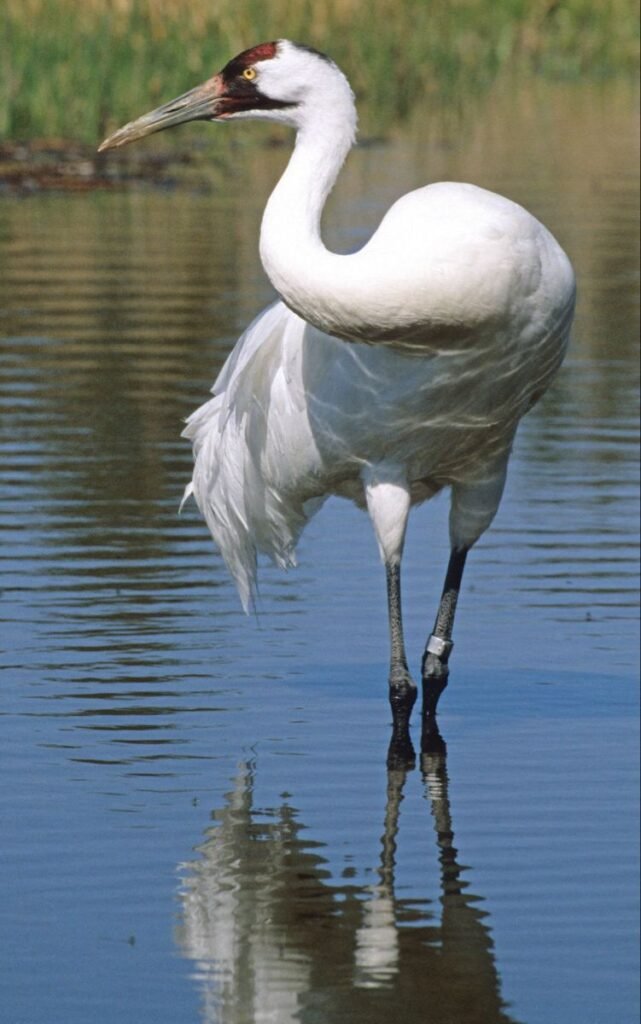
Scientific Name: Grus americana
Class: Aves
Diet: Omnivore
The whooping crane is the tallest bird in North America, standing up to five feet tall on long legs. It is also one of the rarest.
Interestingly, the crane uses its long legs to wade and forage in wetlands. Pairs perform elegant dances, leaping and bowing on their long legs.
Whooping cranes inhabit the wetlands and marshes of North America, feeding on plants, insects, and small animals.
As wetland dwellers, cranes help balance their ecosystems. Once nearly extinct, they remain Endangered despite careful recovery efforts.
Fun Fact: The whooping crane’s bugling call can be heard several kilometers away across the wetlands.
Grey Crowned Crane
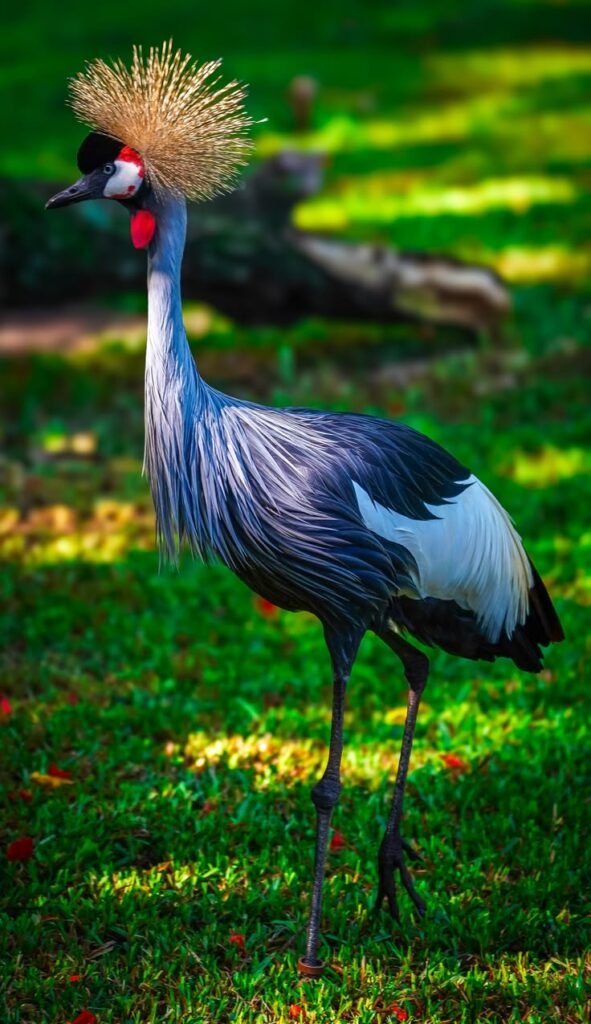
Scientific Name: Balearica regulorum
Class: Aves
Diet: Omnivore
The grey crowned crane is a striking bird with long legs and a spectacular golden crown of feathers. It strides elegantly through African grasslands.
Moreover, the crane uses its long legs to walk through wetlands and grasslands searching for food. It even stomps its feet to flush out insects to eat.
Grey crowned cranes inhabit the wetlands and grasslands of eastern and southern Africa, feeding on seeds, insects, and small animals.
As foragers, cranes help control insects and disperse seeds. Habitat loss has made them Endangered.
Fun Fact: The grey crowned crane is one of only two crane species that can perch in trees, thanks to a special hind toe.
Read: Animals That Growl in The World
Read: Thickest Skin Animals in The World
Read: Animals Like Hamsters
Read: Animals Like Mongoose
Read: Animals That Are Skinny
Frequently Asked Questions
Conclusion
From the towering ostrich to the water-walking jacana, the world’s birds with long legs are among nature’s most graceful and specialized creatures. Each species whether a fish-spearing heron, a snake-stomping secretary bird, or a running emu uses its long legs in a way perfectly suited to its life, from wading and hunting to sprinting across open plains.