Top 10 Animals That Look Like Cats (With Images)
Have you ever spotted what looked like a cat, only to realize it was something else entirely? Nature is full of surprising look-alikes, and cats have more impostors than you might think. The animals that look like cats share feline features such as sleek bodies, pointed ears, whiskers, and long tails, yet many are not cats at all.
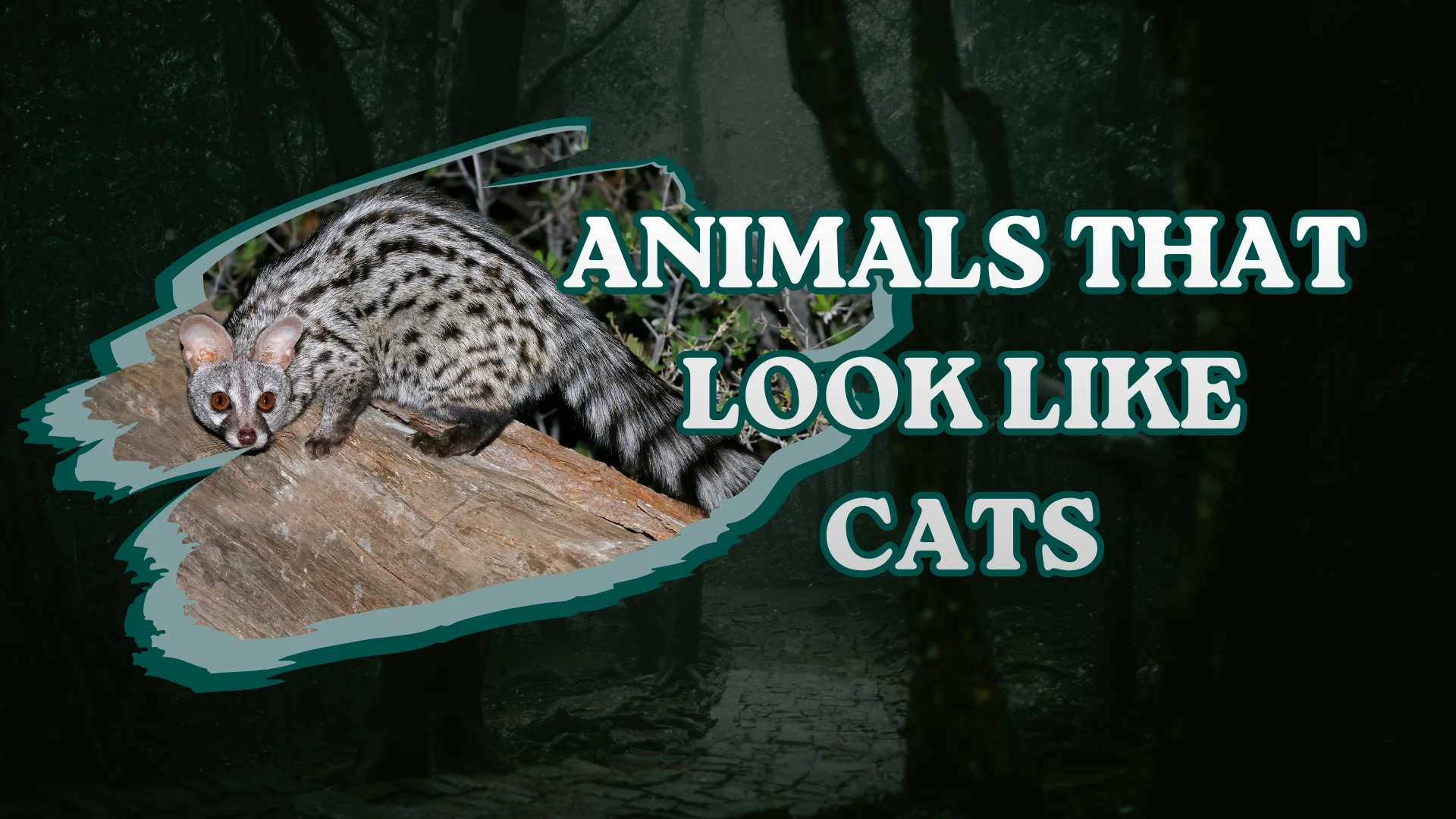
These resemblances often come from similar lifestyles as agile, stealthy hunters. From the spotted genet to the fearsome fossa, these creatures prove that appearances can be delightfully deceiving. Let’s explore the most fascinating animals that look like cats and uncover the surprising truth about who they really are.
Quick List Table
| Rank | Animal Name | Scientific Name |
|---|---|---|
| 1 | Common Genet | Genetta genetta |
| 2 | Fossa | Cryptoprocta ferox |
| 3 | African Palm Civet | Nandinia binotata |
| 4 | Red Panda | Ailurus fulgens |
| 5 | Ringtail | Bassariscus astutus |
| 6 | Binturong | Arctictis binturong |
| 7 | Banded Linsang | Prionodon linsang |
| 8 | Spotted-Tailed Quoll | Dasyurus maculatus |
| 9 | Kinkajou | Potos flavus |
| 10 | Red Fox | Vulpes vulpes |
Common Genet
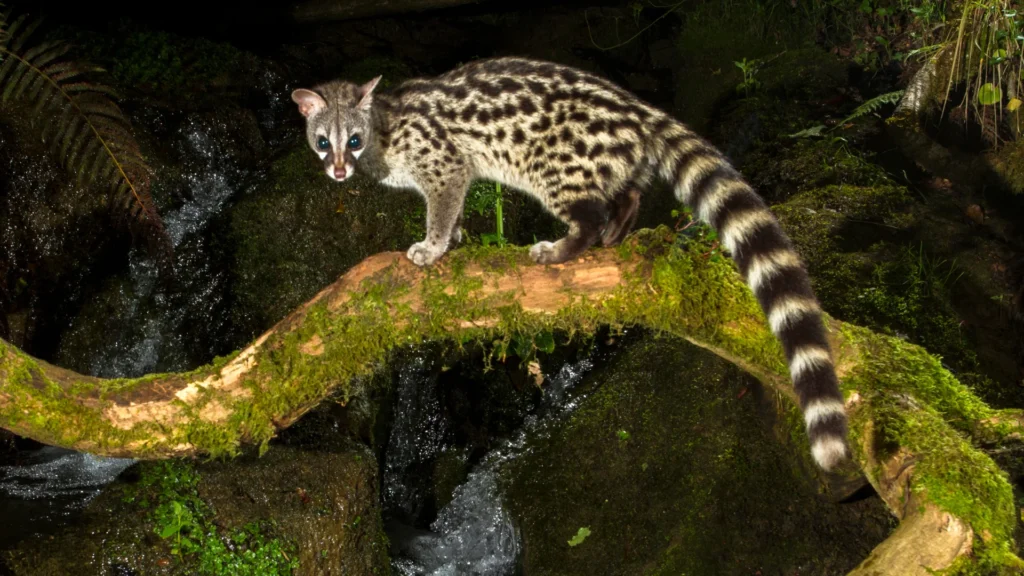
Scientific Name: Genetta genetta
Class: Mammalia
Diet: Carnivore
The common genet looks so much like a cat that it is often mistaken for one. With its slender body, spotted coat, and long tail, it seems feline at first glance. Yet it is not a cat at all.
Interestingly, the genet belongs to a different family, related to civets and mongooses. It shares a cat’s agility, sharp senses, and stealthy hunting style, which explains the resemblance. Its long, ringed tail helps it balance while climbing.
Common genets live in the forests and scrublands of Africa and parts of Europe. As carnivores, they hunt small animals, insects, and birds.
Moreover, genets help control rodent and insect populations. They remain widespread across their range.
Fun Fact: Genets were once kept as pets to catch mice, much like domestic cats.
Fossa
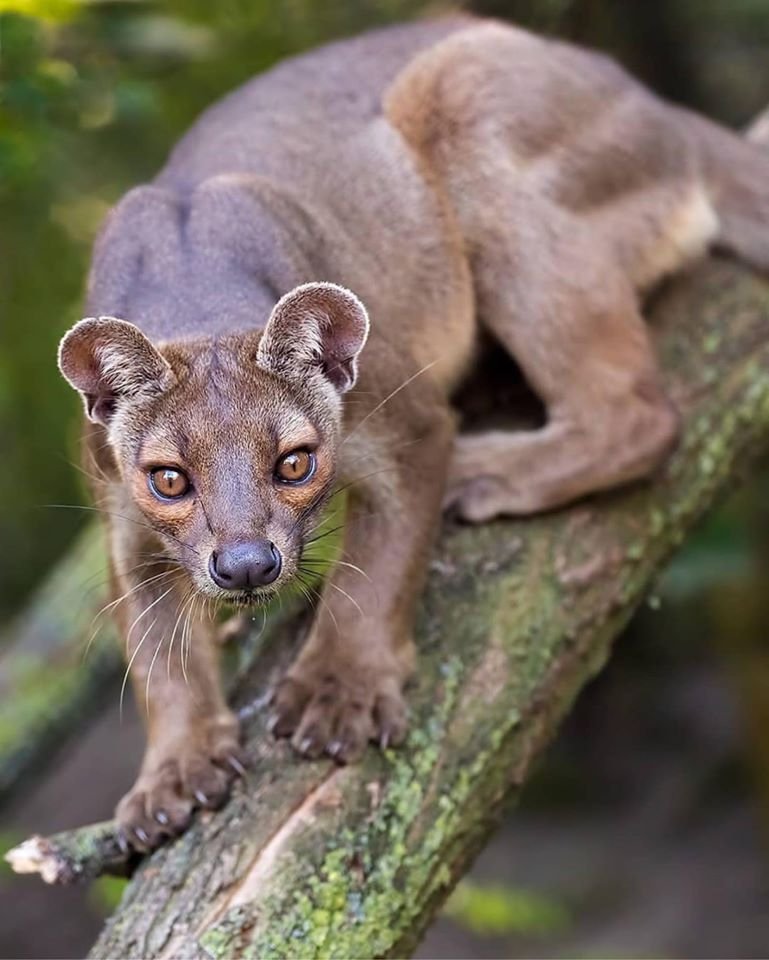
Scientific Name: Cryptoprocta ferox
Class: Mammalia
Diet: Carnivore
The fossa is a cat-like predator from Madagascar that fools many observers. With its sleek body, retractable-like claws, and feline face, it looks remarkably like a cat. In truth, it is more closely related to the mongoose.
What sets the fossa apart is its role as Madagascar’s top predator. It combines cat-like agility with an ability to climb head-first down trees. Its long tail helps it balance as it hunts through the canopy.
Fossas live in the forests of Madagascar. As carnivores, they hunt lemurs and other animals, both in the trees and on the ground.
Moreover, the fossa is a key predator that helps balance Madagascar’s ecosystems. Deforestation has made it a vulnerable species.
Fun Fact: Despite looking like a cat, the fossa is most closely related to the mongoose.
African Palm Civet
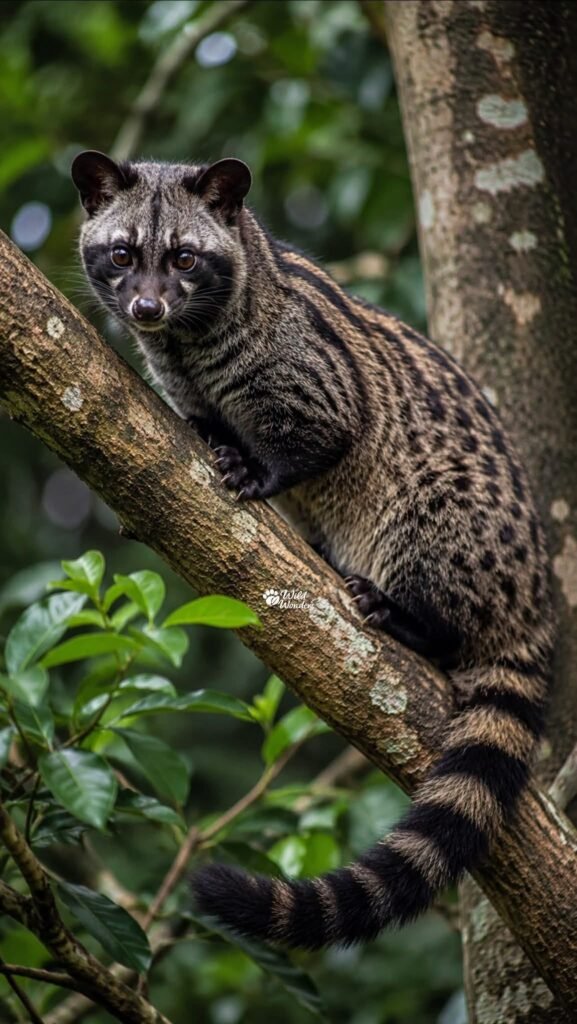
Scientific Name: Nandinia binotata
Class: Mammalia
Diet: Omnivore
The African palm civet has a distinctly cat-like appearance. With its slim body, long tail, and pointed face, it resembles a small wild cat. Yet it belongs to its own unique family.
Interestingly, this civet is an agile climber that spends much of its life in the trees. Its cat-like build and movements suit its arboreal, nocturnal lifestyle. Scent glands help it mark territory in the canopy.
African palm civets live in the rainforests of central and West Africa. As omnivores, they eat fruit, insects, and small animals.
Moreover, palm civets help disperse seeds through the forest. They remain fairly common across their range.
Red Panda
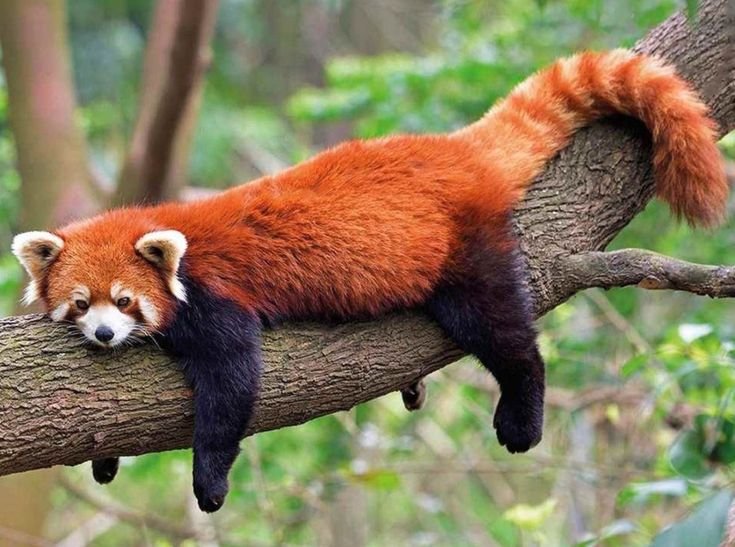
Scientific Name: Ailurus fulgens
Class: Mammalia
Diet: Herbivore (mostly bamboo)
The red panda has a face and size that many find cat-like, earning it the nickname “firefox.” About the size of a house cat, it has a rounded face and bushy tail. Yet it belongs to its own distinct family.
What sets the red panda apart is its cat-like size paired with a raccoon-like tail. It uses a false thumb to grip bamboo, and its ringed tail helps it balance in the trees. It moves gracefully through the canopy.
Red pandas live in the mountain forests of the Himalayas and southwestern China. As herbivores, they feed mainly on bamboo.
Moreover, red pandas help maintain healthy forests. Deforestation and poaching have made them endangered.
Fun Fact: The red panda’s nickname “firefox” inspired the name of a popular web browser.
Ringtail
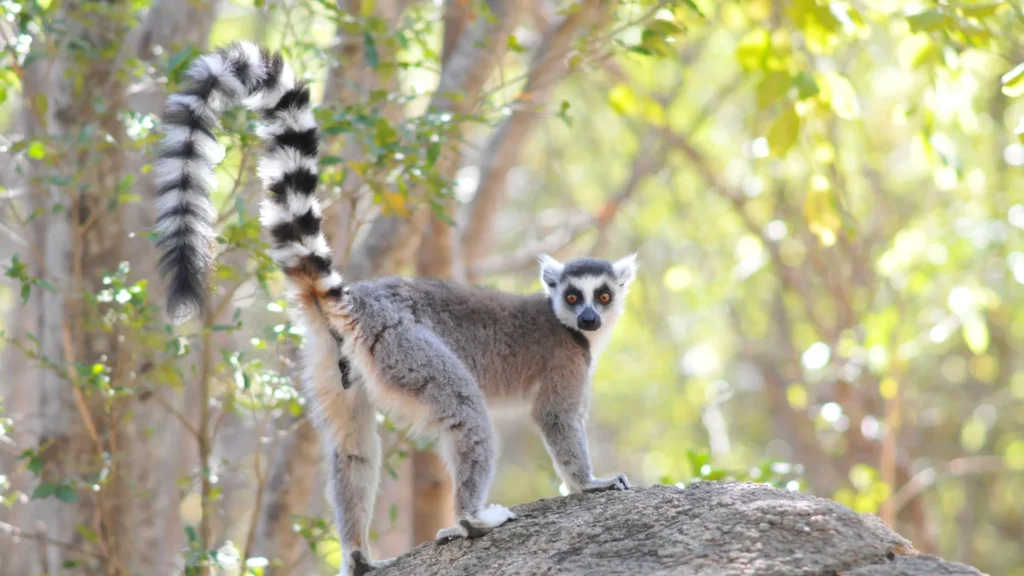
Scientific Name: Bassariscus astutus
Class: Mammalia
Diet: Omnivore
The ringtail is often called a “ringtail cat,” though it is not a cat at all. With its small feline face and long striped tail, it certainly looks the part. In reality, it is a relative of the raccoon.
Interestingly, the ringtail is an agile, nocturnal hunter with cat-like grace. Its ankles can rotate to help it climb down rocks and trees head-first. Miners once kept them to catch mice, calling them “miner’s cats.”
Ringtails live in the rocky deserts and woodlands of the southwestern United States and Mexico. As omnivores, they eat insects, small animals, and fruit.
Moreover, ringtails help control rodent and insect populations. They remain fairly common across their range.
Fun Fact: Miners once kept ringtails to catch mice, nicknaming them “miner’s cats.”
Binturong
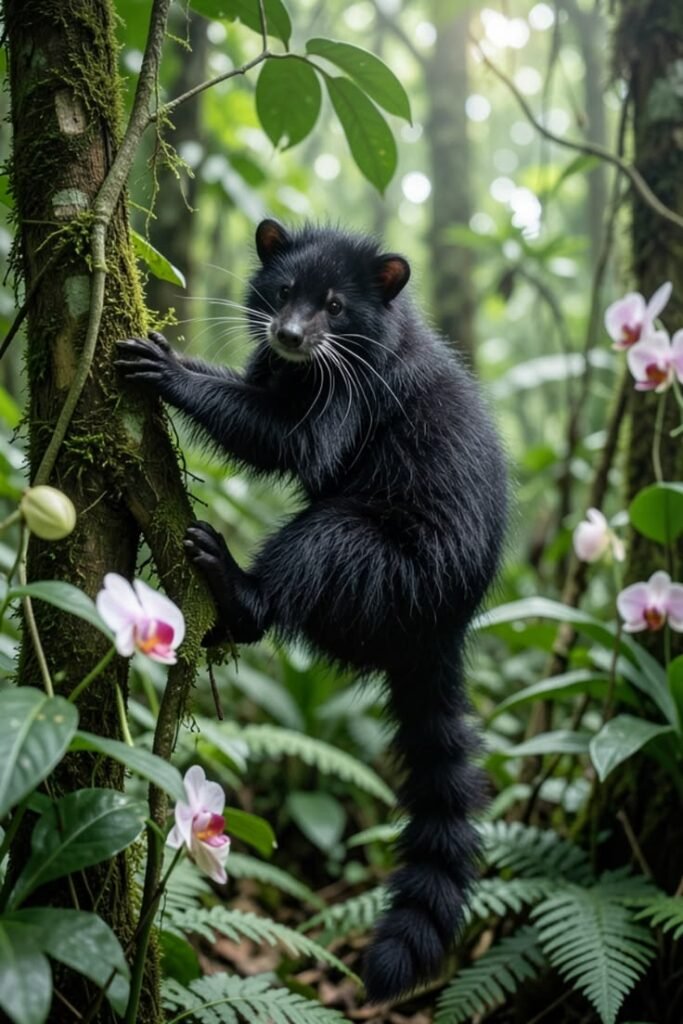
Scientific Name: Arctictis binturong
Class: Mammalia
Diet: Omnivore (mostly fruit)
The binturong, also called the bearcat, has a name that reflects its cat-like traits. Though shaggy and heavy, it has a feline face and whiskers. Yet it is neither a bear nor a cat.
What sets the binturong apart is its prehensile tail and unusual scent. Its tail grips branches like a fifth limb, and it famously smells of buttered popcorn. It moves slowly through the treetops.
Binturongs live in the rainforests of Southeast Asia. As omnivores, they feed mainly on fruit, along with small animals and insects.
Moreover, binturongs are important seed dispersers, especially for figs. Deforestation has made them a vulnerable species.
Fun Fact: The binturong gives off a scent that smells surprisingly like buttered popcorn.
Banded Linsang
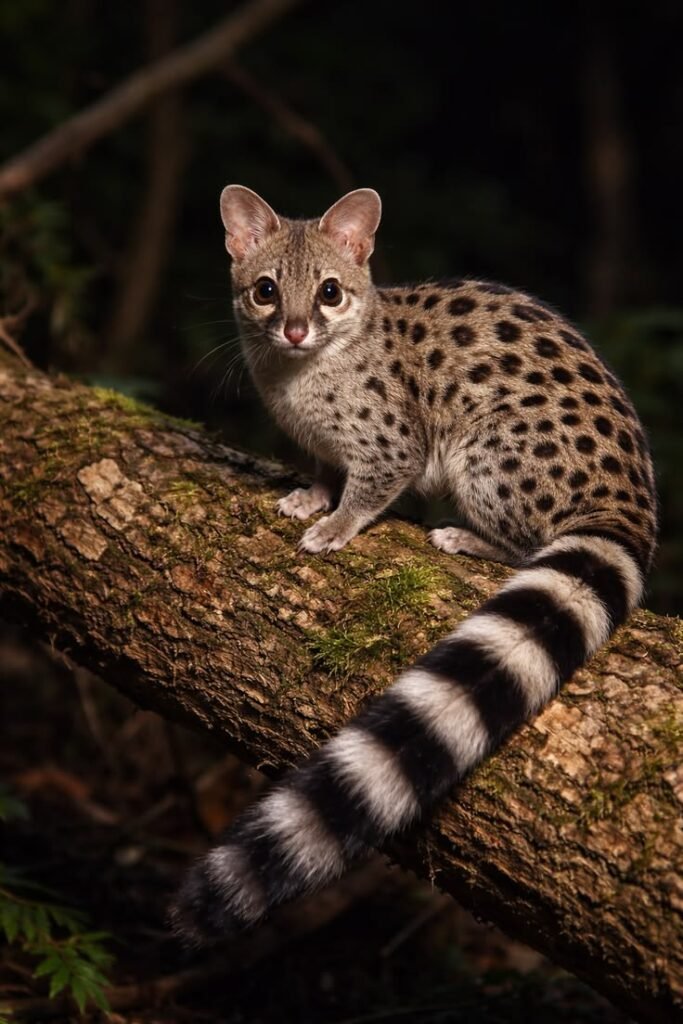
Scientific Name: Prionodon linsang
Class: Mammalia
Diet: Carnivore
The banded linsang is a slender, spotted animal that looks strikingly like a small wild cat. With its lithe body and patterned coat, it resembles a miniature leopard. Yet it belongs to its own family.
Interestingly, the linsang is an agile, nocturnal tree hunter with cat-like movements. Its long body and tail help it balance as it stalks prey among the branches. It is one of the most cat-like of all non-cats.
Banded linsangs live in the rainforests of Southeast Asia. As carnivores, they hunt small animals, birds, and insects.
Moreover, linsangs help control small-animal populations. They remain elusive but part of healthy forest ecosystems.
Spotted-Tailed Quoll
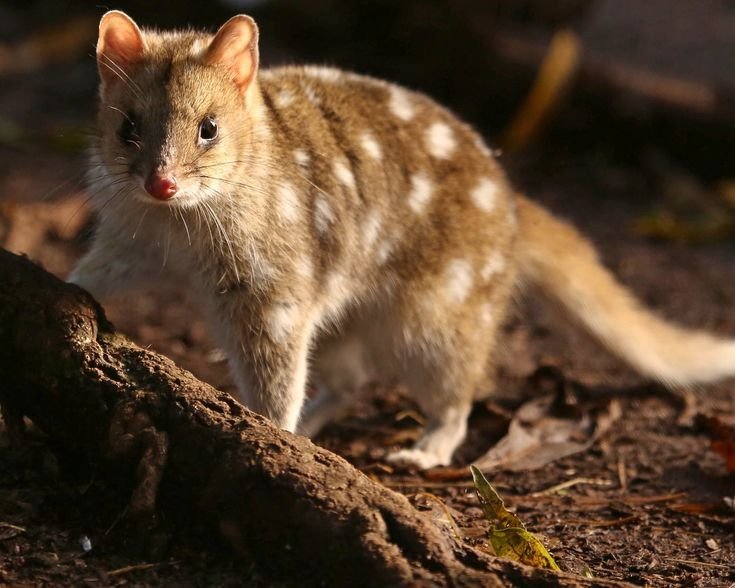
Scientific Name: Dasyurus maculatus
Class: Mammalia
Diet: Carnivore
The spotted-tailed quoll is a cat-sized marsupial once called a “native cat.” With its spotted coat and pointed face, it resembles a small cat. Yet it is a pouched mammal, not a feline.
What sets the quoll apart is its marsupial biology paired with cat-like hunting. It is an agile predator that climbs well and hunts both in trees and on the ground. Its spotted tail sets it apart from true cats.
Spotted-tailed quolls live in the forests of eastern Australia. As carnivores, they hunt birds, small mammals, and reptiles.
Moreover, quolls help control prey populations. Habitat loss has made them a threatened species.
Fun Fact: Early settlers called the quoll a “native cat,” though it is actually a marsupial.
Kinkajou
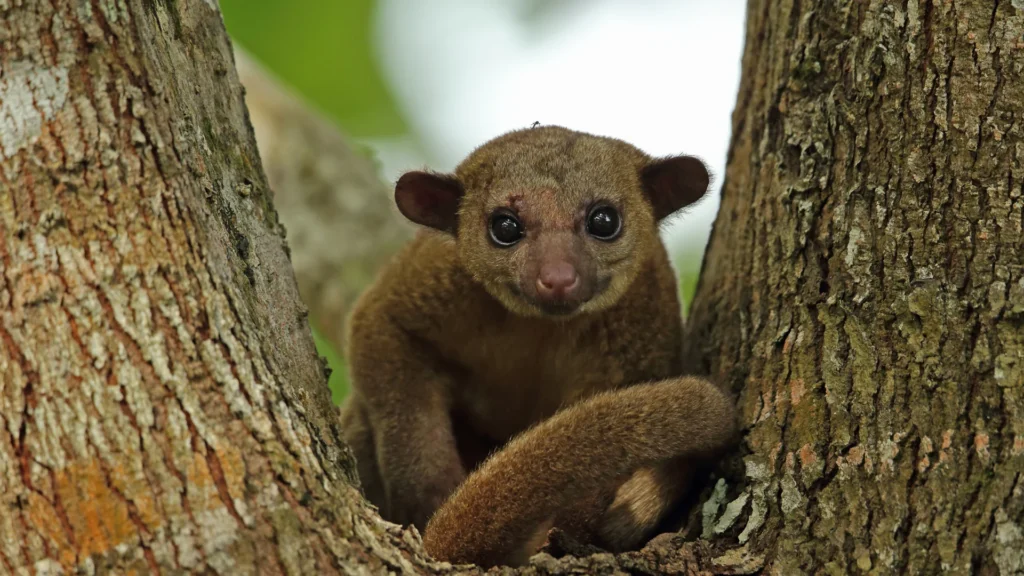
Scientific Name: Potos flavus
Class: Mammalia
Diet: Omnivore (mostly fruit)
The kinkajou is sometimes mistaken for a cat because of its size and big eyes. With its rounded ears and soft fur, it can look feline in the dark. Yet it is a relative of the raccoon.
Interestingly, the kinkajou is a nocturnal tree-dweller with a prehensile tail. Its cat-like size and large eyes suit its life in the canopy. It uses a long tongue to reach nectar and fruit.
Kinkajous live in the rainforests of Central and South America. As omnivores, they feed mainly on fruit, along with nectar and insects.
Moreover, kinkajous disperse seeds and pollinate flowers as they feed. Deforestation and the pet trade threaten some populations.
Red Fox
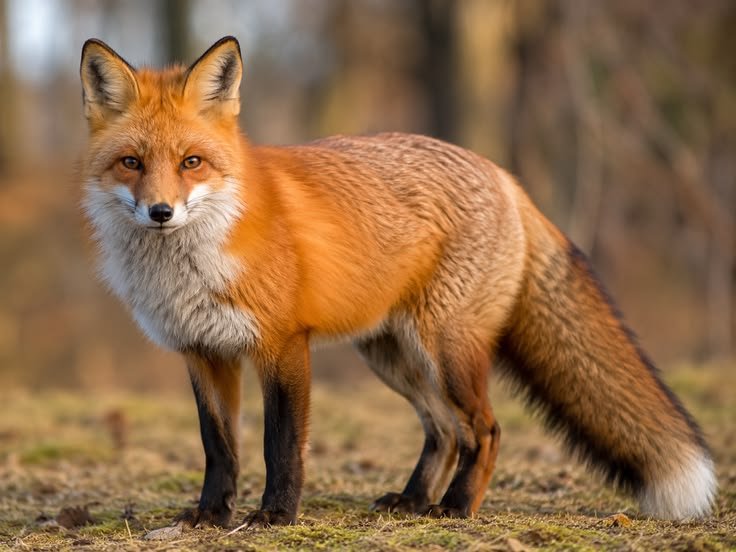
Scientific Name: Vulpes vulpes
Class: Mammalia
Diet: Omnivore
The red fox is often described as the most cat-like of all dogs. With its slender body, vertical pupils, and stealthy pounce, it behaves much like a cat. Yet it is a member of the dog family.
What sets the fox apart is its blend of canine and feline traits. It has vertical-slit pupils like a cat, retractable-like claws, and hunts with a cat-style pounce. It even has sensitive whiskers to feel its way.
Red foxes live across the Northern Hemisphere, in forests, farmland, and cities. As omnivores, they eat small animals, insects, fruit, and scraps.
Moreover, foxes help control rodent populations. They are highly adaptable and thrive in many environments.
Fun Fact: The red fox has vertical-slit pupils like a cat, unusual among members of the dog family.
Read: Animals with No Teeth
Read: Aggressive Animals in the World
Read: Animals That Live on Mountains
Read: Animals That Are Like Raccoons
Frequently Asked Questions
Conclusion
From the sleek genet to the popcorn-scented binturong, the animals that look like cats show how nature loves to blur the lines between species. Many of these look-alikes evolved feline features because they share a similar life as agile, stealthy hunters, a beautiful example of convergent evolution. Whether related to mongooses, raccoons, or even dogs, they remind us that appearances can be deceiving.