Top 15 Animals That Are Like Raccoons in The World (With Images)
Did you know that several animals wear the same “bandit mask” and ringed tail as a raccoon, yet many are not related to it at all? From the forests of Asia to the deserts of North America, a surprising number of creatures share the raccoon’s masked face, striped tail, or clever, curious nature. Some are close cousins in the raccoon family, while others simply evolved a similar look and lifestyle.
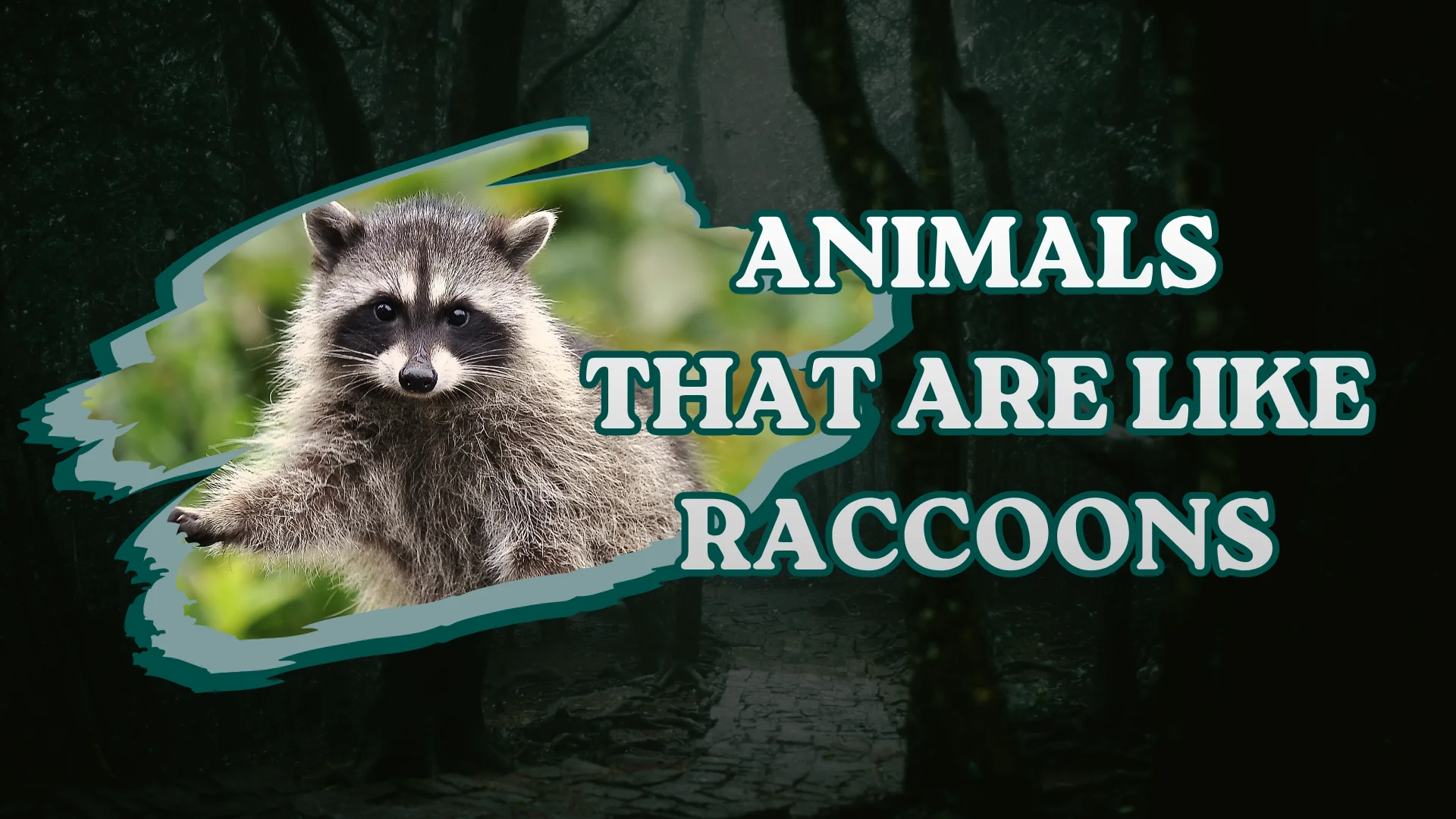
These raccoon-like animals are intelligent, adaptable, and endlessly fascinating. In this guide, we’ll explore the top 15 animals that are like raccoons, uncovering how they resemble the famous “trash panda” and why they deserve our attention.
List of Animals That Are Like Raccoons
| Rank | Animal | Scientific Name |
|---|---|---|
| 1 | Coati | Nasua nasua |
| 2 | Ringtail | Bassariscus astutus |
| 3 | Kinkajou | Potos flavus |
| 4 | Cacomistle | Bassariscus sumichrasti |
| 5 | Olingo | Bassaricyon gabbii |
| 6 | Olinguito | Bassaricyon neblina |
| 7 | Red Panda | Ailurus fulgens |
| 8 | Raccoon Dog | Nyctereutes procyonoides |
| 9 | Asian Palm Civet | Paradoxurus hermaphroditus |
| 10 | Masked Palm Civet | Paguma larvata |
| 11 | Common Genet | Genetta genetta |
| 12 | Binturong | Arctictis binturong |
| 13 | Tayra | Eira barbara |
| 14 | African Civet | Civettictis civetta |
| 15 | European Badger | Meles meles |
Coati

Scientific Name: Nasua nasua
Class: Mammalia
Diet: Omnivore
The coati, also called the coatimundi, is one of the raccoon’s closest relatives and look-alikes. It shares the raccoon’s ringed tail and facial markings, though its tail is longer and thinner.
Interestingly, the coati is far more social than the raccoon, often roaming in noisy groups called bands. It uses its long, flexible snout to root through leaf litter for insects and fruit.
Coatis inhabit the forests and grasslands of Central and South America, feeding on insects, fruit, and small animals.
As omnivores and seed dispersers, coatis play an important role in their ecosystems. Most populations are of Least Concern.
Fun Fact: A coati often holds its long, ringed tail straight up in the air to help its group stay together in tall grass.
Ringtail
Scientific Name: Bassariscus astutus
Class: Mammalia
Diet: Omnivore
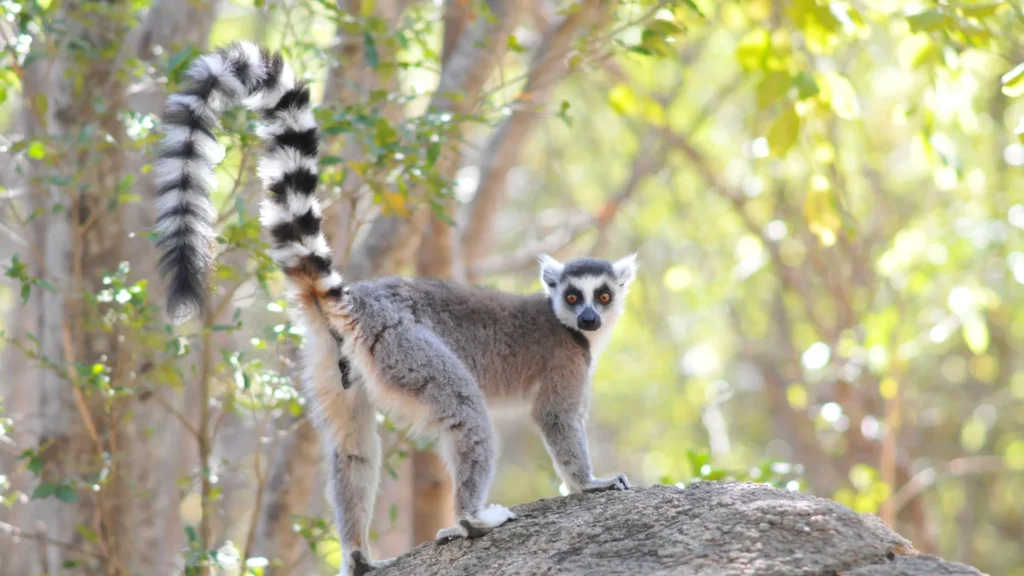
The ringtail is a small procyonid that looks like a miniature raccoon, complete with a masked face and a long, boldly ringed tail. Its bushy black-and-white tail is often longer than its body.
Moreover, the ringtail is an incredible acrobat, able to rotate its hind feet nearly 180 degrees to climb down cliffs headfirst. This agility helps it navigate rocky, arid terrain.
Ringtails inhabit the deserts, canyons, and woodlands of western North America, feeding on insects, small animals, and fruit.
As nocturnal predators, ringtails help control insect and rodent populations. Widespread in their range, they are of Least Concern.
Fun Fact: Miners once kept ringtails as pets to catch mice, earning them the nickname “miner’s cat.”
Kinkajou
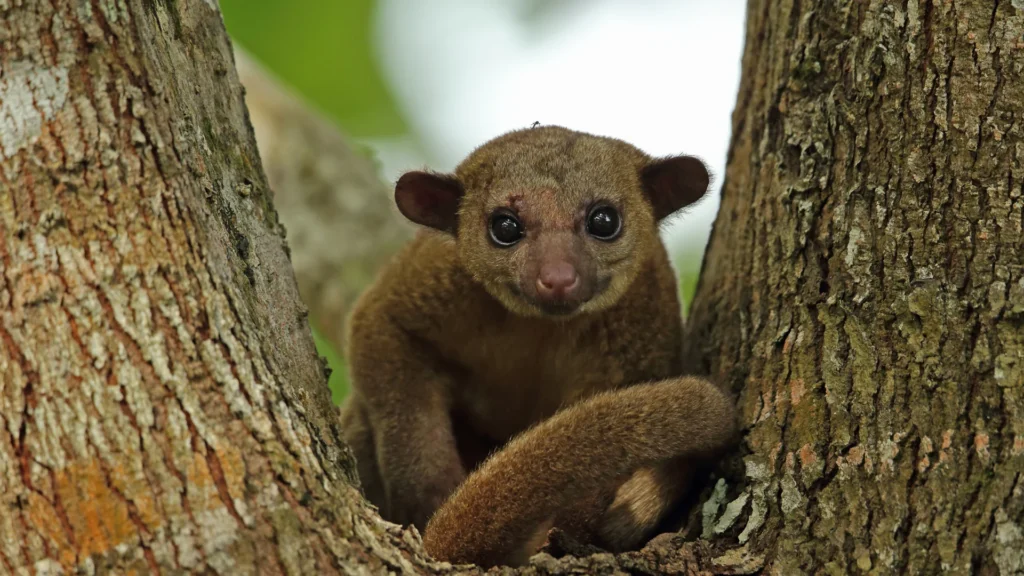
Scientific Name: Potos flavus
Class: Mammalia
Diet: Omnivore
The kinkajou is a raccoon relative that lives high in the rainforest canopy. Though it lacks the classic mask, it shares the raccoon’s intelligence, dexterity, and curious nature.
Interestingly, the kinkajou has a prehensile tail that works like a fifth limb, gripping branches as it climbs. It uses its long tongue to lap nectar from flowers and eat fruit.
Kinkajous inhabit the tropical rainforests of Central and South America, feeding mainly on fruit, nectar, and insects.
As pollinators and seed dispersers, kinkajous are vital to their forest ecosystems. They are currently of Least Concern.
Fun Fact: The kinkajou is nicknamed the “honey bear” for its love of nectar and sweet fruit.
Cacomistle
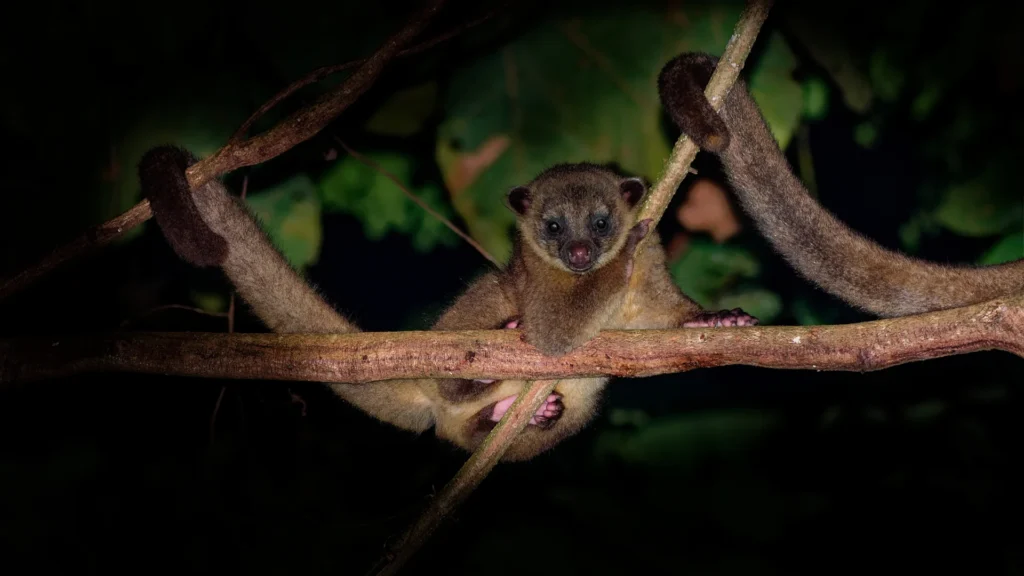
Scientific Name: Bassariscus sumichrasti
Class: Mammalia
Diet: Omnivore
The cacomistle is a close cousin of the ringtail and raccoon, with a similar masked face and long, banded tail. Slender and agile, it is a skilled climber of the tropical canopy.
Moreover, the cacomistle is almost entirely arboreal, rarely coming down to the ground. Its long tail helps it balance as it moves gracefully through the treetops at night.
Cacomistles inhabit the tropical forests of Central America and southern Mexico, feeding on fruit, insects, and small animals.
As nocturnal omnivores, cacomistles help disperse seeds and control insects. Habitat loss is a growing threat to some populations.
Fun Fact: The cacomistle’s name comes from an ancient Aztec word meaning “half cat.”
Olingo
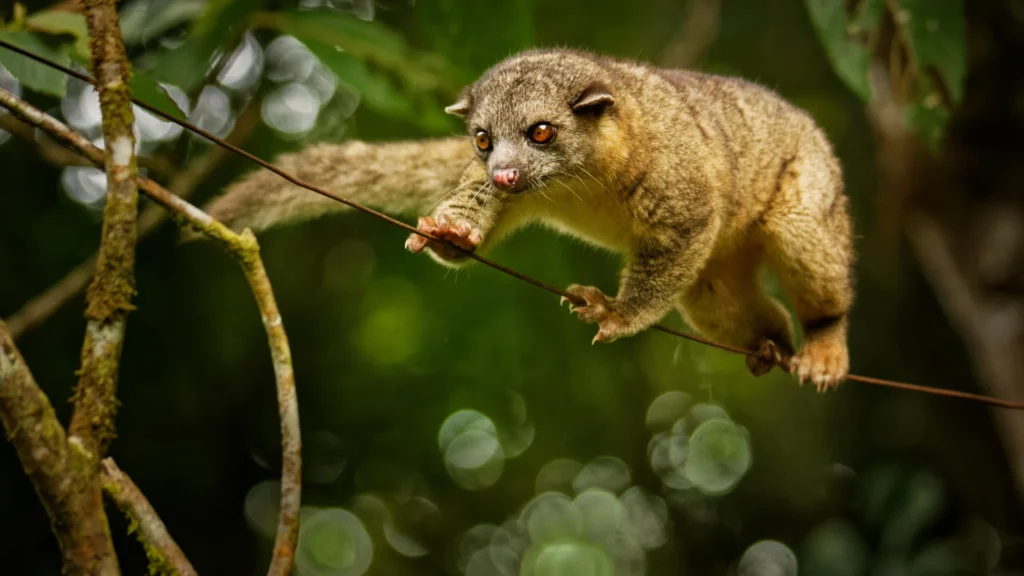
Scientific Name: Bassaricyon gabbii
Class: Mammalia
Diet: Omnivore
The olingo is a raccoon-family member that closely resembles the kinkajou, with a slender body and a long, bushy tail. It shares the raccoon’s nocturnal, tree-dwelling habits.
Interestingly, unlike the kinkajou, the olingo’s tail is not prehensile, so it relies on leaping between branches. It is a nimble, agile climber of the rainforest canopy.
Olingos inhabit the tropical forests of Central and South America, feeding mainly on fruit, nectar, and insects.
As fruit-eaters, olingos help disperse seeds through the forest. Most populations are currently of Least Concern.
Fun Fact: Olingos are often mistaken for kinkajous, and the two even share the same trees and food sources.
Olinguito
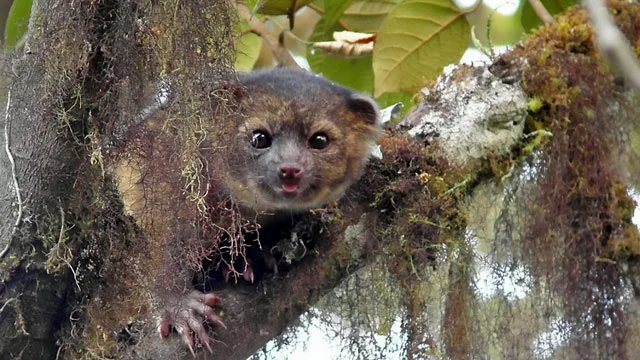
Scientific Name: Bassaricyon neblina
Class: Mammalia
Diet: Omnivore
The olinguito is the smallest member of the raccoon family and one of the most recently discovered mammals. Announced to science in 2013, it looks like a cross between a teddy bear and a raccoon relative.
Moreover, the olinguito is nocturnal and tree-dwelling, foraging voraciously for food under the cover of darkness. Its small size and dense fur suit its misty mountain home.
Olinguitos inhabit the cloud forests of the Andes in Colombia and Ecuador, feeding mainly on fruit and insects.
As fruit-eaters, olinguitos help disperse seeds in their high-altitude forests. Habitat loss has made them Near Threatened.
Fun Fact: The olinguito was the first new carnivore species discovered in the Americas in 35 years.
Red Panda
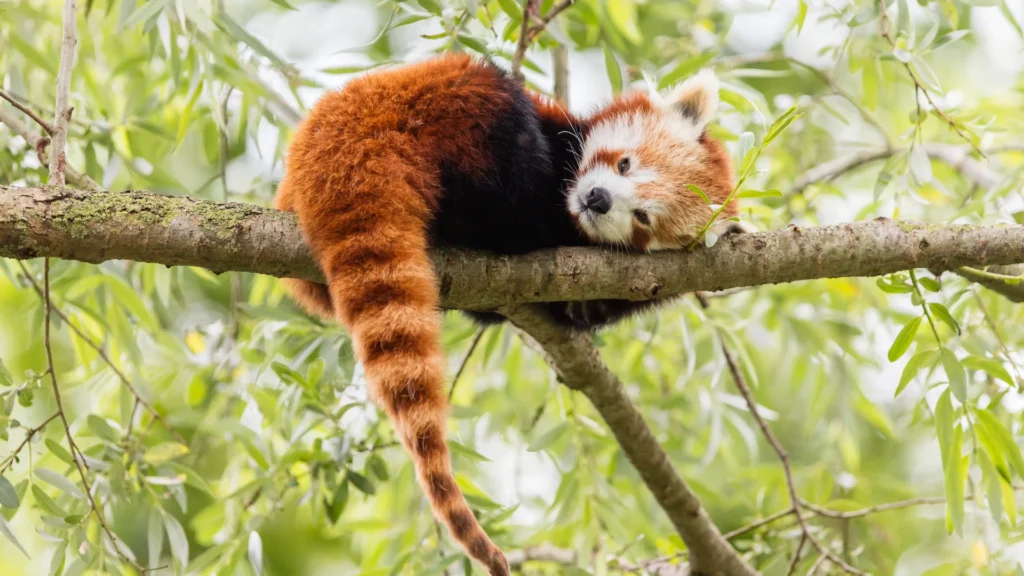
Scientific Name: Ailurus fulgens
Class: Mammalia
Diet: Herbivore
The red panda looks like a soft, red-and-cream version of a raccoon, sharing a masked face and a long, ringed tail. Scientists once even placed it in the raccoon family.
Interestingly, further study revealed the red panda is so unique it belongs to its own family, Ailuridae. Despite this, its ringed tail and facial markings still make it a striking raccoon look-alike.
Red pandas inhabit the temperate forests of the Himalayas and southwestern China, feeding mainly on bamboo, along with fruit and insects.
As bamboo eaters, red pandas are part of the delicate balance of their forest homes. Habitat loss and poaching have made them Endangered.
Fun Fact: The red panda was described by scientists decades before the giant panda, and originally shared the “panda” name.
Raccoon Dog
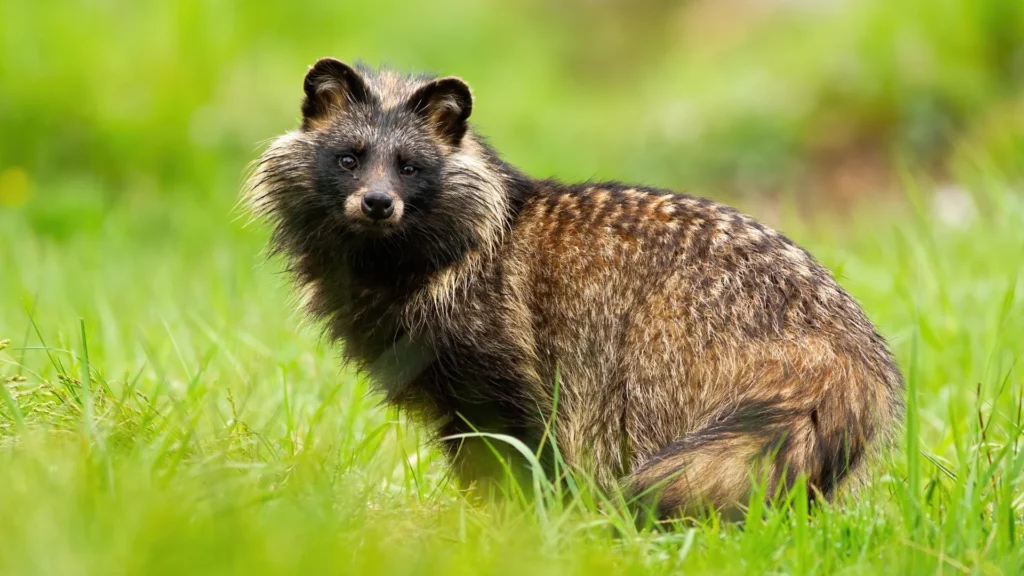
Scientific Name: Nyctereutes procyonoides
Class: Mammalia
Diet: Omnivore
The raccoon dog, or tanuki, is often mistaken for a raccoon thanks to its masked face and fluffy coat. Remarkably, it is not a raccoon at all but a member of the dog family.
Moreover, the raccoon dog shares the raccoon’s nocturnal, omnivorous, foraging lifestyle. Its dark eye markings, grayish fur, and stocky body complete the striking resemblance.
Raccoon dogs inhabit forests and wetlands across East Asia and parts of Europe, feeding on insects, fruit, small animals, and scraps.
As adaptable omnivores, raccoon dogs help control pests and disperse seeds. They are widespread and of Least Concern.
Fun Fact: The raccoon dog is the only canid known to hibernate through the coldest part of winter.
Asian Palm Civet
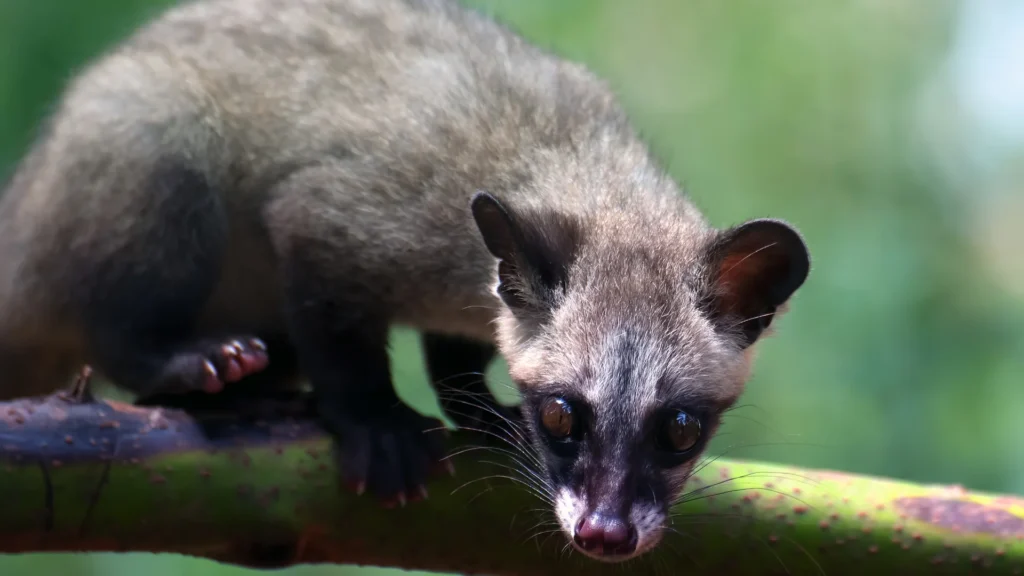
Scientific Name: Paradoxurus hermaphroditus
Class: Mammalia
Diet: Omnivore
The Asian palm civet shares the raccoon’s masked face, dark markings, and nocturnal, omnivorous habits. Slender and agile, it is a skilled climber of trees and rooftops.
Interestingly, though it looks and behaves like a raccoon, the civet belongs to a completely different family. It forages at night for fruit, insects, and small animals, much like its look-alike.
Asian palm civets inhabit the forests and farmlands of South and Southeast Asia, feeding on fruit, insects, and small creatures.
As fruit-eaters, civets help disperse seeds through their habitats. Widespread but pressured by the wildlife trade, they are of Least Concern.
Fun Fact: The Asian palm civet is famous for producing “kopi luwak,” one of the world’s most expensive coffees.
Masked Palm Civet
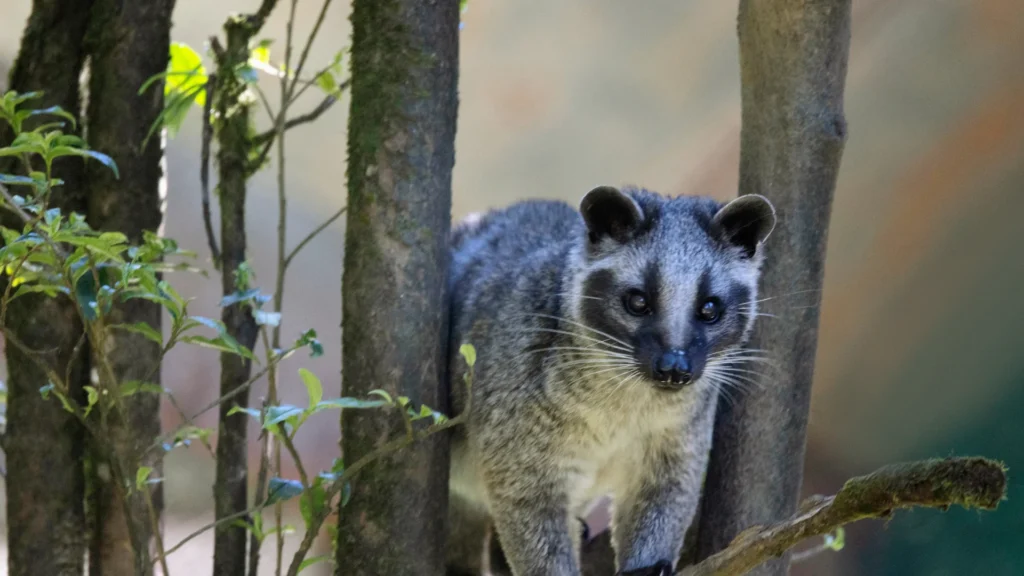
Scientific Name: Paguma larvata
Class: Mammalia
Diet: Omnivore
The masked palm civet is perhaps the most raccoon-faced of all civets, with bold white-and-dark facial markings. Its striking “mask” gives it a strong resemblance to the raccoon.
Moreover, this civet shares the raccoon’s nocturnal, tree-climbing, omnivorous lifestyle. It is an agile forager, using its slender body to move through branches in search of food.
Masked palm civets inhabit the forests of South and Southeast Asia, feeding on fruit, insects, and small animals.
As fruit-eaters, masked palm civets help disperse seeds. Habitat loss and the wildlife trade threaten some populations.
Fun Fact: The masked palm civet’s bold facial stripes make it one of the most raccoon-like animals in Asia.
Common Genet
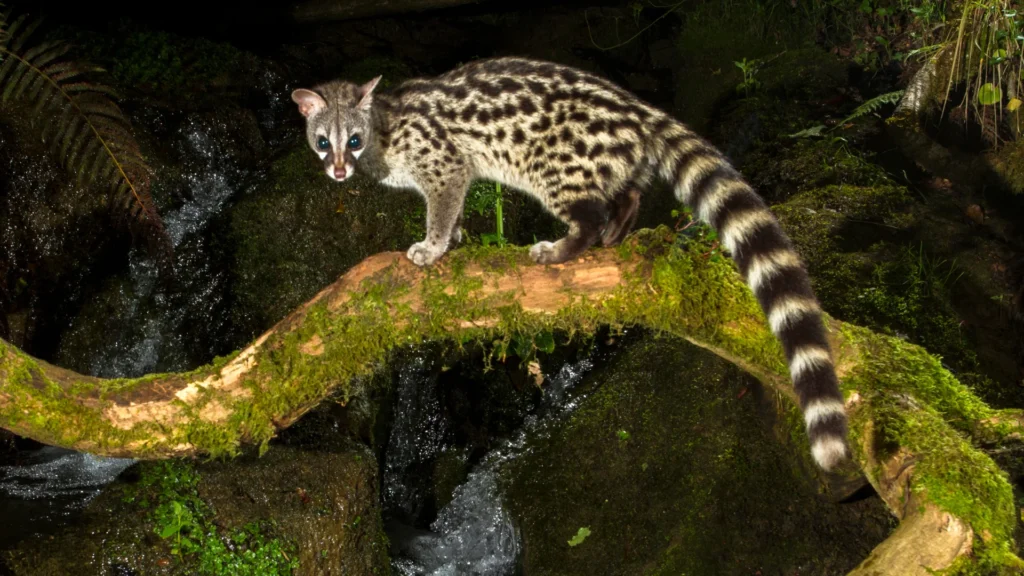
Scientific Name: Genetta genetta
Class: Mammalia
Diet: Carnivore
The common genet is a slender, spotted mammal with a long, boldly ringed tail reminiscent of a raccoon’s. Its striped tail and agile body make it a striking look-alike.
Interestingly, though genets share the ringed tail and nocturnal habits, they are more closely related to civets and mongooses. They are exceptional climbers with cat-like grace.
Common genets inhabit forests, scrublands, and rocky areas across Africa and parts of Europe, hunting small animals and insects.
As agile predators, genets help control rodent and insect populations. Widespread and adaptable, they are of Least Concern.
Fun Fact: A genet’s ringed tail can be nearly as long as its entire body, aiding its balance in the trees.
Binturong
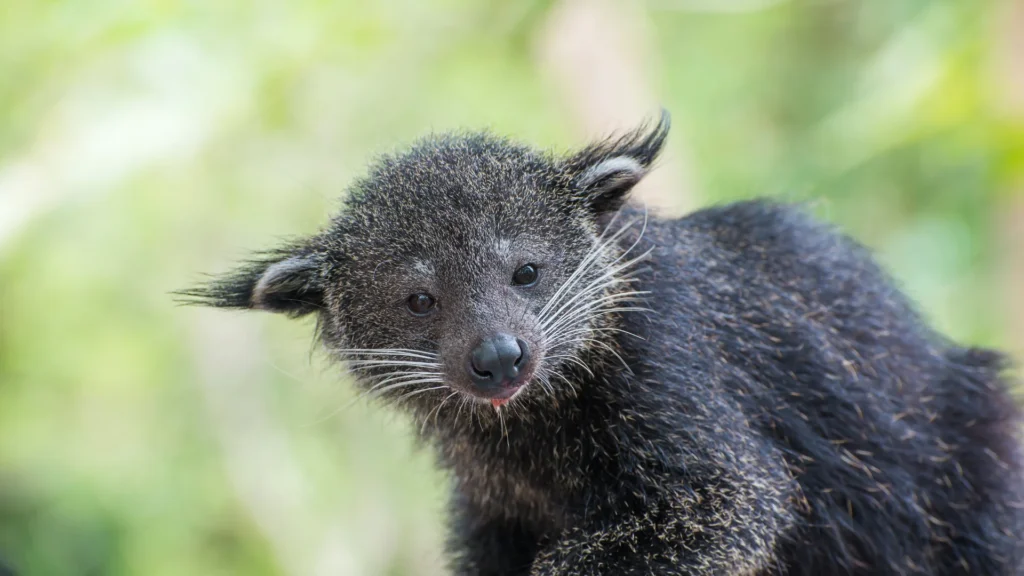
Scientific Name: Arctictis binturong
Class: Mammalia
Diet: Omnivore
The binturong, or “bearcat,” is a shaggy, dark-furred mammal that shares the raccoon’s arboreal, nocturnal, and omnivorous ways. Its bushy build and masked look give it a raccoon-like charm.
Moreover, the binturong has a prehensile tail, much like the kinkajou, that helps it grip branches. Slow and secretive, it moves quietly through the rainforest canopy.
Binturongs inhabit the forests of Southeast Asia, feeding on fruit, small animals, insects, and eggs.
As fruit-eaters, binturongs are important seed dispersers, especially for figs. Habitat loss has made them Vulnerable.
Fun Fact: The binturong famously smells like buttered popcorn, thanks to a compound in its scent markings.
Tayra
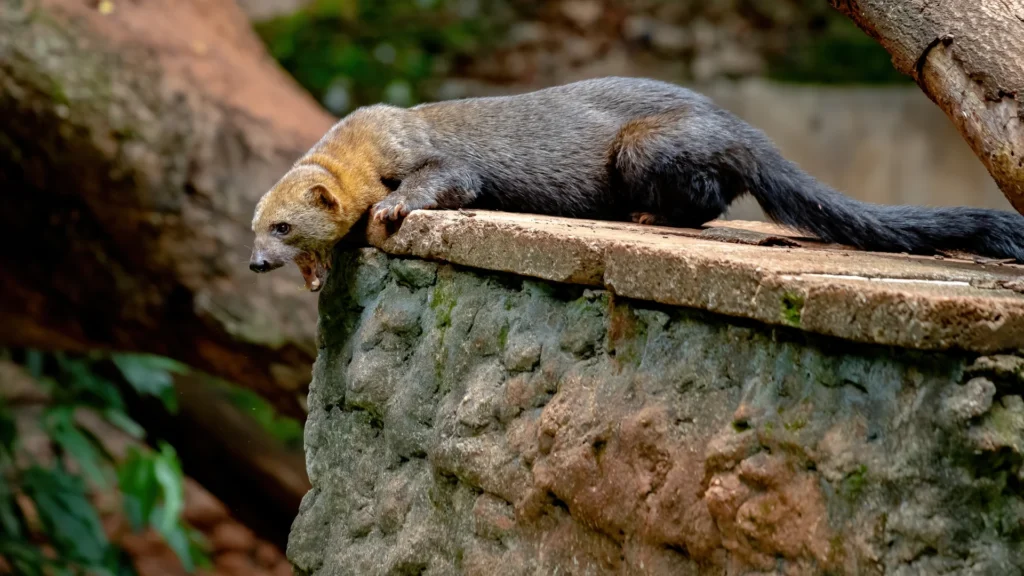
Scientific Name: Eira barbara
Class: Mammalia
Diet: Omnivore
The tayra is a large, agile member of the weasel family that shares the raccoon’s size, curiosity, and omnivorous diet. Its dark coat and bounding movements give it a raccoon-like presence.
Interestingly, the tayra is remarkably intelligent, even known to store unripe fruit and return later once it has ripened. It is an excellent climber and forager.
Tayras inhabit the forests and grasslands of Central and South America, feeding on fruit, small animals, and insects.
As omnivores and seed dispersers, tayras play an important role in their ecosystems. They are currently of Least Concern.
Fun Fact: The tayra is one of the few animals known to plan ahead by stashing fruit to eat once it ripens.
African Civet
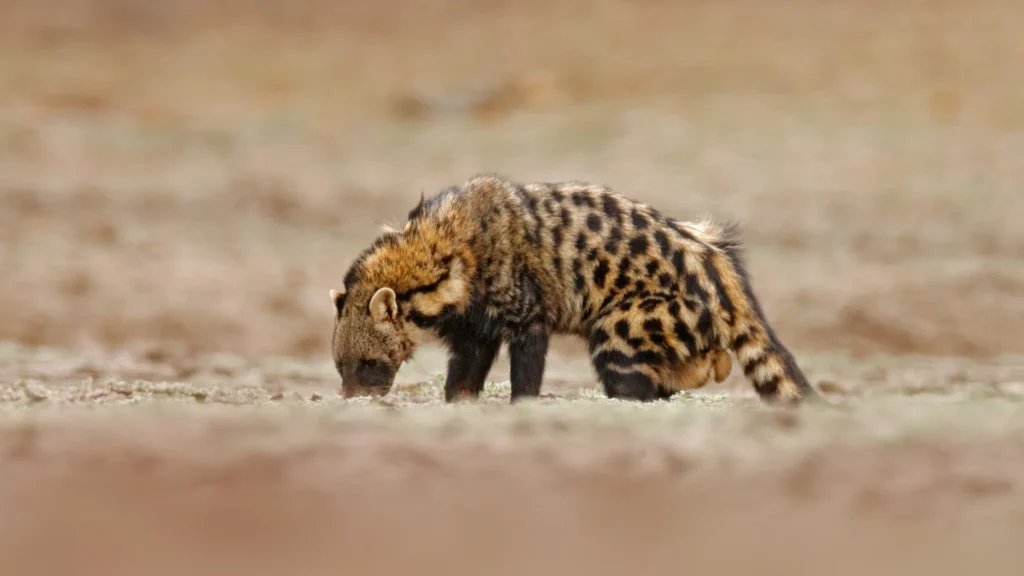
Scientific Name: Civettictis civetta
Class: Mammalia
Diet: Omnivore
The African civet has bold black-and-white markings and a masked face that strongly recall a raccoon. Its stocky body and banded coat add to the resemblance.
Moreover, the African civet shares the raccoon’s nocturnal, ground-foraging, omnivorous lifestyle. It uses a keen sense of smell to find food after dark.
African civets inhabit the forests, savannas, and grasslands of sub-Saharan Africa, feeding on fruit, insects, and small animals.
As omnivores, civets help disperse seeds and control pests. Widespread across their range, they are of Least Concern.
Fun Fact: The African civet produces a musky secretion that was once widely used in the perfume industry.
European Badger
Scientific Name: Meles meles
Class: Mammalia
Diet: Omnivore
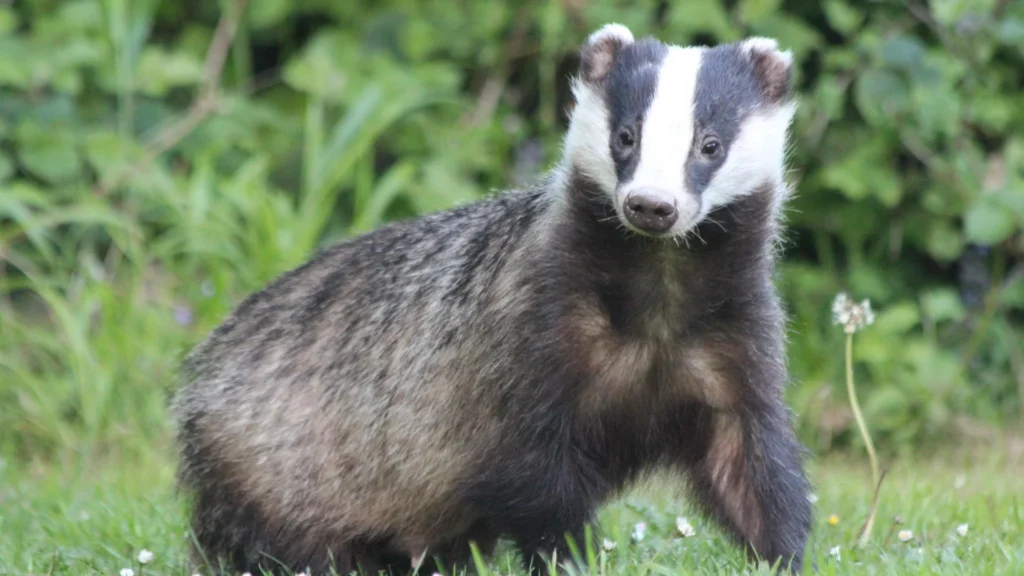
The European badger shares the raccoon’s masked face, with bold black-and-white stripes running across its head. Stocky and nocturnal, it forages much like a raccoon.
Interestingly, both animals are powerful diggers and opportunistic omnivores. The badger uses its strong claws to dig for earthworms and to build large underground burrow systems.
European badgers inhabit woodlands, grasslands, and farmland across Europe and parts of Asia, feeding on worms, insects, fruit, and small animals.
As diggers and omnivores, badgers aerate soil and control pests. Widespread across their range, they are of Least Concern.
Fun Fact: Badgers live in large underground burrow systems called “setts,” which can be used for many generations.
Frequently Asked Questions
Conclusion
From true cousins like the coati and ringtail to surprising look alikes like the raccoon dog and red panda, the world is full of animals that resemble raccoons. Each species whether a nectar loving kinkajou, a popcorn scented binturong, or a masked badger shares the raccoon’s clever, curious, and adaptable spirit. Some are close relatives in the raccoon family, while others simply evolved a similar look and lifestyle, showing the many paths evolution can take.