Snakes With Triangular Heads: Are They Venomous? (With Images)
Have you ever come across a snake with a distinct, arrow-shaped head and immediately felt a jolt of fear? Many people believe that a triangular head is a sure sign of a venomous snake. There’s some truth to this many dangerous vipers do have broad, triangular heads.
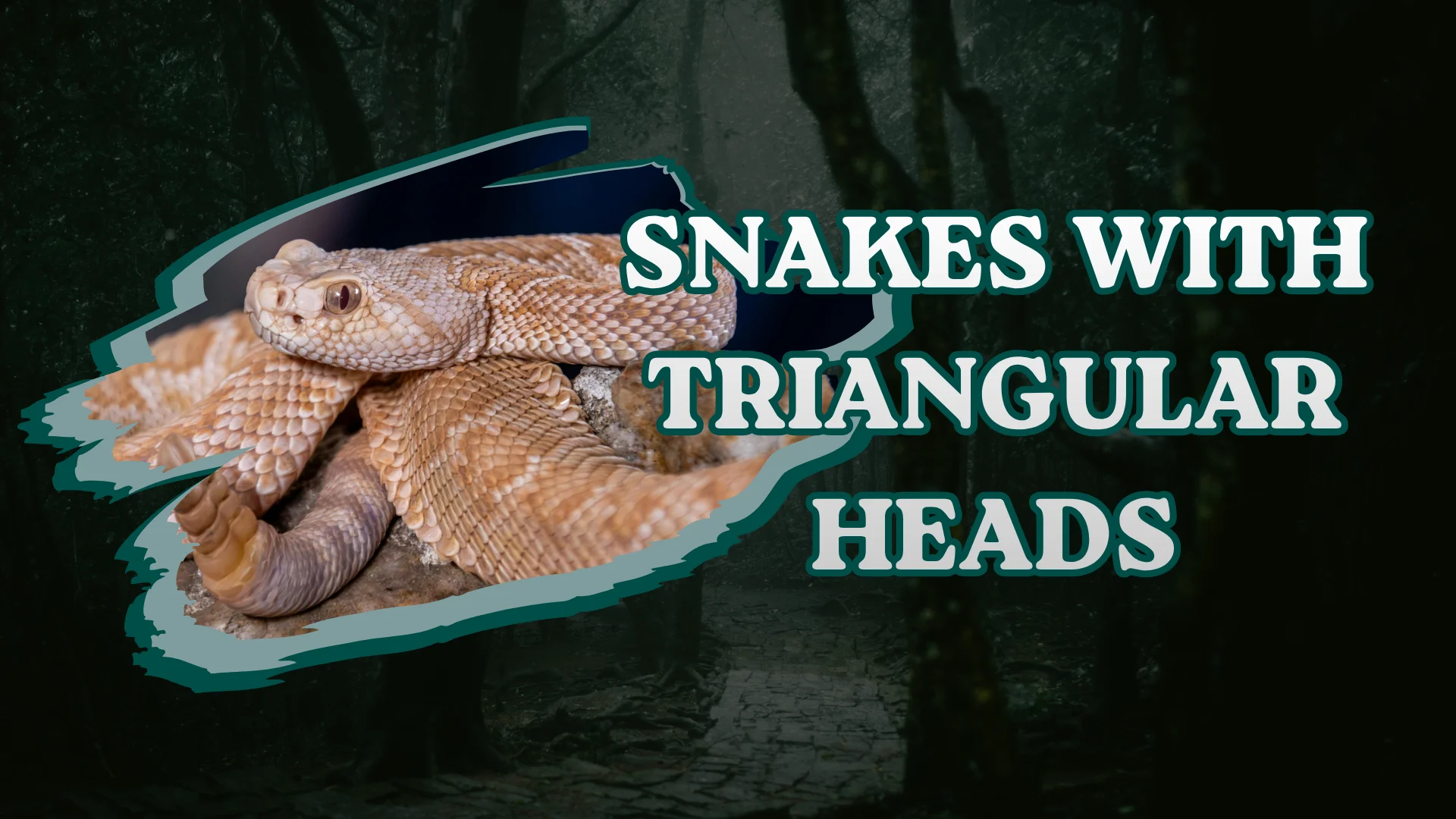
But the rule isn’t foolproof, and some harmless snakes can flatten their heads to fake the look. In this guide, we’ll explore snakes with triangular heads, which ones are truly venomous, and how to tell the difference safely.
Why Do Some Snakes Have Triangular Heads?
A triangular or “arrow-shaped” head is common among venomous snakes, especially the group known as vipers and pit vipers. The reason is anatomy: these snakes have large venom glands located on each side of the head, behind the eyes. These glands bulge outward, giving the head its distinctive wide, triangular shape that is much broader than the neck.
Non-venomous snakes, by contrast, usually have narrower, more rounded heads that blend smoothly into the body, because they don’t carry these large venom glands.
Important: A triangular head is a helpful clue, but it is not a guaranteed rule. Some harmless snakes flatten their heads to mimic vipers when threatened, and some venomous snakes (like coral snakes) have narrow heads. Never rely on head shape alone to judge whether a snake is dangerous.
Venomous Snakes With Triangular Heads
Many of the world’s most dangerous snakes have the classic broad, triangular head. Here are some of the most notable.
Copperhead
Scientific Name: Agkistrodon contortrix
Class: Reptilia
Diet: Carnivore
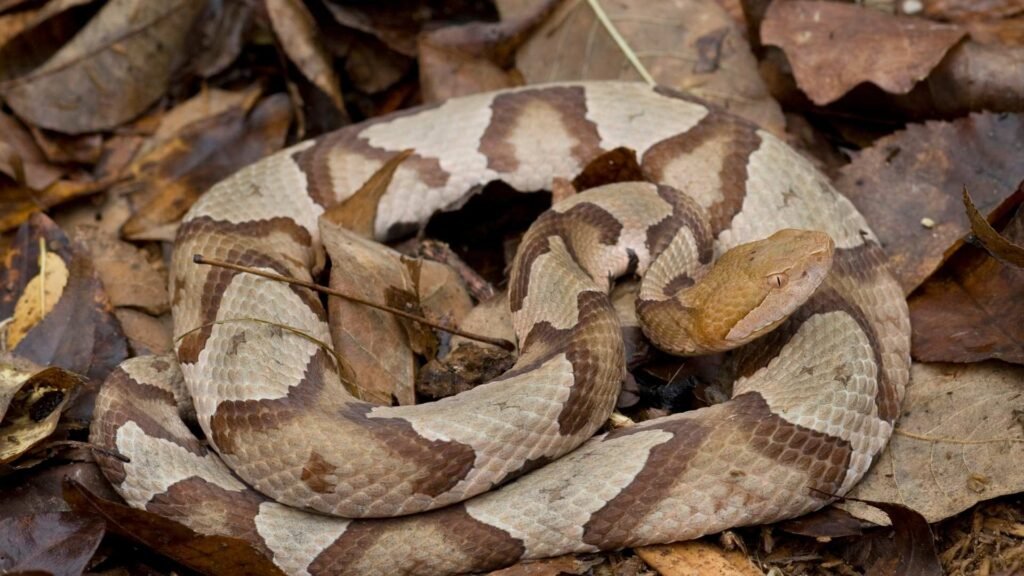
The copperhead is a venomous pit viper with a distinct triangular head and a copper-colored, hourglass-patterned body. It is common across the eastern United States.
Interestingly, the copperhead relies on its excellent camouflage, often freezing rather than fleeing when approached. Its bite is painful but rarely fatal to healthy adults.
Copperheads inhabit forests, rocky hillsides, and wetlands, hunting rodents, frogs, and insects.
As ambush predators, copperheads help control rodent populations. They remain common throughout their range.
Fun Fact: Baby copperheads have bright yellow-green tail tips, which they wiggle to lure in curious prey.
Rattlesnake
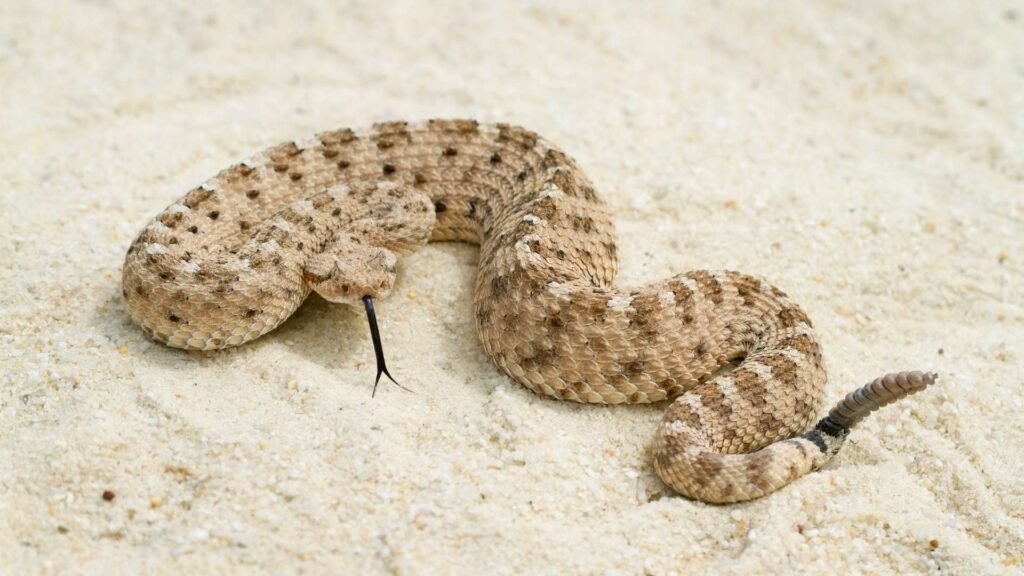
Scientific Name: Crotalus
Class: Reptilia
Diet: Carnivore
The rattlesnake is a venomous pit viper easily identified by its triangular head and the signature rattle on its tail. There are many species across the Americas.
Moreover, the rattlesnake shakes its tail to produce a warning buzz before striking. Its broad head houses potent venom glands and heat-sensing pits that detect warm-blooded prey.
Rattlesnakes inhabit deserts, grasslands, and forests across North and South America, hunting rodents and small animals.
As important predators, rattlesnakes keep rodent numbers in check. Most species remain common, though some are threatened.
Fun Fact: A rattlesnake adds a new segment to its rattle each time it sheds its skin, not once per year as many believe.
Cottonmouth (Water Moccasin)
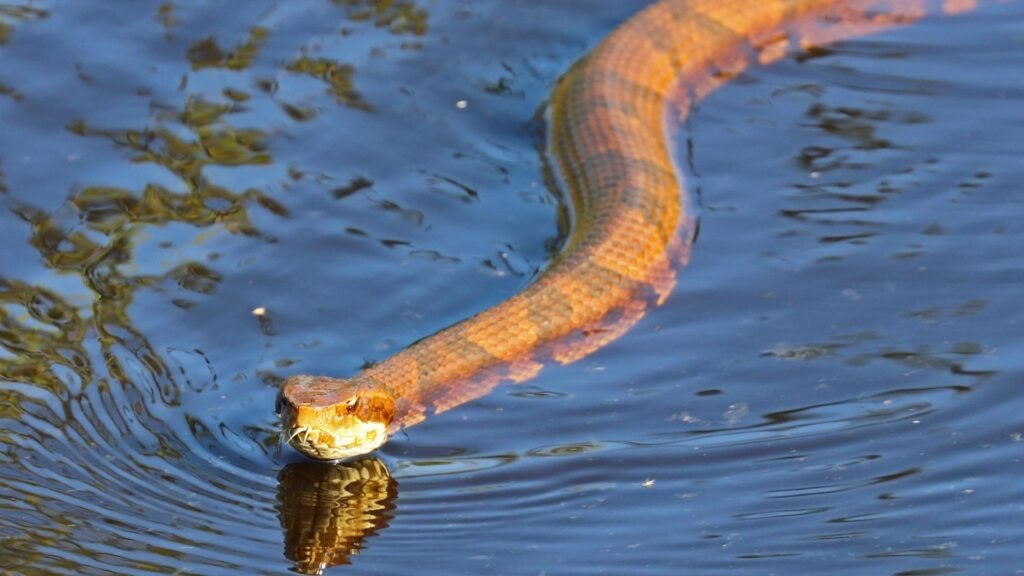
Scientific Name: Agkistrodon piscivorus
Class: Reptilia
Diet: Carnivore
The cottonmouth is a venomous, semi-aquatic pit viper with a blocky, triangular head. It is named for the white lining of its mouth, which it displays as a warning.
Interestingly, the cottonmouth gapes its mouth wide open to reveal the cotton-white interior when threatened. It is an excellent swimmer, often seen in and around water.
Cottonmouths inhabit swamps, rivers, and wetlands of the southeastern United States, hunting fish, frogs, and small animals.
As aquatic predators, cottonmouths help balance wetland ecosystems. They remain common in their range.
Fun Fact: The cottonmouth often swims with its whole body riding on top of the water, unlike many harmless water snakes.
Gaboon Viper
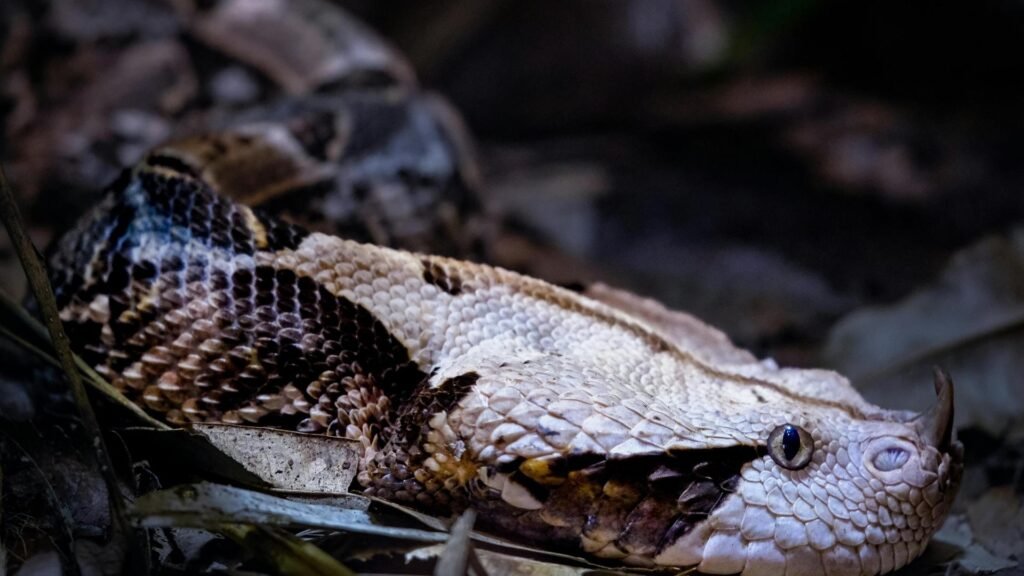
Scientific Name: Bitis gabonica
Class: Reptilia
Diet: Carnivore
The Gaboon viper has one of the most dramatically triangular heads of any snake, along with the longest fangs of any venomous species. It is native to Africa.
Moreover, the Gaboon viper’s fangs can reach two inches long, and it delivers a large dose of venom. Its leaf-like camouflage makes it nearly invisible on the forest floor.
Gaboon vipers inhabit the rainforests and savannas of sub-Saharan Africa, ambushing rodents, birds, and small mammals.
As master ambush predators, Gaboon vipers rely on stillness and camouflage. They remain widespread in their range.
Fun Fact: The Gaboon viper has the longest fangs of any snake in the world, reaching up to two inches in length.
Bushmaster
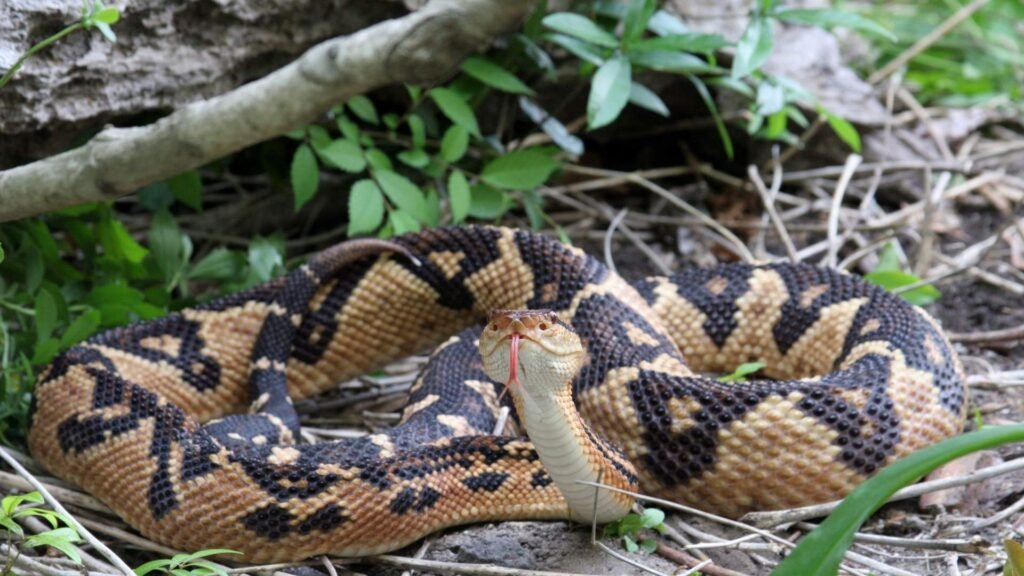
Scientific Name: Lachesis muta
Class: Reptilia
Diet: Carnivore
The bushmaster is the largest venomous snake in the Americas, with a broad, triangular head. It is a powerful pit viper of the tropics.
Interestingly, the bushmaster can grow over 10 feet long and delivers venom in large quantities. It is a secretive, nocturnal hunter of the deep rainforest.
Bushmasters inhabit the rainforests of Central and South America, hunting rodents and other small mammals.
As apex snake predators, bushmasters play an important role in their ecosystems. Habitat loss threatens some populations.
Fun Fact: The bushmaster is the longest viper in the world and the largest venomous snake in the Western Hemisphere.
Non-Venomous Snakes That Fake a Triangular Head
Some harmless snakes have learned to mimic the triangular-headed vipers to scare off predators. This clever trick can easily fool people.
Eastern Hognose Snake
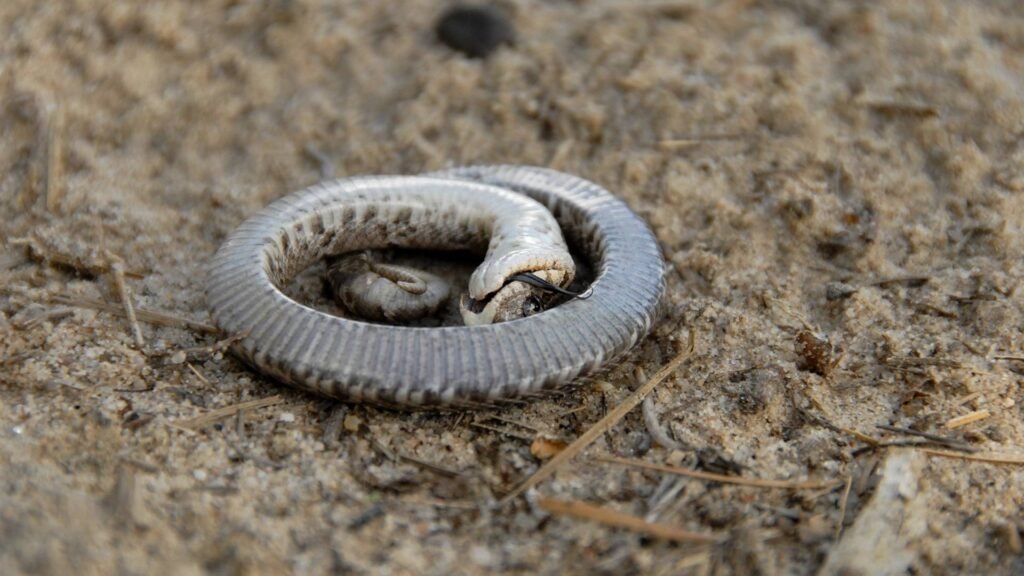
Scientific Name: Heterodon platirhinos
Class: Reptilia
Diet: Carnivore
The eastern hognose snake is completely harmless to humans but puts on a dramatic show when threatened. It can flatten its head and neck to look like a cobra or viper.
Moreover, the hognose may hiss, spread its neck, and even play dead by rolling over with its tongue hanging out. Despite the act, it almost never bites people.
Eastern hognose snakes inhabit sandy fields and woodlands of the eastern United States, feeding mainly on toads.
As harmless mimics, hognose snakes rely on bluffing rather than venom. They remain common in their range.
Fun Fact: When its threat display fails, the hognose snake flips onto its back and plays dead, even releasing a foul smell.
Water Snakes
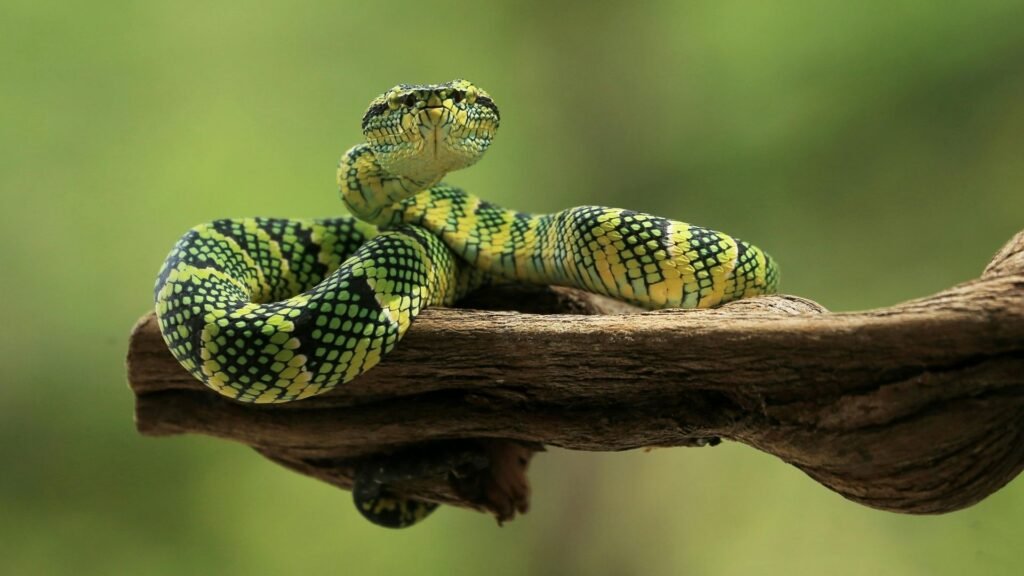
Scientific Name: Nerodia
Class: Reptilia
Diet: Carnivore
Water snakes are non-venomous snakes that are frequently mistaken for the venomous cottonmouth. They can flatten their heads to look more triangular when alarmed.
Interestingly, water snakes flatten their bodies and heads to appear larger and more threatening. Though they may bite defensively, they are not venomous and pose no serious danger.
Water snakes inhabit rivers, lakes, and wetlands across North America, hunting fish and amphibians.
As aquatic hunters, water snakes help control fish and frog populations. They are common and widespread.
Fun Fact: Frightened water snakes can flatten their heads into a triangle shape, making them look far more dangerous than they are.
How to Tell if a Triangular-Headed Snake Is Venomous
Since head shape alone isn’t reliable, look for a combination of clues from a safe distance:
– Pupil shape: Many venomous pit vipers have vertical, cat-like pupils, while most harmless snakes have round pupils. (Note: this is hard to see safely and isn’t foolproof.)
– Heat-sensing pits: Pit vipers have a small pit between each eye and nostril.
– Body shape: Vipers tend to be thick and stocky; many harmless snakes are more slender.
– Behavior: Rattling, gaping a white mouth, or a heavy, sluggish body can indicate a viper.
– Location: Learn which venomous species actually live in your region.
The golden rule: Never handle or approach a wild snake to check these features. When in doubt, keep your distance and leave it alone.
Read: Animals Like Meerkats
Read: Animals Similar to Foxes
Read: Friendliest Animals in the World
Read: Animals That Eat Eggs
Read: Animals That Eat Bones
Frequently Asked Questions
Conclusion
A triangular head is one of nature’s most famous warning signs, and for good reason many of the world’s most venomous snakes, from copperheads to Gaboon vipers, share this broad, arrow-shaped look. But it’s not a perfect rule. Harmless snakes like the hognose and water snakes can flatten their heads to fake the same threatening appearance.