
Top 14 Small Monkey Breeds in The World: With Their Pictures
Did you know that the world’s smallest monkey can curl up comfortably in the palm of your hand? These tiny primates are far more than adorable curiosities they are agile seed dispersers, insect controllers, and vital threads in the fabric of tropical forests. From the whispering canopies of the Amazon to the woodlands of Africa, small monkey breeds have evolved remarkable adaptations to thrive in a world built for giants.
Their intelligence, complex social bonds, and delicate beauty make them some of nature’s most captivating creatures. In this guide, we’ll explore the top 14 small monkey breeds in the world, uncovering their unique traits, habitats, and why protecting them matters.
List of Small Monkey Breeds in The World
| Rank | Animal | Scientific Name |
|---|---|---|
| 1 | Pygmy Marmoset | Cebuella pygmaea |
| 2 | Common Marmoset | Callithrix jacchus |
| 3 | Cotton-top Tamarin | Saguinus oedipus |
| 4 | Golden Lion Tamarin | Leontopithecus rosalia |
| 5 | Emperor Tamarin | Saguinus imperator |
| 6 | Squirrel Monkey | Saimiri sciureus |
| 7 | Silvery Marmoset | Mico argentatus |
| 8 | Talapoin | Miopithecus talapoin |
| 9 | Night Monkey | Aotus trivirgatus |
| 10 | Dusky Titi | Plecturocebus moloch |
| 11 | Red-handed Tamarin | Saguinus midas |
| 12 | Goeldi’s Monkey | Callimico goeldii |
| 13 | Geoffroy’s Tamarin | Saguinus geoffroyi |
| 14 | Capuchin Monkey | Cebus capucinus |
Pygmy Marmoset
Scientific Name: Cebuella pygmaea
Class: Mammalia
Diet: Omnivore
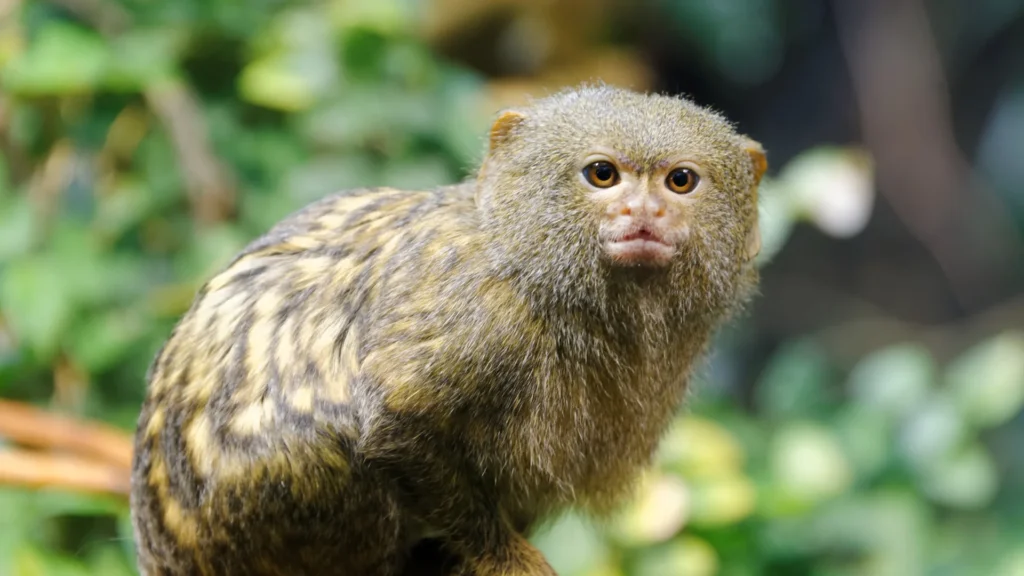
The pygmy marmoset holds the crown as the smallest monkey in the world. Measuring just 4.6 to 6.2 inches in body length and weighing only 100 to 150 grams, this miniature primate fits easily in a human palm. Its tawny, speckled fur and expressive face make it a true marvel of nature.
Interestingly, the pygmy marmoset is a specialist “gumivore,” using its sharp lower teeth to gouge holes in tree bark and feed on the sap and gum that ooze out. It supplements this diet with insects and small fruits.
Native to the western Amazon rainforest of Brazil, Peru, Ecuador, and Colombia, it lives in small family groups high in the understory. Communication relies on high-pitched trills and clicks that often travel beyond human hearing.
As a seed and sap forager, the pygmy marmoset plays a quiet role in forest health. Though listed as Vulnerable, habitat loss and the illegal pet trade remain persistent threats.
Fun Fact: A pygmy marmoset can turn its head nearly 180 degrees to scan for predators while clinging motionless to a tree trunk.
Common Marmoset
Scientific Name: Callithrix jacchus
Class: Mammalia
Diet: Omnivore
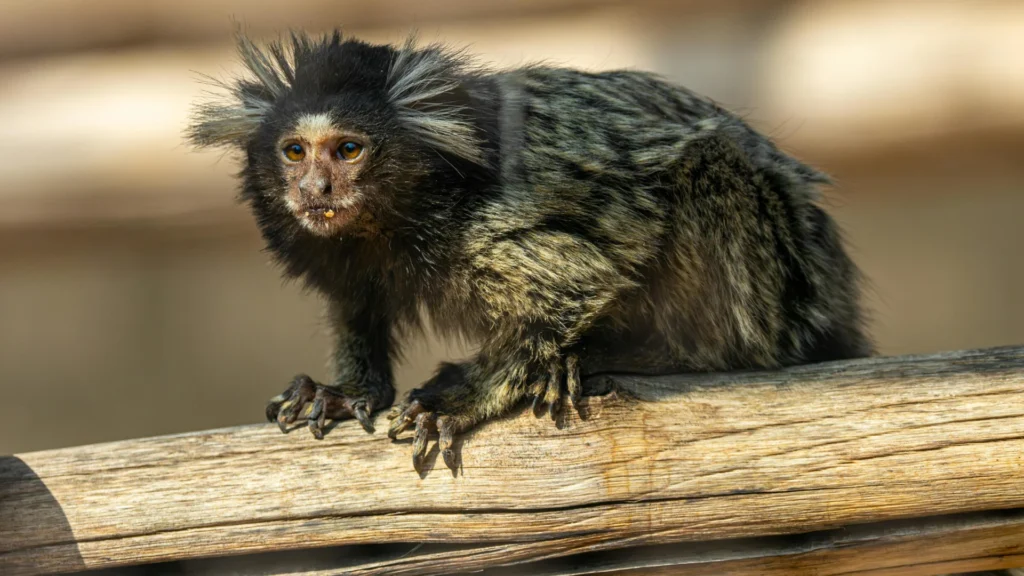
The common marmoset is a charismatic little primate instantly recognized by the white tufts of fur fanning out around its ears. With a body length of 18 to 23 centimeters and a weight of 250 to 350 grams, it is small, nimble, and endlessly energetic.
What sets the common marmoset apart is its cooperative family life. Groups are led by a dominant breeding pair, and older siblings help carry and care for the young, often twins. Their chirps, trills, and whistles form a rich vocal language.
This species thrives in the scrub forests and woodlands of northeastern Brazil, feeding on tree gum, sap, insects, fruit, and the occasional small vertebrate.
As exudate feeders and insect hunters, common marmosets help balance their forest ecosystems. While currently of Least Concern, habitat disruption and capture for the pet trade still pose ongoing risks.
Fun Fact: Common marmosets often give birth to non-identical twins, and the whole family pitches in to raise them.
Cotton-top Tamarin
Scientific Name: Saguinus oedipus
Class: Mammalia
Diet: Omnivore
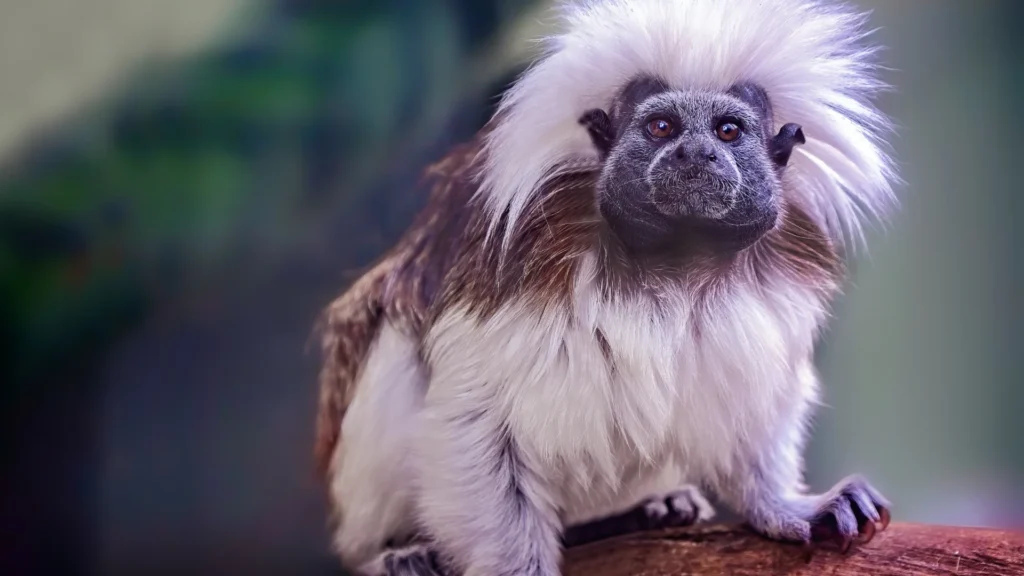
The cotton-top tamarin is impossible to mistake, thanks to the flowing crest of white hair crowning its head — a look often compared to Albert Einstein. Measuring 8.2 to 10.2 inches long and weighing under half a kilogram, it is one of the smallest New World monkeys.
Beyond their striking appearance, cotton-top tamarins are remarkably vocal, using more than 30 distinct sounds to communicate. They live in tight-knit family groups and display cooperative parenting, with fathers doing much of the infant carrying.
This species is found only in the tropical forests of northwestern Colombia, where it forages for fruit, insects, and plant exudates in the lower canopy.
As seed dispersers, cotton-top tamarins help regenerate their shrinking forests. Tragically, decades of deforestation have left them Critically Endangered, with only a few thousand individuals surviving in the wild.
Fun Fact: Scientists have found that cotton-top tamarins use a grammar-like structure in their calls, hinting at surprisingly complex communication.
Golden Lion Tamarin
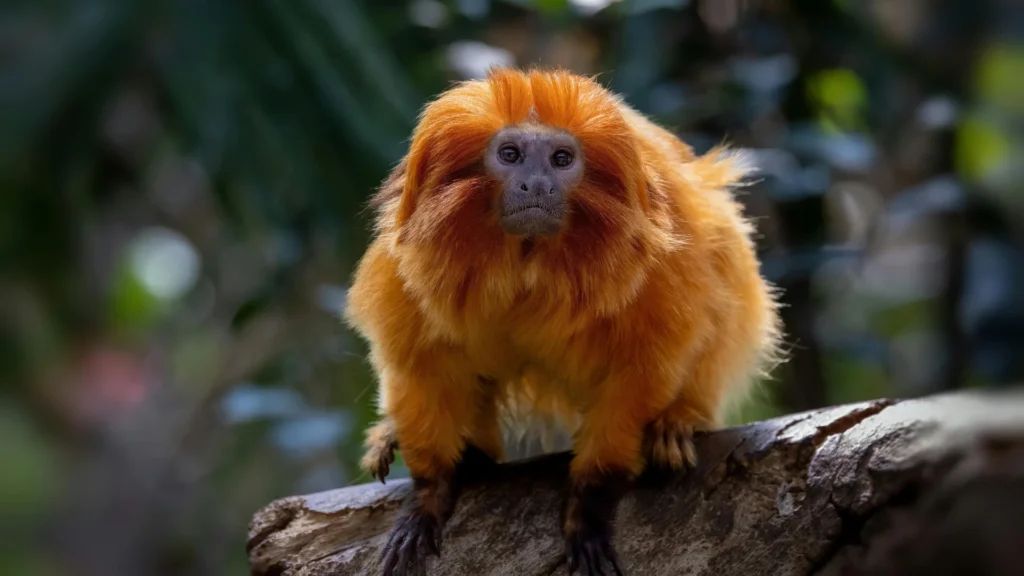
Scientific Name: Leontopithecus rosalia
Class: Mammalia
Diet: Omnivore
The golden lion tamarin is a living flame of the forest, cloaked in luxuriant reddish-gold fur that frames its face like a lion’s mane. Weighing around 620 grams, this dazzling primate is as beautiful as it is delicate.
Moreover, golden lion tamarins are devoted family animals. They live in small groups bonded by grooming and shared parenting, sleeping together in tree hollows for warmth and safety, and communicating through chirps, trills, and whistles.
Endemic to the Atlantic coastal rainforests of southeastern Brazil, they forage for fruit, insects, small invertebrates, and nectar within the dense canopy.
As pollinators and seed dispersers, golden lion tamarins are essential to their fragile habitat. Once on the brink of extinction, intensive conservation and reintroduction programs have helped, but they remain Endangered.
Fun Fact: The golden lion tamarin is a conservation success story — captive breeding and reforestation have brought it back from near-total collapse.
Emperor Tamarin
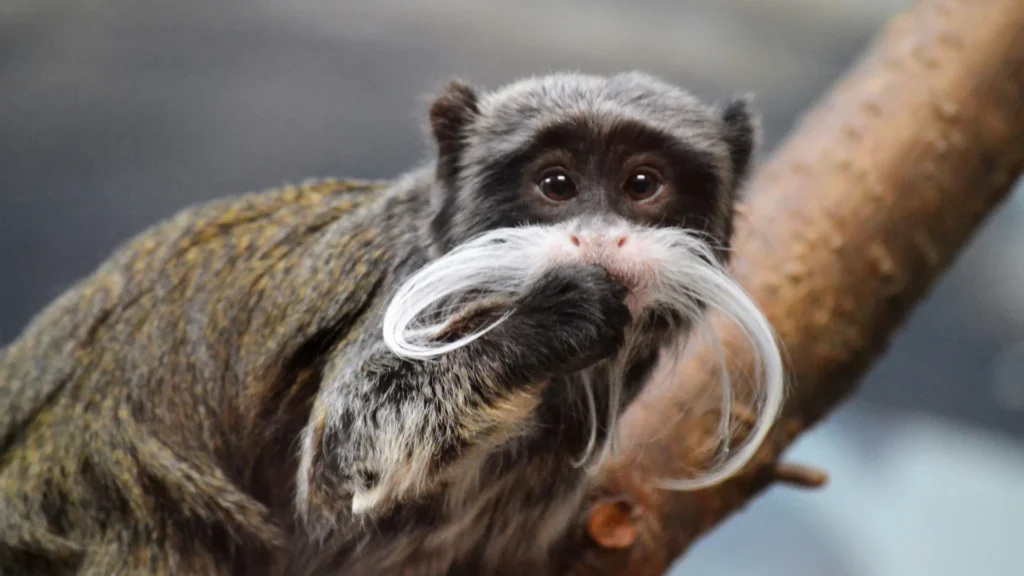
Scientific Name: Saguinus imperator
Class: Mammalia
Diet: Omnivore
The emperor tamarin is famous for its magnificent, sweeping white moustache, said to resemble that of German emperor Wilhelm II. Weighing just 300 to 400 grams, this whiskered primate combines comic charm with genuine agility.
Interestingly, emperor tamarins often form mixed-species groups with other tamarins, sharing lookout duties and foraging routes. This cooperation improves safety and helps them locate food across the forest.
They inhabit the southwestern Amazon Basin of Peru, Bolivia, and Brazil, feeding on fruit, nectar, tree sap, insects, and small frogs in the middle and upper canopy.
As active foragers, emperor tamarins contribute to seed dispersal throughout their range. Currently listed as Least Concern, they still face pressure from ongoing deforestation and habitat fragmentation.
Fun Fact: Both male and female emperor tamarins sport the iconic white moustache from birth.
Squirrel Monkey
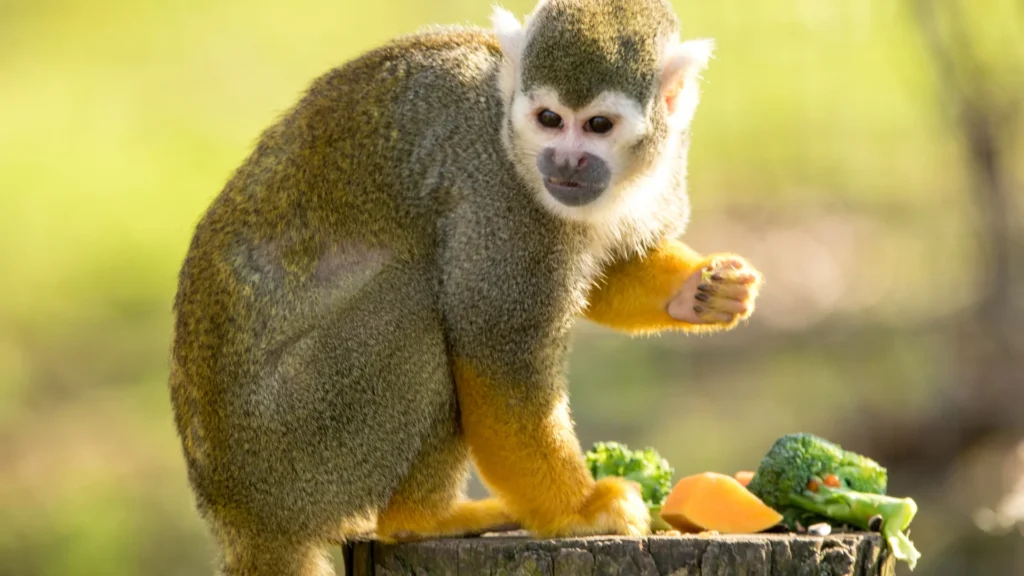
Scientific Name: Saimiri sciureus
Class: Mammalia
Diet: Omnivore
The squirrel monkey is a small, wonderfully agile primate with a slender body, a long non-prehensile tail used for balance, and a distinctive black-and-white “mask” face. Its body measures around 12 inches, with the tail often longer than the body itself.
What sets the squirrel monkey apart is its brain. Relative to body size, it carries one of the largest brains of any primate, fueling its sharp intelligence and lively, acrobatic behavior. These monkeys live in large, noisy troops that can number in the dozens.
Squirrel monkeys inhabit the tropical rainforests of South America, from Bolivia and Venezuela to Brazil, favoring the middle canopy where they hunt insects and gather fruit.
As insect controllers and seed dispersers, they help maintain forest balance. While generally of Least Concern, deforestation and the pet trade threaten certain populations.
Fun Fact: Squirrel monkeys sometimes rub urine on their hands and feet — a behavior thought to help with scent-marking and grip.
Silvery Marmoset
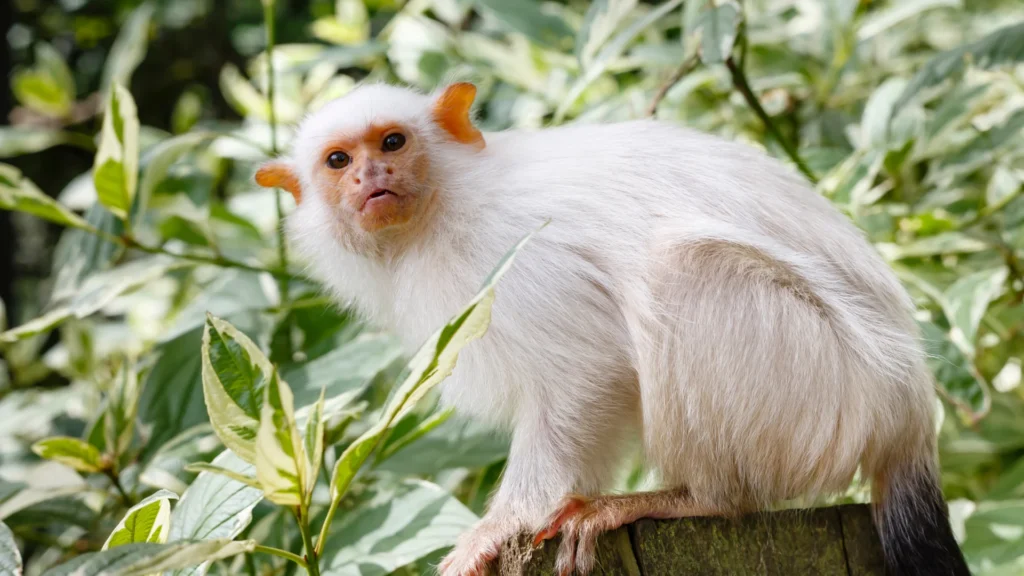
Scientific Name: Mico argentatus
Class: Mammalia
Diet: Omnivore
The silvery marmoset is a strikingly elegant primate, draped in pale, silvery-white fur that contrasts with its dark, hairless face and tail. Measuring 18 to 25 centimeters in body length and weighing 300 to 400 grams, it moves through the canopy with quick, darting grace.
Moreover, silvery marmosets are highly social, living in cooperative family groups where members share food, grooming, and infant care. They communicate using a range of chirps and high-frequency calls.
They are found in the eastern Amazon rainforest of Brazil, where they feed on tree sap, gum, fruit, and insects, using specialized teeth to tap into bark.
As exudate feeders, silvery marmosets influence the health of the trees they depend on. Though currently of Least Concern, expanding deforestation continues to shrink their forest home.
Fun Fact: The silvery marmoset’s ghostly coat makes it look almost luminous in the dappled light of the rainforest canopy.
Talapoin
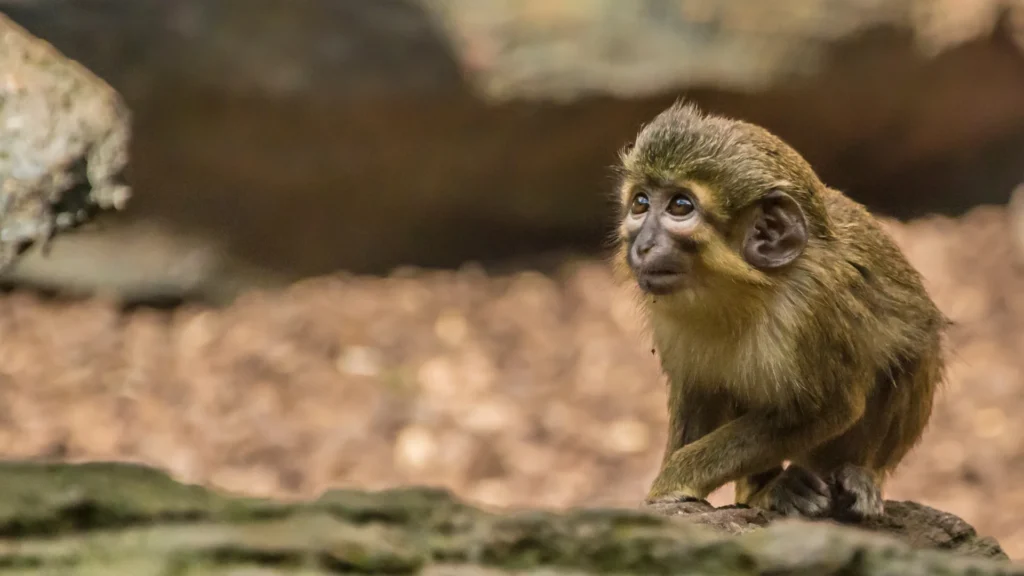
Scientific Name: Miopithecus talapoin
Class: Mammalia
Diet: Omnivore
The talapoin is the smallest monkey in Africa and the only Old World monkey on this list. Distinguished by its greenish-tinged fur, large eyes, and rounded face, it weighs roughly 1 to 1.4 kilograms — tiny by Old World standards.
Interestingly, talapoins are strong swimmers, unlike most monkeys, and will readily leap into water to escape predators. They live in large, active troops and sleep in trees overhanging rivers for added protection.
Talapoins inhabit the swampy forests and riverbanks of west-central Africa, including Gabon, Congo, and Cameroon, feeding on fruit, seeds, insects, and aquatic plants.
As seed dispersers along waterways, talapoins help sustain their riverside forests. Currently of Least Concern, they nonetheless face threats from habitat clearance and bushmeat hunting.
Fun Fact: Talapoins are among the few monkeys that will dive into rivers and swim underwater to flee danger.
Night Monkey
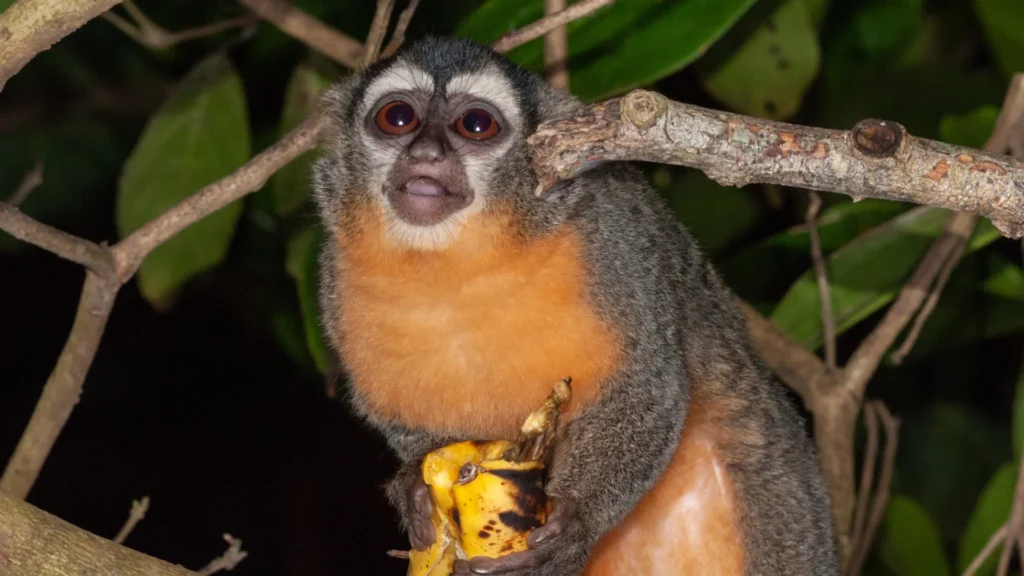
Scientific Name: Aotus trivirgatus
Class: Mammalia
Diet: Omnivore
The night monkey, also called the owl monkey, is the world’s only truly nocturnal monkey. Its enormous brown eyes, adapted for seeing in near-darkness, dominate a soft, rounded face framed by three dark stripes.
Beyond their nocturnal lifestyle, night monkeys are famously monogamous, forming lifelong pair bonds. Fathers take the lead in carrying and caring for infants, and the family communicates through low hoots and gentle calls under the cover of night.
Night monkeys inhabit the forests of South America, from Panama to the Amazon Basin, foraging after dark for fruit, insects, nectar, and leaves.
As nocturnal seed dispersers, they occupy an ecological niche few primates fill. While many populations are of Least Concern, deforestation and the illegal pet trade threaten several species.
Fun Fact: Night monkeys lack the reflective eye layer most nocturnal animals have, relying instead on unusually large eyes to gather light.
Dusky Titi
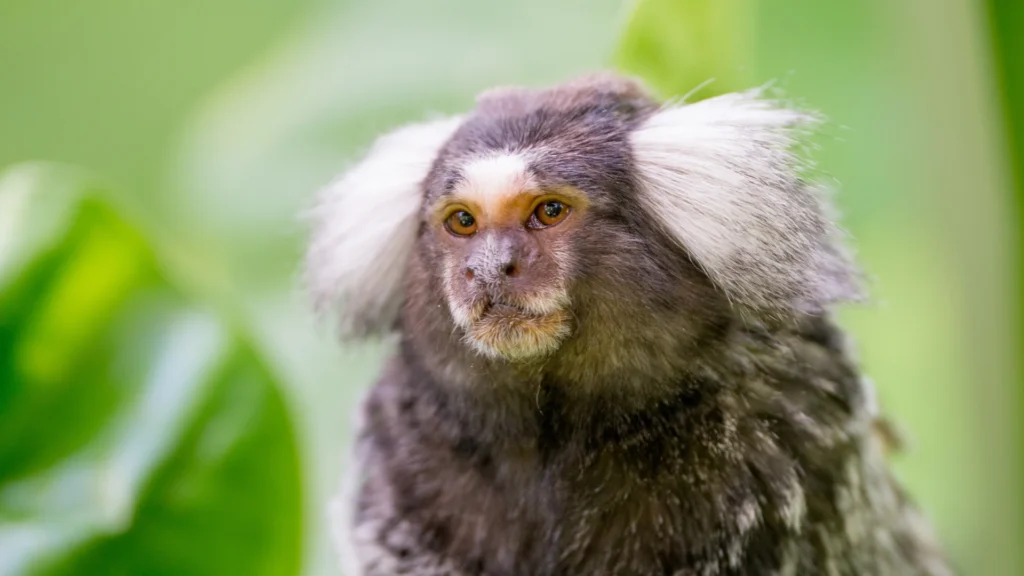
Scientific Name: Plecturocebus moloch
Class: Mammalia
Diet: Herbivore
The dusky titi is a gentle, medium-small monkey with lush, grizzled brown fur that provides excellent camouflage among the foliage. Weighing roughly 1 to 1.3 kilograms, it has a long, fluffy tail that is not prehensile but essential for balance.
What sets the dusky titi apart is its deep pair bond. Mated couples are inseparable, often sitting side by side with their tails entwined a touching behavior known as “tail-twining” that strengthens their bond.
Dusky titis live in the tropical forests of central Brazil, near the Amazon and Orinoco river basins, feeding primarily on fruit and leaves.
As dedicated frugivores, titis are important seed dispersers within their habitat. Though currently of Least Concern, ongoing deforestation poses a long-term threat to their populations.
Fun Fact: Dusky titi pairs perform loud “duet” calls each morning to announce their territory and reinforce their bond.
Red-handed Tamarin
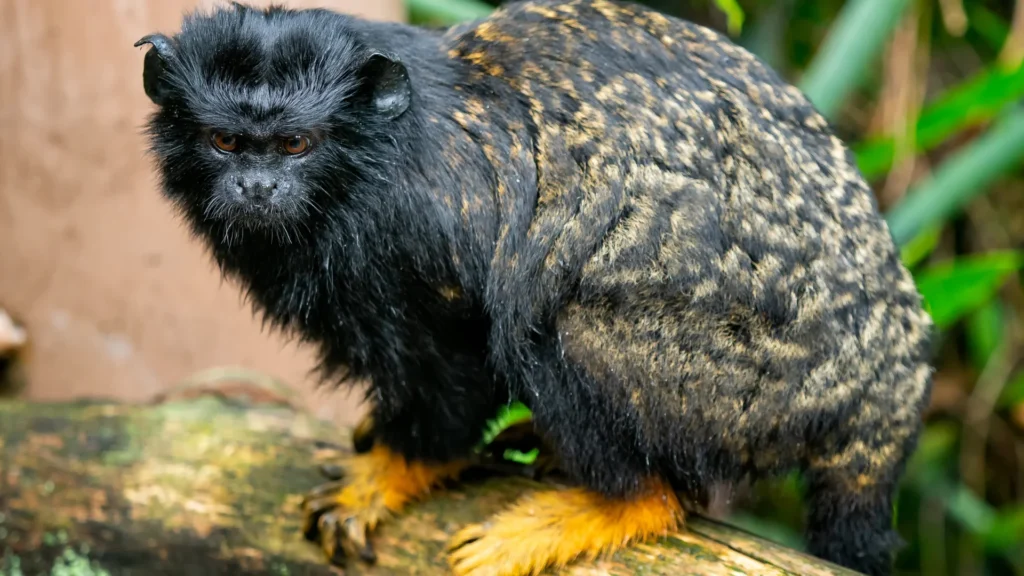
Scientific Name: Saguinus midas
Class: Mammalia
Diet: Omnivore
The red-handed tamarin, also known as the golden-handed tamarin, is a sleek black primate with vivid reddish-orange fur on its hands and feet. Weighing around 400 to 550 grams, it is a nimble and acrobatic climber.
Moreover, red-handed tamarins are highly cooperative, living in family groups where all members help raise the young. They are known to form mixed-species foraging bands, sometimes alongside capuchins, to boost their safety.
They inhabit the rainforests north of the Amazon River, across Brazil, Guyana, Suriname, and French Guiana, feeding on fruit, insects, nectar, and tree sap.
As agile foragers, red-handed tamarins aid seed dispersal across their range. Listed as Least Concern, they still depend on intact forest and face pressure from habitat loss.
Fun Fact: Red-handed tamarins can leap impressive distances between trees, using their bright-handed grip to land with precision.
Goeldi’s Monkey
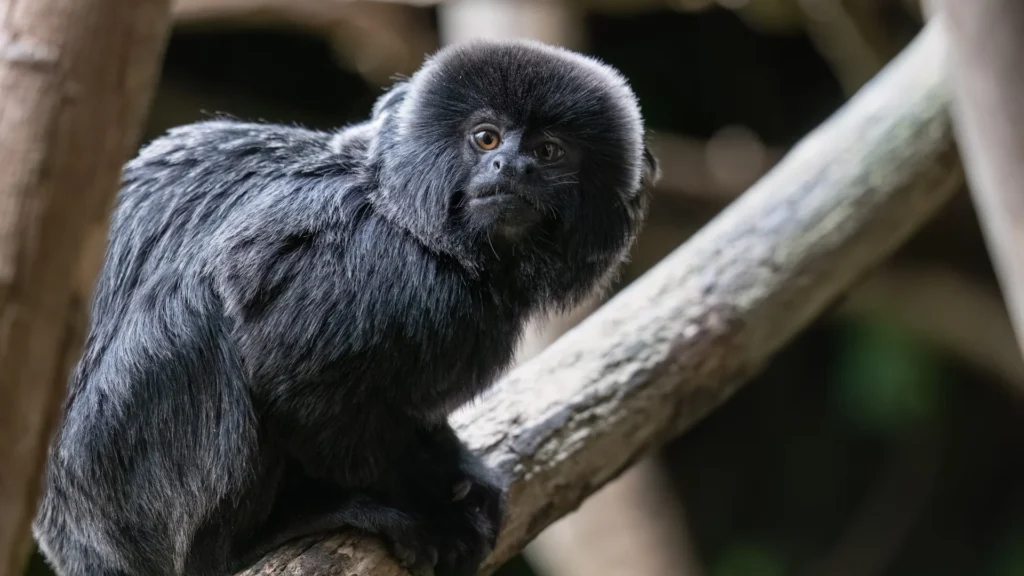
Scientific Name: Callimico goeldii
Class: Mammalia
Diet: Omnivore
Goeldi’s monkey is a rare, dark-furred primate with a distinctive cape-like mane around its head and shoulders. Weighing roughly 350 to 550 grams, it bridges the gap between marmosets and larger New World monkeys.
Interestingly, Goeldi’s monkeys have a special fondness for fungi, which forms a significant part of their diet during the dry season — an unusual trait among primates. They live in small, close-knit groups that stay in constant vocal contact.
This elusive species inhabits the dense understory of the upper Amazon Basin, in Bolivia, Brazil, Peru, and Colombia, feeding on fruit, insects, fungi, and small vertebrates.
As fungi and seed dispersers, Goeldi’s monkeys play a subtle but important ecological role. They are listed as Vulnerable, with habitat fragmentation their greatest threat.
Fun Fact: Goeldi’s monkey is one of the few primates that relies heavily on mushrooms and fungi to survive the dry season.
Geoffroy’s Tamarin
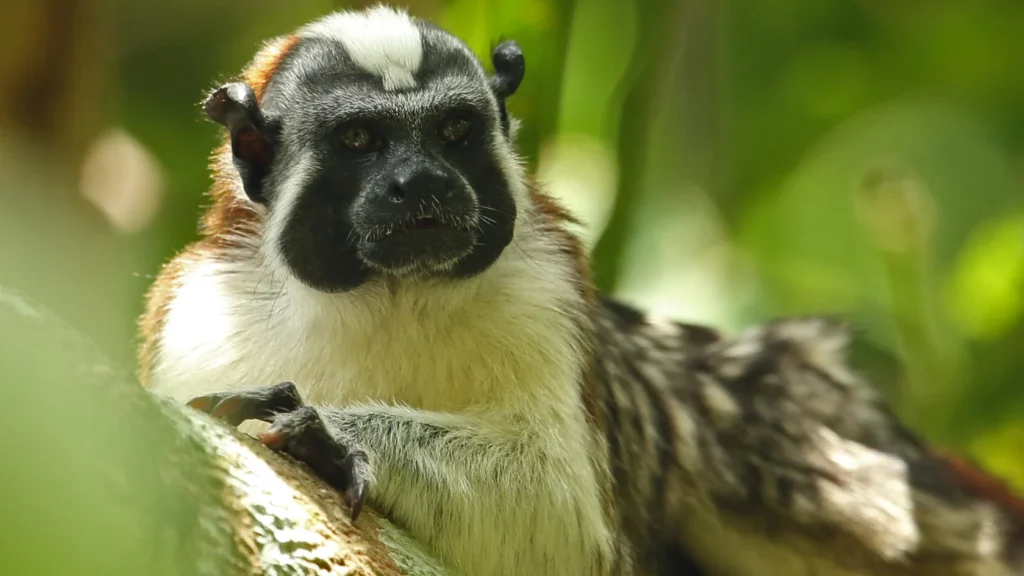
Scientific Name: Saguinus geoffroyi
Class: Mammalia
Diet: Omnivore
Geoffroy’s tamarin is a small, striking primate with a mix of black and white fur, a reddish nape, and a distinctive triangular crest of pale hair on its head. Weighing around 500 grams, it is quick, alert, and highly social.
Beyond their lively nature, Geoffroy’s tamarins live in cooperative groups and communicate through bird-like whistles and trills. They are agile leapers, darting through the understory in search of food.
They inhabit the tropical forests of Panama and northwestern Colombia, feeding on insects, fruit, plant exudates, and occasionally small vertebrates.
As insect predators and seed dispersers, Geoffroy’s tamarins help sustain their forest ecosystems. Currently of Least Concern, they remain sensitive to deforestation and habitat loss.
Fun Fact: Geoffroy’s tamarins often forage low in the forest, making them one of the easier tamarins to spot in the wild.
Capuchin Monkey
Scientific Name: Cebus capucinus
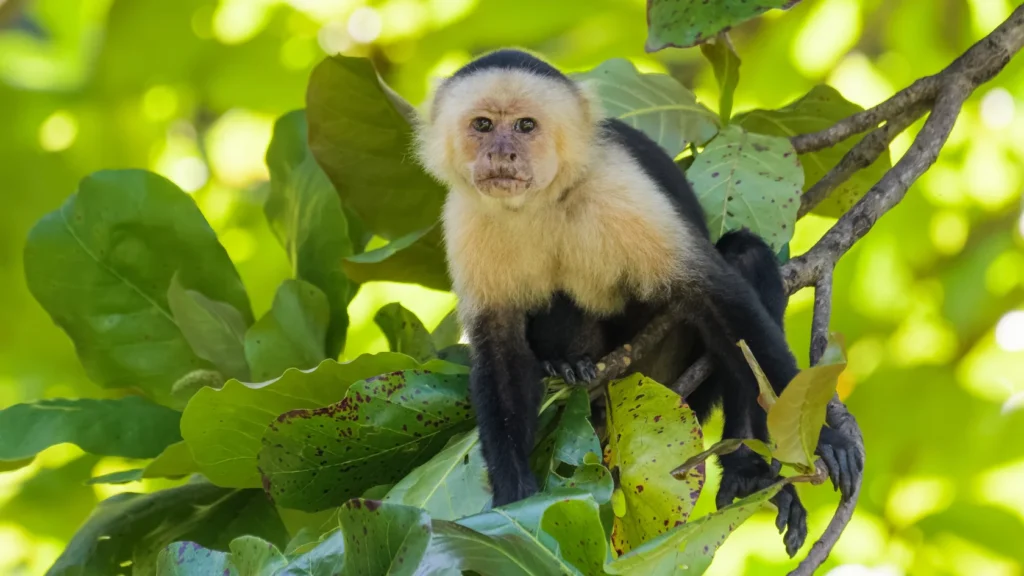
Class: Mammalia
Diet: Omnivore
The capuchin monkey is the largest primate on this list, yet still counts as a small monkey, with adults weighing between 1.3 and 4.8 kilograms. Named for the dark “cap” of fur on its head, it is famous for its remarkable intelligence.
What sets capuchins apart is their advanced tool use. They crack open nuts with stones, use sticks to extract food, and even rub crushed plants on their fur as insect repellent behaviors that reveal impressive problem-solving skills.
Capuchins range widely across Central and South America, from Honduras to Brazil, thriving in rainforests, dry forests, and mangroves while feeding on fruit, insects, small vertebrates, and seeds.
As intelligent, adaptable foragers, capuchins are key seed dispersers. Most populations are of Least Concern, though habitat loss and capture for the pet trade affect certain species.
Fun Fact: Capuchins are so clever that they have been trained to assist people with disabilities by performing simple daily tasks.
Read: Animals Like Mongoose
Read: Animals That Are Skinny
Read: Weakest Animals in The World
Read: Snakes With Triangular Heads
Read: Chubby Animals in The World
Frequently Asked Questions
Conclusion
From the palm-sized pygmy marmoset to the tool-wielding capuchin, small monkey breeds showcase the astonishing diversity of the primate world. Each species has evolved unique adaptations swimming talapoins, moustached emperor tamarins, night-roaming owl monkeys that allow it to flourish in its own corner of the forest.



One Comment