
Top 15 Animals With Bushy Tails in The World (With Images)
Did you know that a bushy tail can serve as a blanket, a balancing pole, a signal flag, and even a scarf against freezing cold? Across forests, deserts, and snowy tundra, animals with bushy tails have turned this fluffy feature into a powerful survival tool. Far more than adorable decoration, these thick, furry tails help creatures leap, stay warm, communicate, and escape predators.
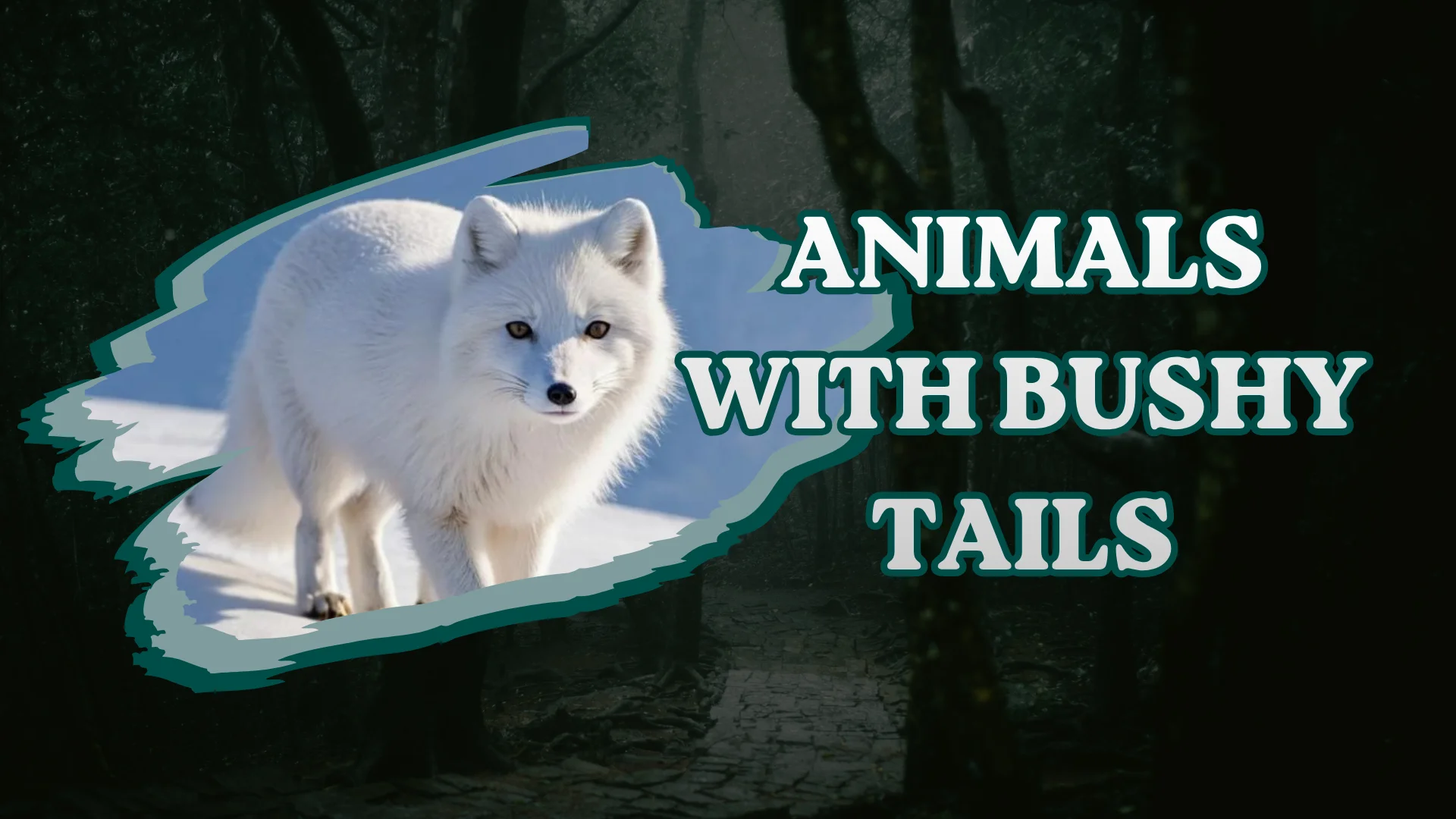
From fiery red foxes to fluffy red pandas, bushy-tailed animals showcase the endless creativity of evolution. In this guide, we’ll explore the top 15 animals with bushy tails, uncovering how they use their remarkable tails and why these charming species deserve our attention and protection.
List of Animals With Bushy Tails
| Rank | Animal | Scientific Name |
|---|---|---|
| 1 | Red Fox | Vulpes vulpes |
| 2 | Gray Squirrel | Sciurus carolinensis |
| 3 | Red Panda | Ailurus fulgens |
| 4 | Arctic Fox | Vulpes lagopus |
| 5 | Raccoon | Procyon lotor |
| 6 | Striped Skunk | Mephitis mephitis |
| 7 | Ring-tailed Lemur | Lemur catta |
| 8 | Chipmunk | Tamias striatus |
| 9 | Coyote | Canis latrans |
| 10 | Gray Wolf | Canis lupus |
| 11 | Pine Marten | Martes martes |
| 12 | Giant Anteater | Myrmecophaga tridactyla |
| 13 | Ringtail | Bassariscus astutus |
| 14 | Fennec Fox | Vulpes zerda |
| 15 | Snow Leopard | Panthera uncia |
Red Fox
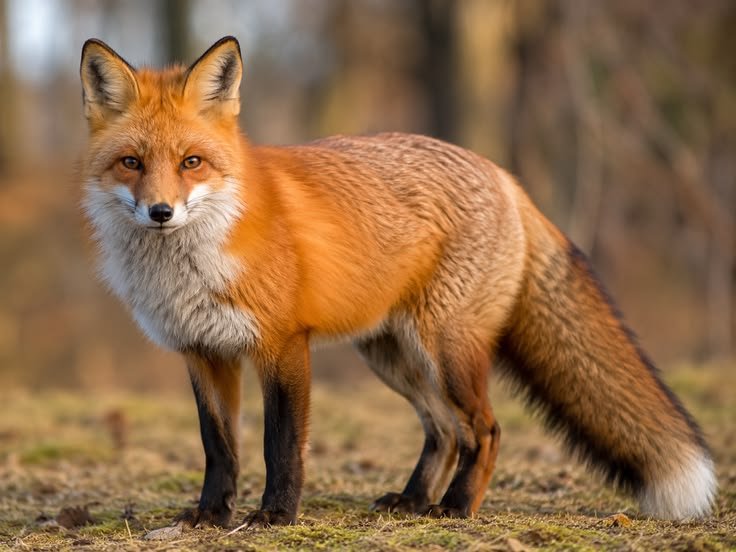
Scientific Name: Vulpes vulpes
Class: Mammalia
Diet: Omnivore
The red fox is famous for its long, luxuriant bushy tail, called a “brush,” often tipped in white. This thick tail makes up about a third of its total length and is one of its most striking features.
Interestingly, the red fox uses its bushy tail for warmth, balance, and communication. It wraps the fluffy brush around its body like a blanket in the cold and uses it as a rudder while running and leaping.
Red foxes inhabit an enormous range across the Northern Hemisphere, thriving in forests, grasslands, farmland, and even cities, feeding on small mammals, birds, fruit, and insects.
As adaptable predators, red foxes help control rodent populations. Widespread and thriving, they are of Least Concern.
Fun Fact: A red fox uses its bushy tail as a warm cover in winter and as a signal to communicate with other foxes.
Gray Squirrel
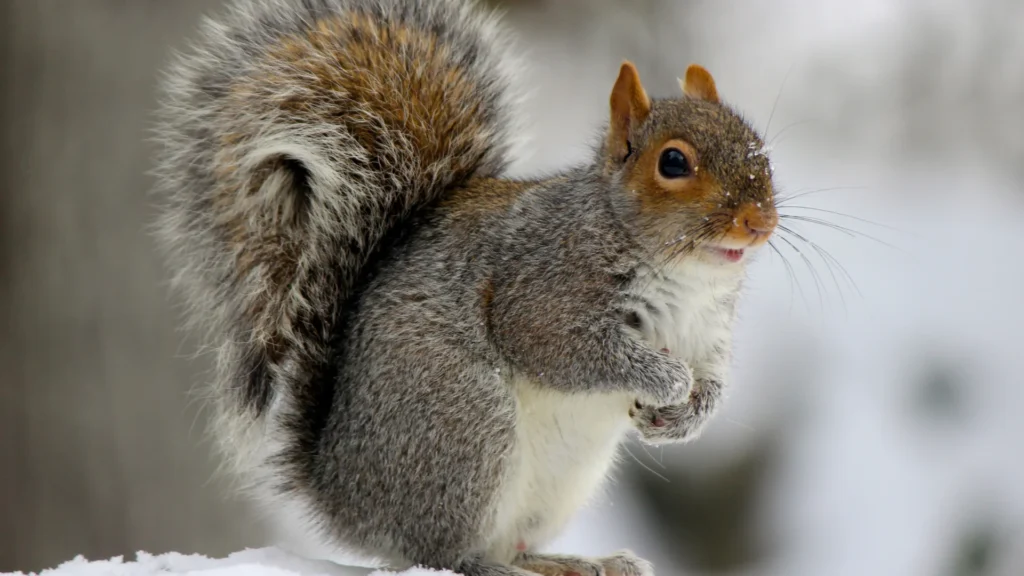
Scientific Name: Sciurus carolinensis
Class: Mammalia
Diet: Omnivore
The gray squirrel is perhaps the most famous bushy-tailed animal, instantly recognized by its big, fluffy tail. The tail can be nearly as long as its body and is rarely still.
Moreover, the squirrel’s bushy tail is a true multi-tool. It acts as a counterbalance when leaping between branches, a warm wrap in winter, a parachute during falls, and an alarm signal to other squirrels.
Gray squirrels inhabit forests, woodlands, and city parks across much of the world, feeding on nuts, seeds, fruit, and fungi.
As seed hoarders, squirrels accidentally plant countless trees by forgetting buried caches. Most populations thrive and are of Least Concern.
Fun Fact: The name “Sciurus” comes from Greek words meaning “shadow tail,” a nod to the squirrel’s famous bushy tail.
Red Panda
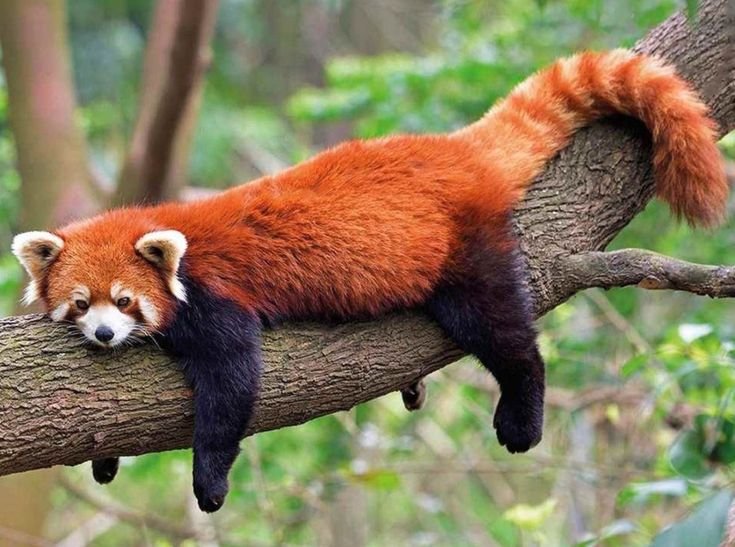
Scientific Name: Ailurus fulgens
Class: Mammalia
Diet: Herbivore
The red panda has one of the most beautiful bushy tails in the animal kingdom, thick and ringed with red and black bands. The long, fluffy tail nearly matches the length of its body.
Interestingly, the red panda relies on its bushy tail for balance while climbing and moving through the treetops. In cold mountain nights, it wraps the tail around itself like a cozy blanket.
Red pandas inhabit the temperate forests of the Himalayas and southwestern China, feeding mainly on bamboo, along with fruit and insects.
As bamboo eaters, red pandas are part of the delicate balance of their forest homes. Habitat loss and poaching have made them Endangered.
Fun Fact: The red panda’s ringed tail can be almost as long as its entire body, helping it balance high in the trees.
Arctic Fox
Scientific Name: Vulpes lagopus
Class: Mammalia
Diet: Omnivore
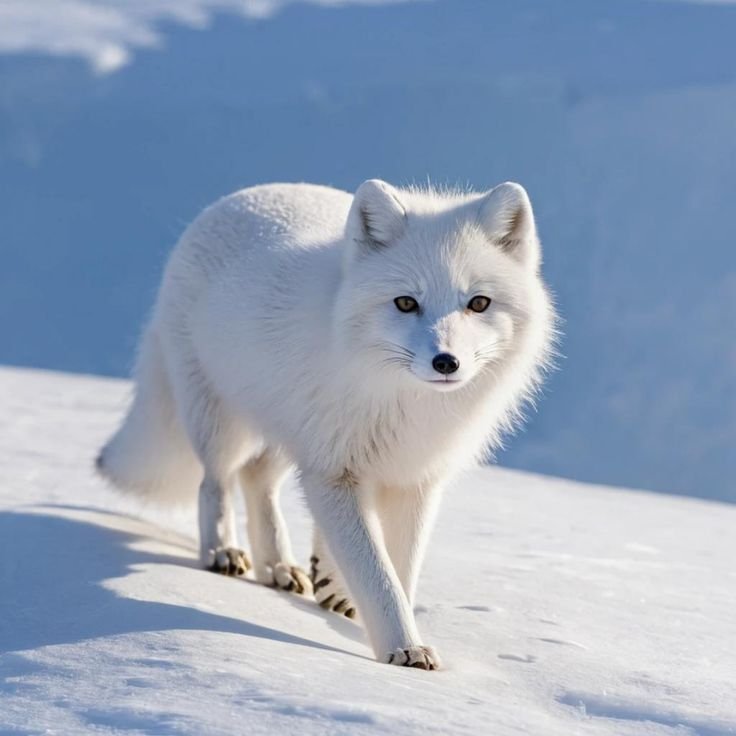
The arctic fox has an exceptionally thick, bushy tail perfectly designed for life in the frozen north. Wrapped in dense fur, the tail is a vital survival tool in sub-zero temperatures.
Moreover, the arctic fox curls its bushy tail around its face and body to cover its nose and ears, dramatically reducing heat loss. The tail acts as a built-in scarf against the brutal Arctic cold.
Arctic foxes inhabit the tundra and coastal regions of the Arctic, feeding on small mammals, birds, eggs, and carrion, changing their diet with the seasons.
As opportunistic predators and scavengers, arctic foxes help balance tundra ecosystems. Currently of Least Concern, they are sensitive to climate change.
Fun Fact: An arctic fox can survive temperatures as low as -50°C, partly thanks to its warm, bushy tail.
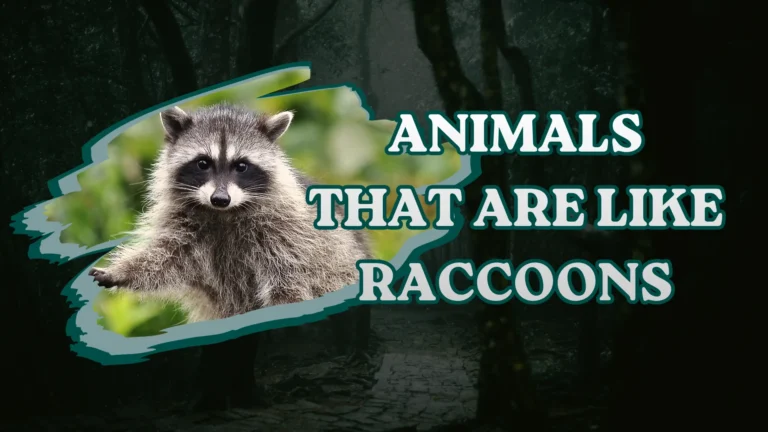
Raccoon
Scientific Name: Procyon lotor
Class: Mammalia
Diet: Omnivore
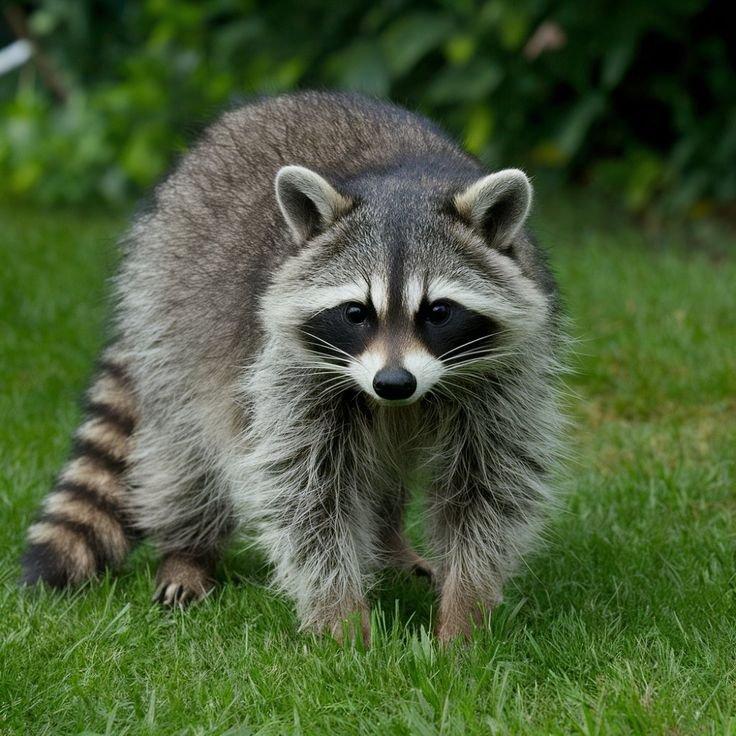
The raccoon sports an impressively fluffy tail marked with five to seven distinctive dark rings and a dark tip. This ringed, bushy tail is one of its most recognizable traits.
Interestingly, the raccoon’s bushy tail helps with balance and warmth. It aids stability when climbing and descending trees, and provides insulation during cold weather and while sleeping.
Raccoons inhabit forests, wetlands, and urban areas across North America and beyond, eating a remarkably varied diet of fruit, insects, eggs, and scraps.
As opportunistic omnivores, raccoons help disperse seeds and control pests. Highly adaptable, they are widespread and of Least Concern.
Fun Fact: The raccoon’s ringed, bushy tail has earned it the playful nickname “trash panda.”
Striped Skunk
Scientific Name: Mephitis mephitis
Class: Mammalia
Diet: Omnivore
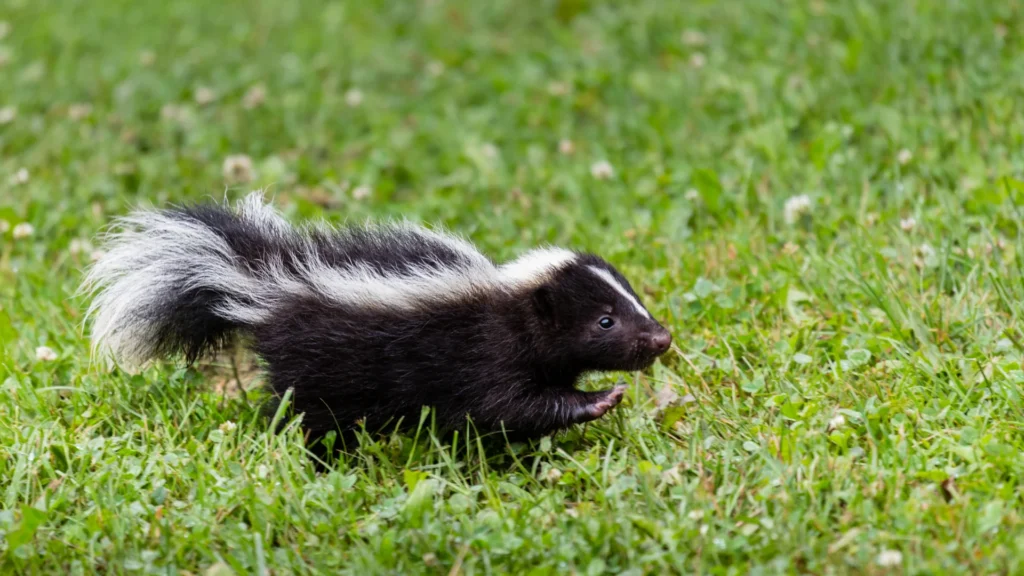
The striped skunk carries a large, bushy tail that it raises dramatically as a warning to predators. Combined with its bold black-and-white markings, the fluffy tail is a clear “stay away” signal.
Moreover, the skunk’s bushy tail plays a starring role in its famous defense. Before spraying its notorious scent, it lifts and fluffs its tail, giving a final visual warning to anything that dares come closer.
Striped skunks inhabit forests, grasslands, and suburban areas across North America, feeding on insects, small animals, fruit, and plants.
As insect and rodent controllers, skunks provide natural pest control. Widespread and adaptable, they are of Least Concern.
Fun Fact: A skunk can spray its powerful scent accurately up to about three meters when it feels threatened.
Ring-tailed Lemur
Scientific Name: Lemur catta
Class: Mammalia
Diet: Omnivore
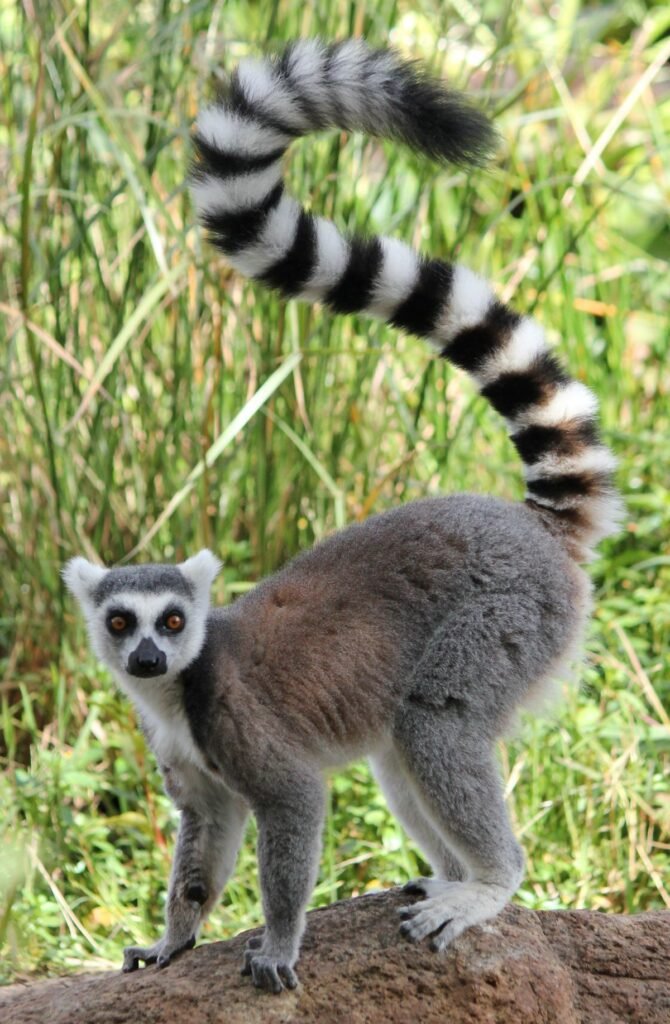
The ring-tailed lemur has a long, bushy tail boldly striped with black-and-white rings. Longer than its own body, the tail is one of the most recognizable in the primate world.
Interestingly, the ring-tailed lemur uses its bushy tail for communication and balance. Troops hold their tails high like flags to stay together, and males wave scent-soaked tails in “stink fights” for dominance.
Ring-tailed lemurs inhabit the dry forests and scrublands of southern Madagascar, feeding on fruit, leaves, flowers, and insects.
As seed dispersers, lemurs are essential to their unique island ecosystem. Habitat loss and hunting have made them Endangered.
Fun Fact: A ring-tailed lemur’s tail has 13 alternating black-and-white rings, unique among lemurs.
Chipmunk
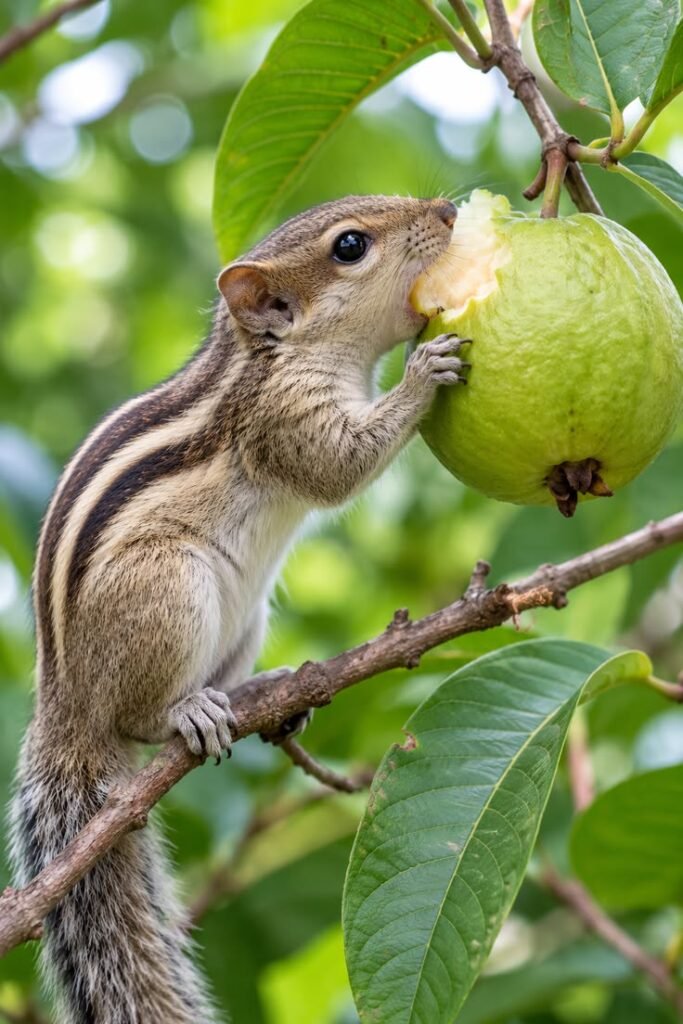
Scientific Name: Tamias striatus
Class: Mammalia
Diet: Omnivore
The chipmunk is a small, striped rodent with a surprisingly bushy tail that it often holds upright as it scurries about. The fluffy tail adds to its lively, energetic appearance.
Moreover, the chipmunk’s bushy tail helps it balance while climbing and darting across the ground. It also serves as a signal, flicking to communicate alarm or excitement to other chipmunks.
Chipmunks inhabit forests, woodlands, and gardens across North America and parts of Asia, feeding on seeds, nuts, fruit, and insects.
As seed gatherers, chipmunks help disperse plants and seeds. Widespread and adaptable, they are of Least Concern.
Fun Fact: A chipmunk can stuff its cheek pouches with food until they swell to three times the size of its head.
Coyote
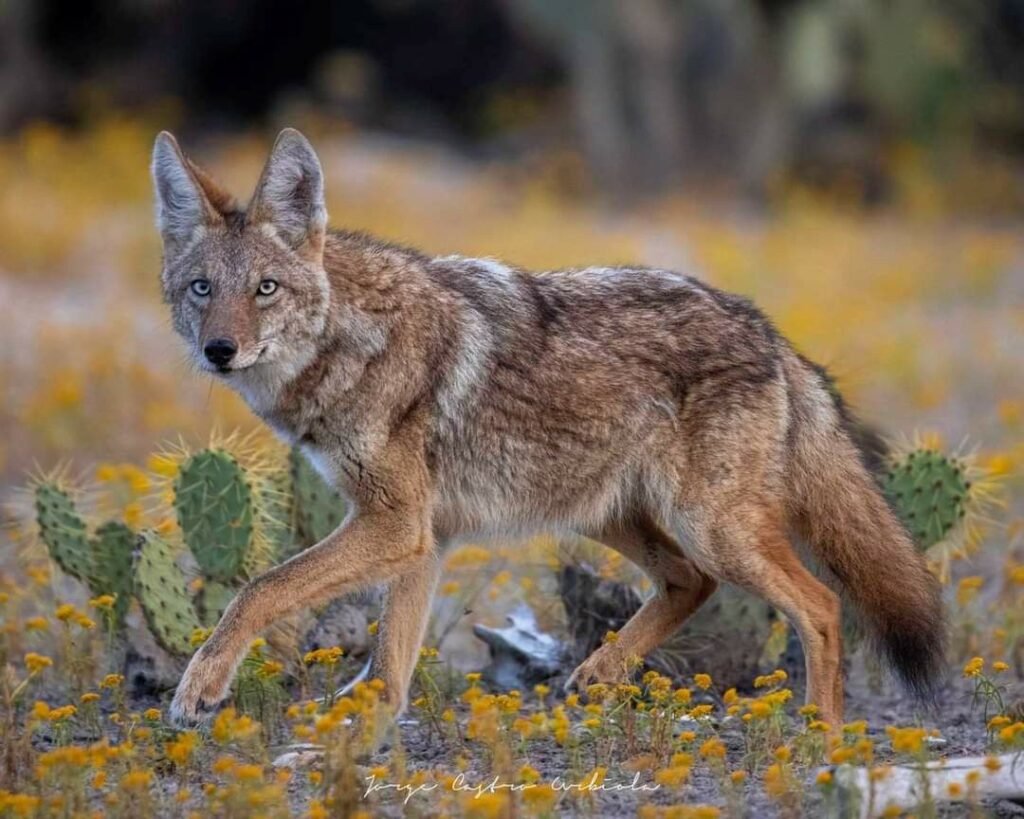
Scientific Name: Canis latrans
Class: Mammalia
Diet: Omnivore
The coyote has a thick, bushy tail that it uses for balance, warmth, and communication. Often tipped in black, the fluffy tail is a distinctive part of its lean, agile silhouette.
Interestingly, the coyote’s tail position reveals its mood. A raised tail can signal aggression or confidence, while a lowered, tucked tail shows submission or fear during social encounters.
Coyotes inhabit forests, deserts, grasslands, and increasingly cities across North America, feeding on small mammals, fruit, insects, and carrion.
As adaptable predators, coyotes help control rodent and small-mammal populations. Highly successful, they are of Least Concern.
Fun Fact: Coyotes are famous for their howls and yips, using their voices to communicate across long distances.
Gray Wolf

Scientific Name: Canis lupus
Class: Mammalia
Diet: Carnivore
The gray wolf has a thick, bushy tail that plays an important role in both survival and social life. Well-furred and expressive, the tail helps the wolf endure harsh, cold environments.
Moreover, the wolf’s bushy tail is a key communication tool within the pack. Its position signals rank and mood — a high tail shows dominance, while a low or tucked tail signals submission.
Gray wolves inhabit forests, tundra, and mountains across North America, Europe, and Asia, preying on deer, elk, and other large mammals.
As apex predators, wolves shape entire ecosystems by controlling prey. Recovering in some regions, they remain threatened by hunting elsewhere.
Fun Fact: Wolves use their bushy tails, along with body posture and howls, to maintain order within the pack.
Pine Marten

Scientific Name: Martes martes
Class: Mammalia
Diet: Omnivore
The pine marten is a sleek, tree-dwelling mammal with a long, bushy tail that aids its acrobatic lifestyle. The fluffy tail becomes especially thick and full during the colder months.
Interestingly, the pine marten relies on its bushy tail for balance as it leaps and climbs through the forest canopy. The tail acts as a counterweight during its swift, graceful movements among the branches.
Pine martens inhabit the woodlands and forests of Europe and parts of Asia, feeding on small mammals, birds, insects, fruit, and eggs.
As agile predators, pine martens help control rodent and bird populations. Widespread in many areas, they are of Least Concern.
Fun Fact: Pine martens are one of the few predators skilled enough to hunt agile squirrels through the treetops.
Giant Anteater
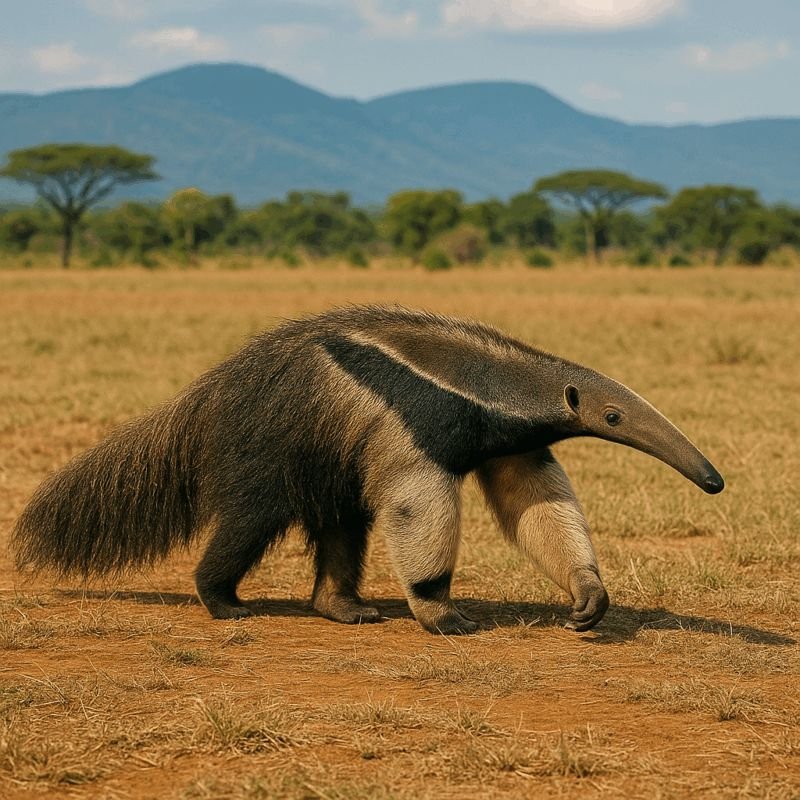
Scientific Name: Myrmecophaga tridactyla
Class: Mammalia
Diet: Insectivore
The giant anteater has an enormous, shaggy, bushy tail nearly as long as its body. The thick, hairy tail adds to its unmistakable, elongated silhouette.
Moreover, the anteater uses its huge bushy tail as a cozy blanket. It curls up and drapes the fluffy tail over its body for warmth and camouflage while sleeping in the open.
Giant anteaters inhabit the grasslands, savannas, and rainforests of Central and South America, feeding on ants and termites.
As specialized insect-eaters, anteaters help control ant and termite populations. Habitat loss and road accidents have made them Vulnerable.
Fun Fact: A giant anteater’s tail is so large and bushy it can completely cover the animal’s body like a rug.
Ringtail
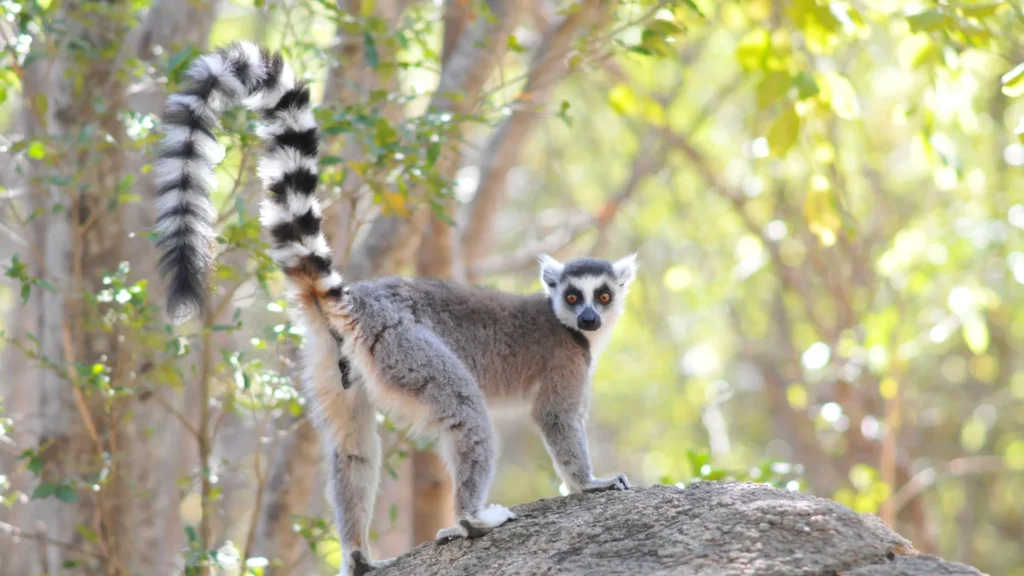
Scientific Name: Bassariscus astutus
Class: Mammalia
Diet: Omnivore
The ringtail is a small, agile mammal famous for its long, bushy tail banded with bold black-and-white rings. Often longer than its body, the fluffy tail is its signature feature.
Interestingly, the ringtail uses its bushy tail for balance as it navigates rocky cliffs and trees. The tail helps it perform remarkable acrobatic feats, including turning around in tight, narrow spaces.
Ringtails inhabit the rocky deserts, canyons, and woodlands of North America, feeding on insects, small animals, and fruit.
As nocturnal predators, ringtails help control insect and rodent populations. Widespread in their range, they are of Least Concern.
Fun Fact: The ringtail can rotate its hind feet nearly 180 degrees, allowing it to climb down steep surfaces headfirst.
Fennec Fox
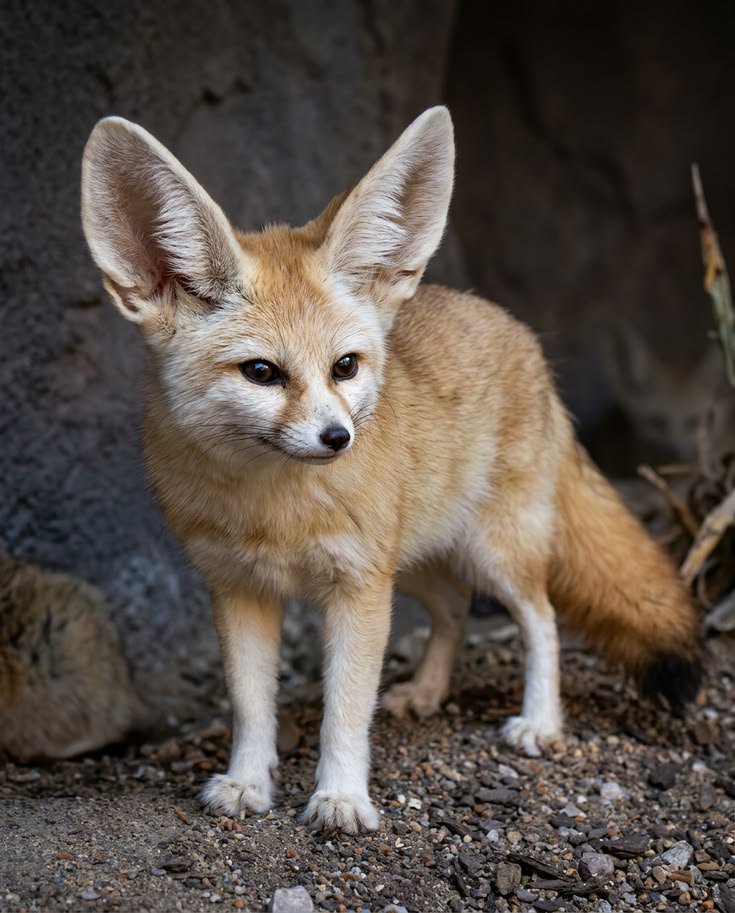
Scientific Name: Vulpes zerda
Class: Mammalia
Diet: Omnivore
The fennec fox is the smallest fox in the world, with an adorably bushy, black-tipped tail. Despite its desert home, the fluffy tail plays an important role in its survival.
Moreover, the fennec fox uses its bushy tail for balance while running and changing direction on loose desert sand. At night, when temperatures drop, the tail also helps keep it warm.
Fennec foxes inhabit the deserts and sandy regions of North Africa, feeding on insects, small animals, eggs, and plants.
As small desert predators, fennec foxes help control insect and rodent populations. Currently of Least Concern, they are sometimes threatened by the pet trade.
Fun Fact: The fennec fox’s huge ears release body heat and can detect prey moving underground in the desert sand.
Snow Leopard
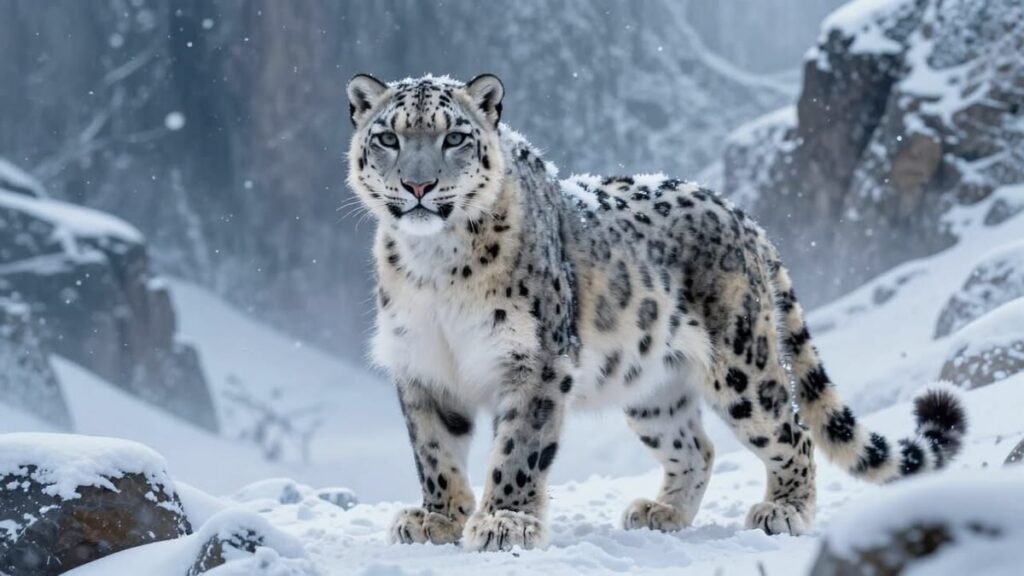
Scientific Name: Panthera uncia
Class: Mammalia
Diet: Carnivore
The snow leopard, the “ghost of the mountains,” has a thick, exceptionally bushy tail nearly as long as its body. In its frozen mountain home, this luxurious tail is essential to survival.
Interestingly, the snow leopard relies on its bushy tail for balance while leaping and climbing across steep, rocky slopes. It also wraps the furry tail around its body like a scarf to stay warm.
Snow leopards inhabit the rugged mountains of Central and South Asia, hunting wild sheep, goats, and smaller mammals.
As apex predators, snow leopards keep mountain ecosystems in balance. Poaching, habitat loss, and climate change have made them Vulnerable.
Fun Fact: A snow leopard’s thick, bushy tail doubles as a built-in blanket, wrapping around its face in freezing weather.
Read: Most Shy Animals in The World
Read: Stubborn Animals in The World
Read: Mischievous Animals in The World
Read: Most Docile Animals in the World
Read: Animals That Eat Oranges
Frequently Asked Questions
Conclusion
From the fiery brush of a red fox to the snow leopard’s blanket-like tail, animals with bushy tails reveal just how versatile a simple fluffy tail can be. Each species whether a balancing squirrel, a communicating wolf, or a heat-conserving arctic fox has turned its bushy tail into a vital tool for survival, warmth, and connection. These remarkable adaptations remind us of the endless ingenuity of the natural world.

One Comment