
Top 20 Animals With Sharp Teeth in The World (With Images)
Did you know that a single great white shark can carry over 300 razor-sharp, serrated teeth at once, replacing them throughout its life? In the animal kingdom, sharp teeth are among nature’s deadliest tools designed to grip, pierce, slice, and crush. From bone-crunching hyenas to fang-toothed vipers, these fearsome dental weapons reveal how predators have evolved to hunt, defend, and survive.
Far from mere menace, sharp teeth play a vital role in keeping ecosystems in balance. In this guide, we’ll explore the top 20 animals with sharp teeth, uncovering the science behind their jaws and why these remarkable creatures deserve our respect and protection.
List of Animals With Sharp Teeth
| Rank | Animal | Scientific Name |
|---|---|---|
| 1 | Great White Shark | Carcharodon carcharias |
| 2 | Saltwater Crocodile | Crocodylus porosus |
| 3 | Lion | Panthera leo |
| 4 | Tiger | Panthera tigris |
| 5 | Piranha | Pygocentrus nattereri |
| 6 | Hippopotamus | Hippopotamus amphibius |
| 7 | Spotted Hyena | Crocuta crocuta |
| 8 | Tasmanian Devil | Sarcophilus harrisii |
| 9 | Great Barracuda | Sphyraena barracuda |
| 10 | Gray Wolf | Canis lupus |
| 11 | Gaboon Viper | Bitis gabonica |
| 12 | Anglerfish | Melanocetus johnsonii |
| 13 | Jaguar | Panthera onca |
| 14 | Polar Bear | Ursus maritimus |
| 15 | Wolverine | Gulo gulo |
| 16 | Bull Shark | Carcharhinus leucas |
| 17 | Alligator Snapping Turtle | Macrochelys temminckii |
| 18 | Komodo Dragon | Varanus komodoensis |
| 19 | Moray Eel | Muraena helena |
| 20 | Fangtooth | Anoplogaster cornuta |
Great White Shark
Scientific Name: Carcharodon carcharias
Class: Chondrichthyes
Diet: Carnivore
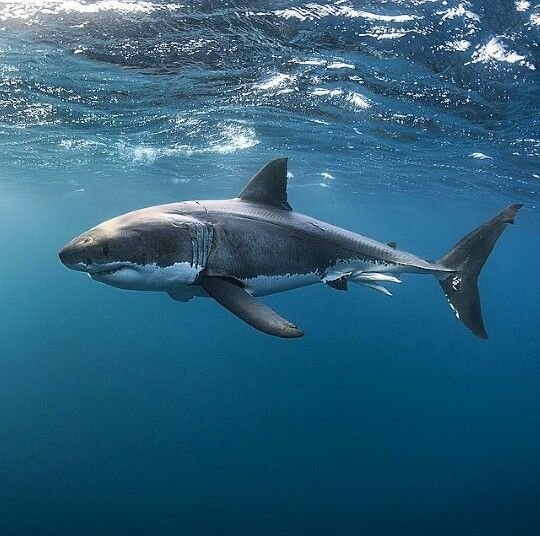
The great white shark has some of the most fearsome teeth in the ocean — large, triangular, and finely serrated for slicing through flesh. It can carry over 300 teeth at once, arranged in multiple rows.
Interestingly, the great white constantly replaces its teeth throughout its life. When one breaks or falls out, a new tooth rotates forward to take its place, keeping its bite razor-sharp.
Great white sharks roam coastal and open waters worldwide, especially cool, temperate seas rich in seals and fish.
As apex predators, great whites help keep marine populations balanced. Overfishing and bycatch have made them Vulnerable.
Fun Fact: A great white shark’s bite force may exceed 4,000 pounds, among the strongest of any living animal.
Saltwater Crocodile
Scientific Name: Crocodylus porosus
Class: Reptilia
Diet: Carnivore
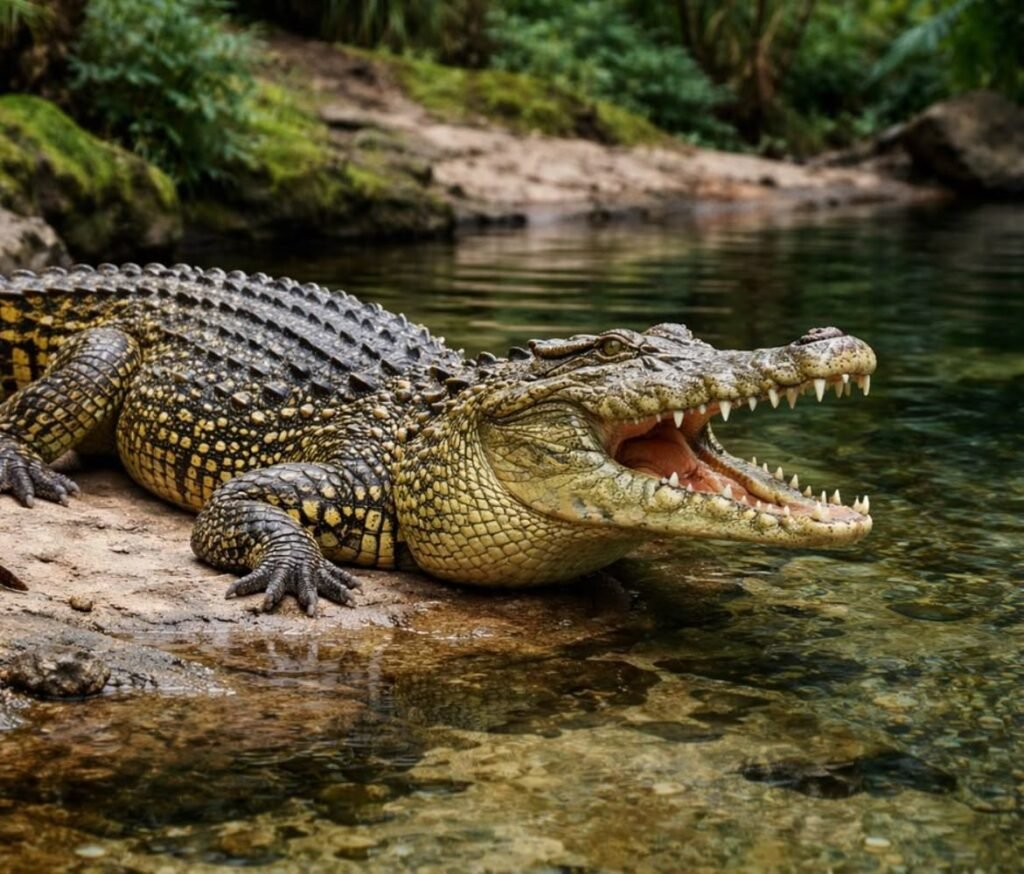
The saltwater crocodile has conical, sharp teeth built for gripping and holding slippery prey. Though not made for chewing, they are perfect for seizing victims and preventing any escape.
Moreover, the saltwater crocodile pairs these teeth with the strongest bite ever measured, exceeding 3,700 pounds per square inch. It clamps down with unstoppable force before dragging prey underwater.
Saltwater crocodiles inhabit the coasts, rivers, and estuaries of Southeast Asia and northern Australia, hunting fish, birds, and large mammals.
As apex predators, crocodiles help keep aquatic ecosystems in balance. Currently of Least Concern, they still face threats from habitat loss and hunting.
Fun Fact: The saltwater crocodile has the most powerful bite of any animal alive today.
Lion

Scientific Name: Panthera leo
Class: Mammalia
Diet: Carnivore
The lion possesses long, sharp canine teeth designed to grip and kill large prey. These fangs can grow several centimeters long, perfect for delivering a fatal bite to the throat.
Interestingly, unlike sharks, lions keep the same set of teeth for life. Their carnassial teeth work like scissors, slicing through meat and hide with remarkable efficiency.
Lions inhabit the savannas and grasslands of sub-Saharan Africa, with a small population in India, hunting large herbivores.
As apex predators, lions help regulate herbivore populations. Habitat loss and conflict have made them Vulnerable.
Fun Fact: A lion’s bite force is around 650 PSI, and its canines can grow up to seven centimeters long.
Tiger
Scientific Name: Panthera tigris
Class: Mammalia
Diet: Carnivore
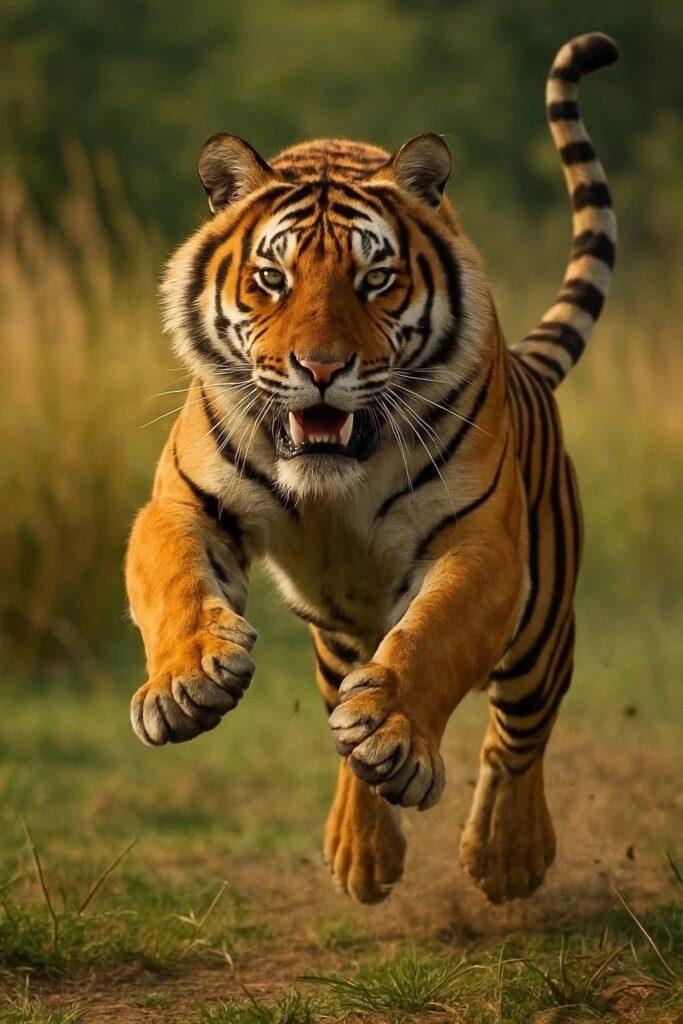
The tiger is armed with large, curved canine teeth used to deliver a killing bite to the neck of its prey. Robust and sharp, they are built for piercing and tearing through tough flesh.
Moreover, the tiger backs these fangs with immense power, biting at around 1,050 PSI. Its teeth and jaws let it take down prey far larger than itself, from deer to buffalo.
Tigers inhabit the forests, grasslands, and mangroves of Asia, hunting deer, wild boar, and other large animals.
As apex predators, tigers help maintain balance in their ecosystems. Habitat loss and poaching have made them Endangered.
Fun Fact: A tiger’s canine teeth are among the longest of any big cat, ideal for piercing prey.
Piranha
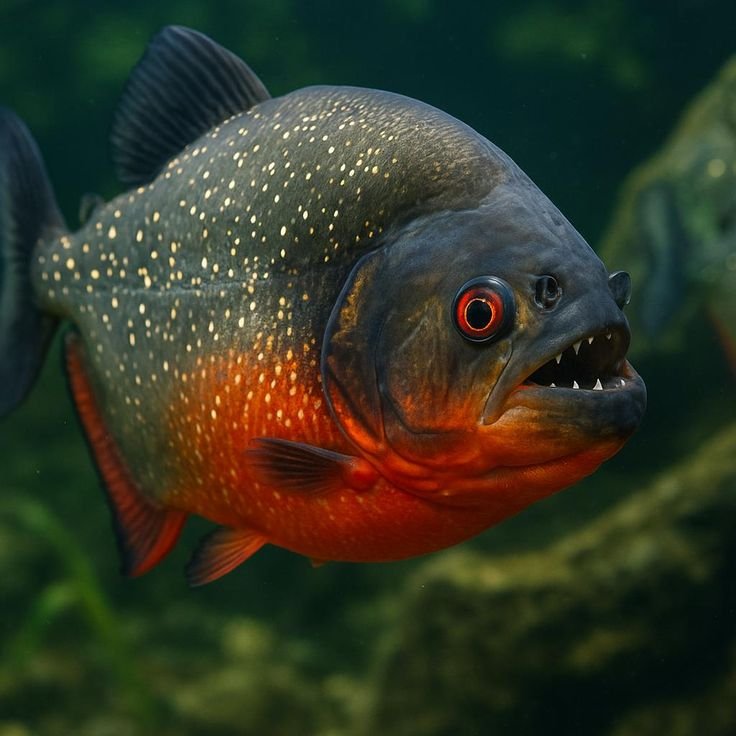
Scientific Name: Pygocentrus nattereri
Class: Actinopterygii
Diet: Carnivore
The piranha has teeth so sharp that some South American tribes historically used them as cutting tools. Its interlocking, triangular teeth snap together like scissors to strip flesh cleanly.
Interestingly, the piranha’s bite is astonishingly strong for its size, exceeding 1,300 PSI. Relative to body weight, it rivals even the great white shark in raw biting power.
Piranhas inhabit the rivers and lakes of South America, especially the Amazon basin, feeding on fish, insects, and carrion.
As predators and scavengers, piranhas help keep river ecosystems clean and balanced. Habitat disruption can affect local populations.
Fun Fact: Piranha teeth are so sharp and replaceable that entire rows can be regrown throughout the fish’s life.
Hippopotamus

Scientific Name: Hippopotamus amphibius
Class: Mammalia
Diet: Herbivore
The hippopotamus may be a herbivore, but it wields enormous, tusk-like canines and incisors that can reach up to 20 inches long. These fearsome teeth are used for fighting, not feeding.
Moreover, the hippo delivers one of the strongest bites of any land animal. Its massive jaws can open nearly 180 degrees and snap shut with bone-crushing, lethal force.
Hippos inhabit the rivers, lakes, and wetlands of sub-Saharan Africa, grazing on grasses at night.
As semi-aquatic grazers, hippos enrich aquatic ecosystems by moving nutrients between land and water. Habitat loss and poaching have made them Vulnerable.
Fun Fact: Despite eating plants, the hippo is one of Africa’s most dangerous animals thanks to its huge teeth.
Spotted Hyena
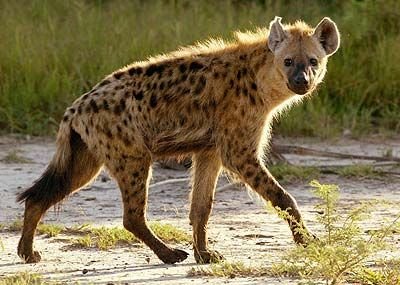
Scientific Name: Crocuta crocuta
Class: Mammalia
Diet: Carnivore
The spotted hyena has incredibly strong jaws and specialized carnassial teeth that can crush bone with ease. These sharp, powerful teeth make it both an efficient hunter and scavenger.
Interestingly, the hyena boasts one of the strongest bites of any carnivorous mammal, around 1,000 pounds of force. This lets it crack open bones to reach the nutritious marrow inside.
Spotted hyenas inhabit the savannas, grasslands, and woodlands of sub-Saharan Africa, hunting and scavenging a wide range of prey.
As hunters and scavengers, hyenas help clean up carcasses and control populations. Widespread and adaptable, they are of Least Concern.
Fun Fact: A spotted hyena can digest bones, hooves, and even teeth thanks to its powerful jaws and stomach.
Tasmanian Devil
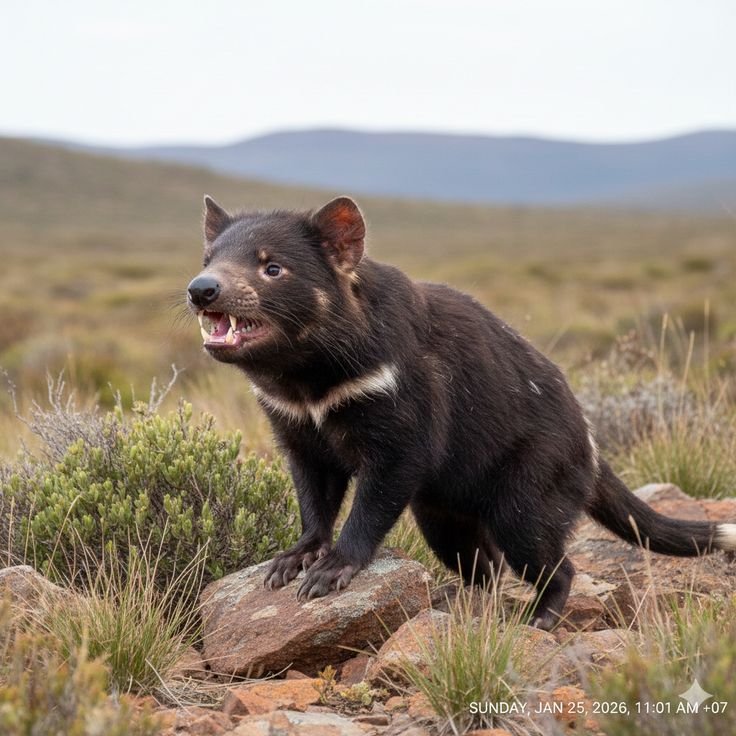
Scientific Name: Sarcophilus harrisii
Class: Mammalia
Diet: Carnivore
The Tasmanian devil has sharp teeth that can slice through flesh and bone with ease, backed by one of the strongest bites relative to body size of any mammal. Despite its small stature, it is a formidable feeder.
Moreover, the devil wastes nothing, using its sharp teeth to devour entire carcasses, including bones and fur. It can even take down live prey larger than itself, such as wombats.
Tasmanian devils are found only on the Australian island of Tasmania, scavenging and hunting for carrion, small mammals, and birds.
As scavengers, devils clean up carcasses and help limit disease. A contagious facial tumor disease has made them Endangered.
Fun Fact: For its size, the Tasmanian devil has one of the most powerful bites of any living mammal.
Great Barracuda
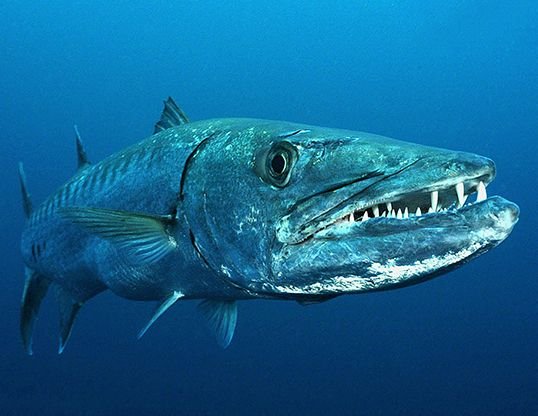
Scientific Name: Sphyraena barracuda
Class: Actinopterygii
Diet: Carnivore
The great barracuda has two types of sharp teeth that work together perfectly for hunting. Small outer teeth grip prey, while large, fang-like inner teeth pierce and hold it fast.
Interestingly, this fearsome dental setup lets the barracuda ambush prey at astonishing speed. It strikes in a lightning-fast burst, slicing fish in half with its razor-sharp bite.
Great barracudas inhabit tropical and subtropical oceans worldwide, favoring reefs, mangroves, and open coastal waters.
As swift predators, barracudas help control fish populations. Currently widespread, they depend on healthy reef and coastal ecosystems.
Fun Fact: A great barracuda can swim in short bursts of up to 35 miles per hour to ambush its prey.
Gray Wolf

Scientific Name: Canis lupus
Class: Mammalia
Diet: Carnivore
The gray wolf has sharp canine teeth and strong carnassials built for gripping, tearing, and shearing meat. Its teeth are perfectly suited to a life of hunting large prey.
Moreover, the wolf’s bite, around 400 PSI, is powerful enough to crack bones and hold struggling prey. Hunting in coordinated packs, wolves use their teeth to bring down animals far larger than themselves.
Gray wolves inhabit forests, tundra, and mountains across North America, Europe, and Asia, preying on deer, elk, and other large mammals.
As apex predators, wolves shape entire ecosystems by controlling prey. Recovering in some regions, they remain threatened elsewhere.
Fun Fact: A gray wolf has 42 teeth, including long canines used to grip and hold struggling prey.
Gaboon Viper
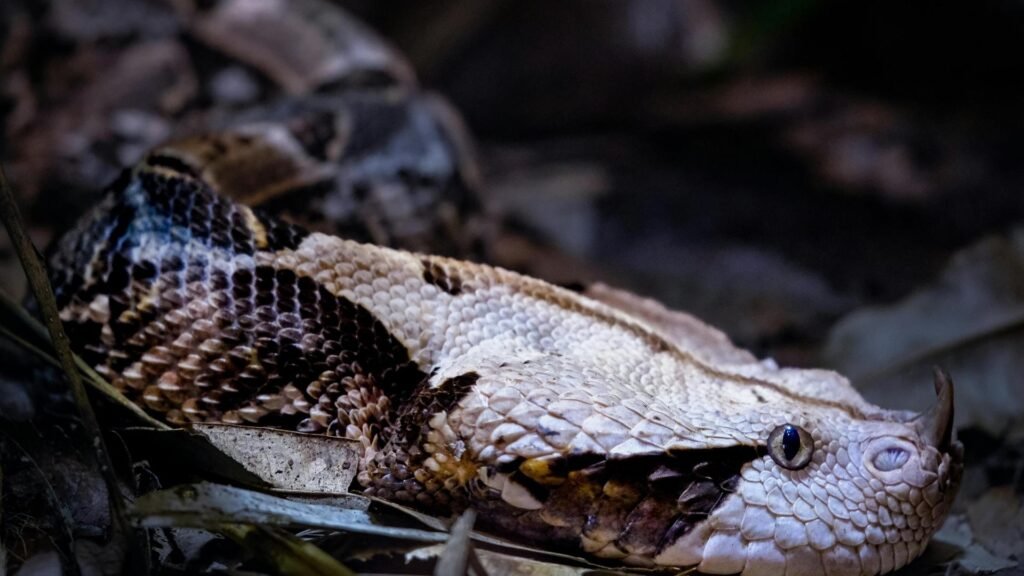
Scientific Name: Bitis gabonica
Class: Reptilia
Diet: Carnivore
The Gaboon viper possesses the longest fangs of any venomous snake, reaching over two inches in length. These enormous, hinged fangs fold back when not in use and swing forward to strike.
Interestingly, the viper uses its huge fangs to inject deep doses of venom. It ambushes prey with a lightning-fast strike, delivering venom directly into the bloodstream.
Gaboon vipers inhabit the rainforests and woodlands of sub-Saharan Africa, hunting small mammals and birds.
As ambush predators, Gaboon vipers help control rodent populations. They rely on undisturbed forest habitat to thrive.
Fun Fact: The Gaboon viper has the longest fangs of any snake, longer than those of any cobra or rattlesnake.
Anglerfish
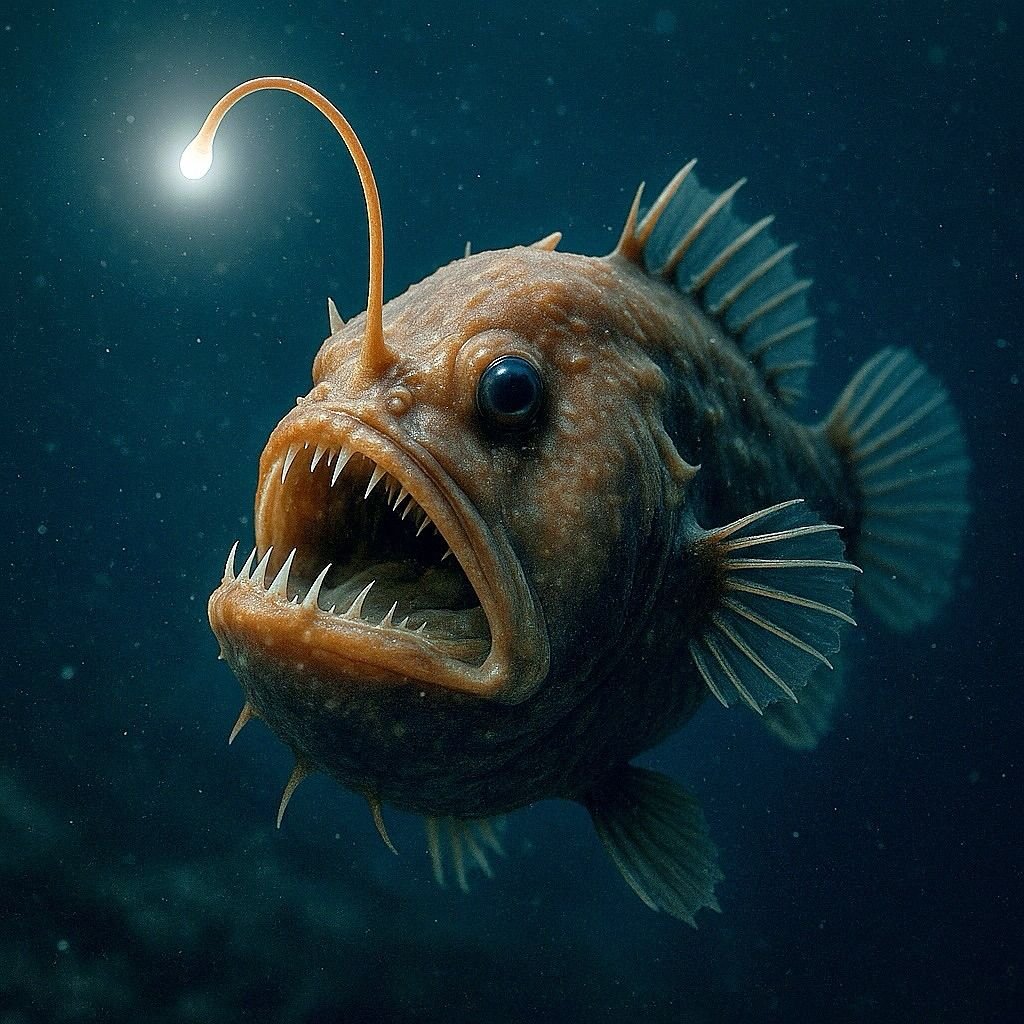
Scientific Name: Melanocetus johnsonii
Class: Actinopterygii
Diet: Carnivore
The anglerfish is a deep-sea predator with a nightmarish mouth full of long, needle-like teeth. These translucent fangs angle inward, ensuring that prey can never escape once caught.
Moreover, the anglerfish lures victims using a glowing rod above its mouth. When curious prey draws near, it snaps shut its enormous, tooth-lined jaws in the pitch-black depths.
Anglerfish inhabit the deep, dark waters of oceans worldwide, hunting whatever unlucky creatures drift within reach.
As deep-sea predators, anglerfish are part of the mysterious food web of the ocean depths, where food is scarce and every meal counts.
Fun Fact: An anglerfish can swallow prey up to twice its own size thanks to its expandable, tooth-filled jaws.
Jaguar
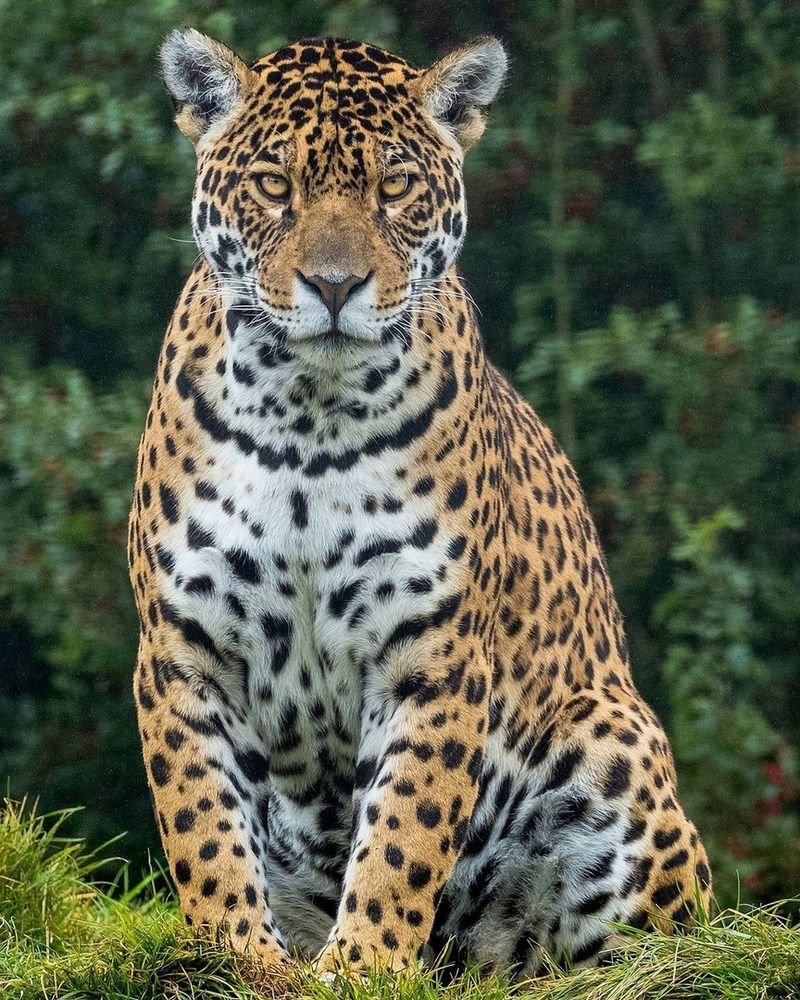
Scientific Name: Panthera onca
Class: Mammalia
Diet: Carnivore
The jaguar has extraordinarily sharp, powerful teeth and the strongest bite of any big cat relative to its size. Its canines can pierce through thick skin, bone, and even turtle shells.
Interestingly, the jaguar has a unique killing technique. Rather than biting the throat, it drives its sharp canines straight through the skull of its prey, delivering a swift, fatal bite.
Jaguars inhabit the rainforests, wetlands, and grasslands of Central and South America, hunting a wide range of prey.
As apex predators, jaguars help maintain balance in their ecosystems. Habitat loss and poaching have made them Near Threatened.
Fun Fact: The jaguar’s bite is powerful enough to crack open the hard shells of turtles and armored caimans.
Polar Bear
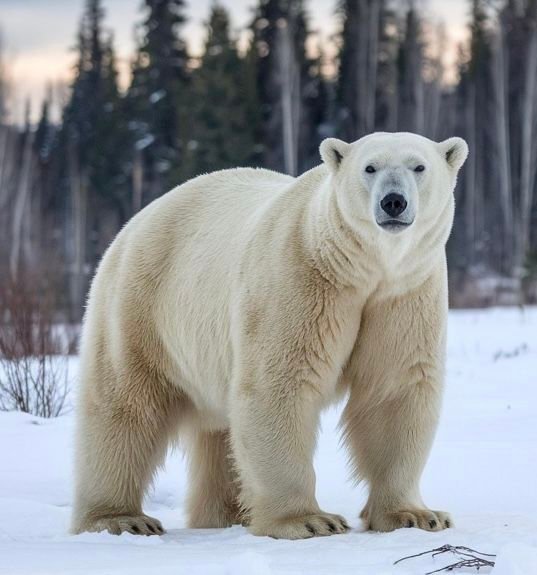
Scientific Name: Ursus maritimus
Class: Mammalia
Diet: Carnivore
The polar bear has long, sharp canine teeth and jagged cheek teeth built for a purely meat-based diet. Unlike other bears, its teeth are specialized for tearing through seal blubber and flesh.
Moreover, the polar bear’s sharp teeth and powerful jaws make it a formidable Arctic hunter. It uses them to seize seals and tear apart its prey on the ice.
Polar bears inhabit the frozen Arctic, hunting seals from the sea ice across the far northern reaches of the globe.
As apex predators, polar bears sit atop the Arctic food web. Melting sea ice from climate change has made them Vulnerable.
Fun Fact: A polar bear’s canine teeth can grow over two inches long, ideal for gripping slippery seals.
Wolverine
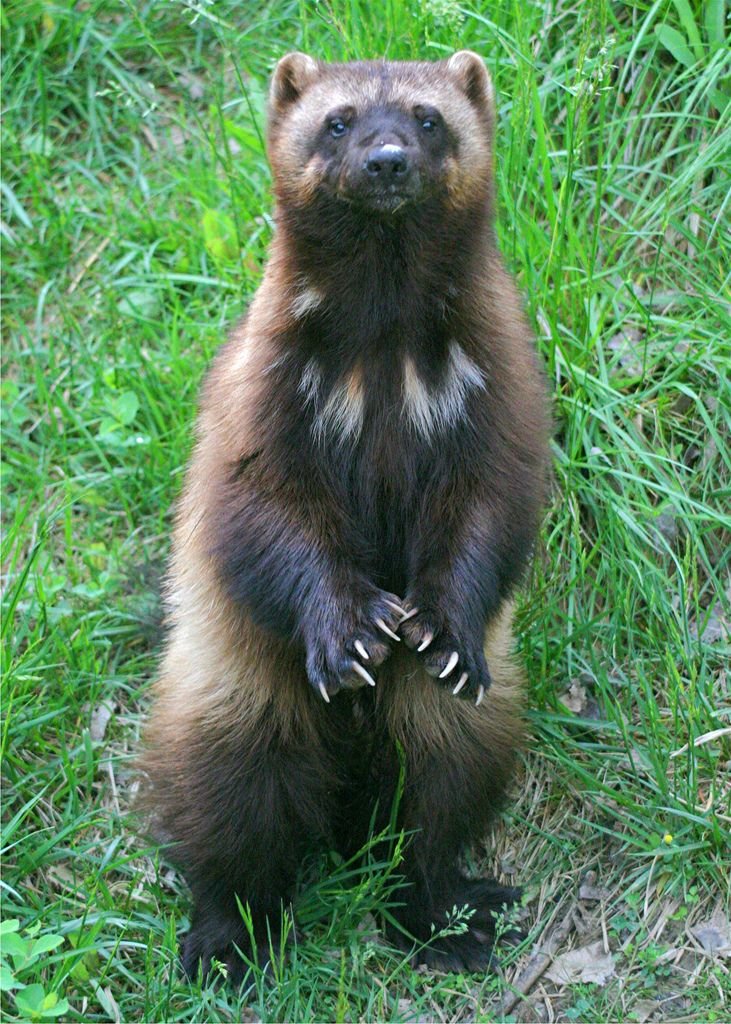
Scientific Name: Gulo gulo
Class: Mammalia
Diet: Carnivore
The wolverine has strong, sharp teeth and a special upper molar rotated inward, letting it tear into frozen meat and bone. Few animals its size have such powerful jaws.
Interestingly, the wolverine’s teeth let it eat prey solid with ice. It crushes frozen carcasses and bones that other predators cannot, surviving harsh northern winters.
Wolverines inhabit the remote forests and tundra of the Northern Hemisphere, roaming vast territories in search of food.
As scavengers and predators, wolverines help clean up carcasses and control prey. Habitat loss and climate change threaten their cold, wild homes.
Fun Fact: A wolverine can crush and eat frozen bones and meat that would defeat far larger predators.
Bull Shark
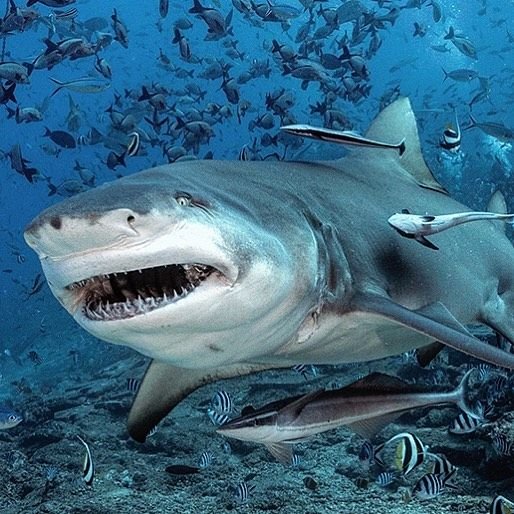
Scientific Name: Carcharhinus leucas
Class: Chondrichthyes
Diet: Carnivore
The bull shark has broad, triangular, serrated teeth designed for gripping and slicing prey. Combined with a powerful bite, they make it one of the ocean’s most aggressive hunters.
Moreover, the bull shark can thrive in both salt and fresh water, bringing its sharp teeth into rivers and estuaries. This adaptability makes it a widespread and formidable predator.
Bull sharks inhabit warm coastal waters, rivers, and lakes around the world, hunting fish, dolphins, and other sharks.
As apex predators, bull sharks help balance both marine and freshwater ecosystems. Overfishing has made them Vulnerable.
Fun Fact: The bull shark can swim far up rivers and has even been spotted hundreds of miles inland.
Alligator Snapping Turtle
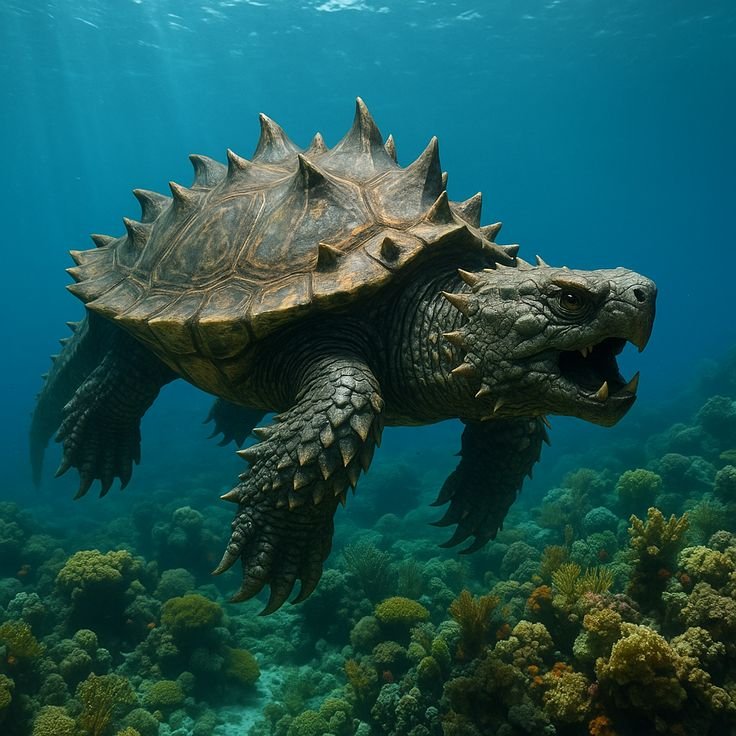
Scientific Name: Macrochelys temminckii
Class: Reptilia
Diet: Carnivore
The alligator snapping turtle has a sharp, powerful beak-like jaw capable of slicing through flesh and even bone. Its hooked, blade-like mouth delivers a bite that commands serious respect.
Interestingly, this turtle lures prey with a worm-like appendage on its tongue. When a curious fish investigates, the turtle snaps its sharp jaws shut with astonishing speed.
Alligator snapping turtles inhabit the rivers, lakes, and swamps of the southeastern United States, hunting fish and other aquatic animals.
As ambush predators, they help control fish populations. Habitat loss and overharvesting have made them Vulnerable.
Fun Fact: The alligator snapping turtle’s bite is strong enough to slice through bone, and it can live for over 70 years.
Komodo Dragon
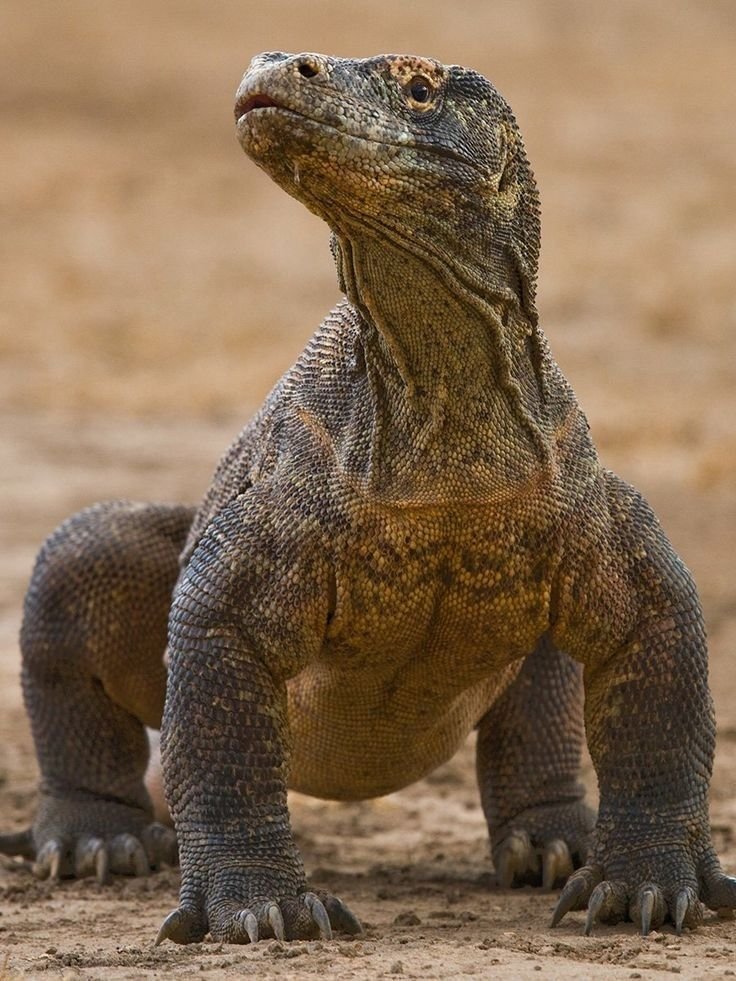
Scientific Name: Varanus komodoensis
Class: Reptilia
Diet: Carnivore
The Komodo dragon has around 60 sharp, serrated teeth designed to tear flesh like a shark’s. Curved and blade-like, they slice deep wounds into its prey.
Moreover, the Komodo dragon combines these teeth with venom that lowers blood pressure and prevents clotting. A single bite can weaken large prey until it collapses.
Komodo dragons are found only on a few Indonesian islands, ambushing deer, pigs, and other large prey.
As apex predators, Komodo dragons help control prey populations on their islands. With a tiny range, they are considered Endangered.
Fun Fact: A Komodo dragon’s serrated teeth are frequently replaced, with new teeth growing throughout its life.
Moray Eel
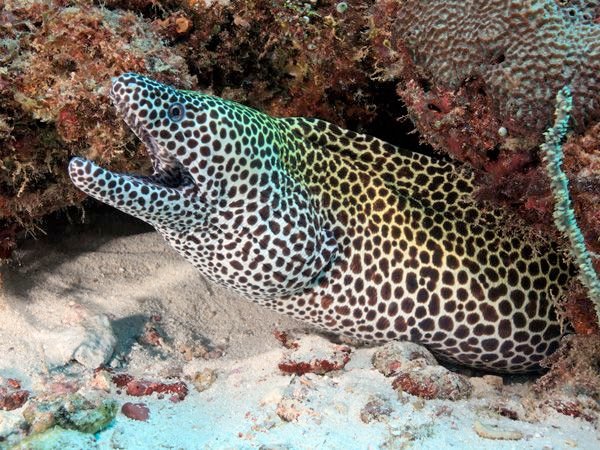
Scientific Name: Muraena helena
Class: Actinopterygii
Diet: Carnivore
The moray eel has sharp, backward-curving teeth that make escape nearly impossible for its prey. Its long jaws are lined with needle-like fangs perfect for gripping slippery fish.
Interestingly, the moray eel has a terrifying secret weapon: a second set of jaws in its throat. These “pharyngeal jaws” shoot forward to grab prey and drag it down to be swallowed.
Moray eels inhabit tropical and temperate oceans worldwide, hiding in reef crevices and rocks to ambush passing prey.
As reef predators, moray eels help control fish and crustacean populations. They depend on healthy reef ecosystems to thrive.
Fun Fact: The moray eel has a hidden second set of jaws in its throat, much like the creature from science-fiction films.
Fangtooth
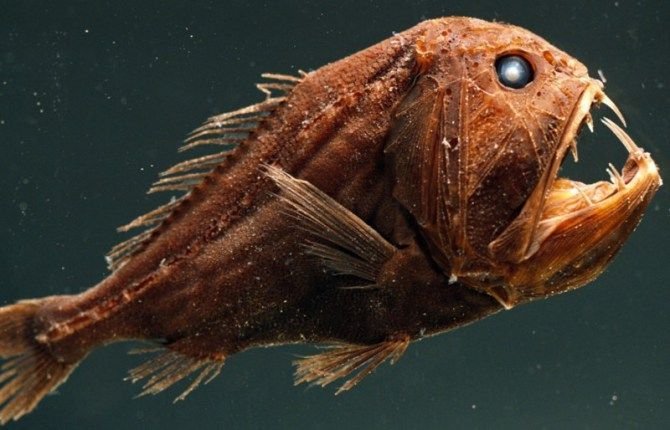
Scientific Name: Anoplogaster cornuta
Class: Actinopterygii
Diet: Carnivore
The fangtooth is a small deep-sea fish with the largest teeth relative to body size of any fish in the ocean. Its enormous fangs are so long they wouldn’t fit inside a closed mouth.
Moreover, the fangtooth has special sockets in its skull to hold its lower fangs when its mouth is closed. These oversized teeth let it grab prey in the food-scarce deep sea.
Fangtooths inhabit the deep, dark waters of oceans worldwide, hunting fish and squid in the crushing depths.
As deep-sea predators, fangtooths are part of the mysterious food web far below the surface, where meals are rare and precious.
Fun Fact: The fangtooth has the largest teeth, proportional to body size, of any fish in the entire ocean.
Read: Loyal Animals in the World
Read: Animals With Long Tail in The World
Read: Animals That Eat Coconuts
Read: Animals That Eat Cactus
Read: Loyal Animals in the World
Frequently Asked Questions
Conclusion
From the serrated jaws of a great white shark to the record-breaking fangs of a Gaboon viper, animals with sharp teeth showcase some of evolution’s most impressive weapons. Each species whether a bone-crushing hyena, a skull-piercing jaguar, or a deep-sea fangtooth uses its remarkable teeth to hunt, defend, and survive in its own environment. These formidable predators play essential roles in keeping their ecosystems healthy and balanced.
2 Comments