Badgers in Maine: Do They Really Live There? (With Images)
Have you ever wondered whether badgers roam the forests and fields of Maine? It’s a common question among nature lovers in the Pine Tree State. The answer might surprise you: badgers are not native to Maine, and true wild populations do not live there.
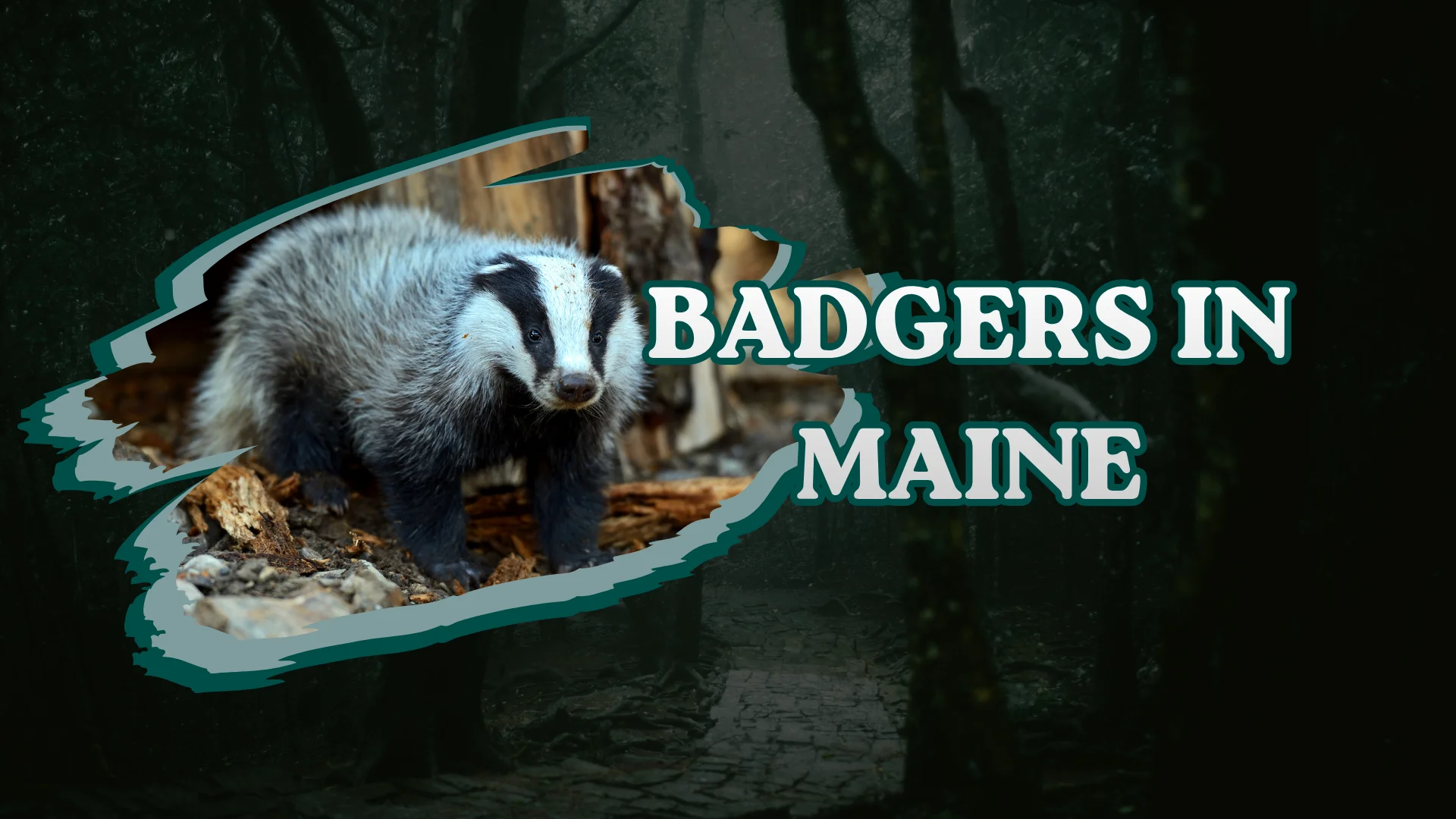
While these powerful diggers thrive across much of North America, Maine’s dense forests and location put it outside the badger’s natural range. In this guide, we’ll explore the truth about badgers in Maine, why they don’t live there, and which similar animals you might spot instead.
Are There Badgers in Maine?
No, the American badger (Taxidea taxus) is not established in Maine. Maine falls outside the natural range of the American badger, which is found mainly in the central and western United States, parts of the Midwest, and into Canada and Mexico.
American badgers prefer open habitats such as grasslands, prairies, and farmland with loose, sandy soils that are easy to dig. Maine, by contrast, is dominated by dense forests and rocky terrain, which don’t suit the badger’s burrowing, open-country lifestyle. This is the main reason badgers never established themselves in the state.
While extremely rare, isolated sightings are occasionally reported in the northeastern U.S., but there is no breeding population of badgers in Maine. Any such sighting would be highly unusual and likely a wandering individual or a case of mistaken identity.
Why Don’t Badgers Live in Maine?
Several factors explain the absence of badgers in Maine:
– Wrong habitat: Badgers need open grasslands and prairies with loose soil for digging. Maine is heavily forested with rocky ground.
– Geographic range: The American badger’s natural range simply doesn’t extend into the far northeastern corner of the U.S.
– Prey availability: Badgers specialize in hunting burrowing rodents like ground squirrels and pocket gophers, which are far less common in Maine’s forested environment.
Together, these factors mean Maine has never been suitable badger country.
Animals Often Mistaken for Badgers in Maine
If you think you’ve seen a badger in Maine, you’ve most likely spotted one of these similar-looking animals. All are true Maine natives.
Woodchuck (Groundhog)
Scientific Name: Marmota monax
Class: Mammalia
Diet: Herbivore
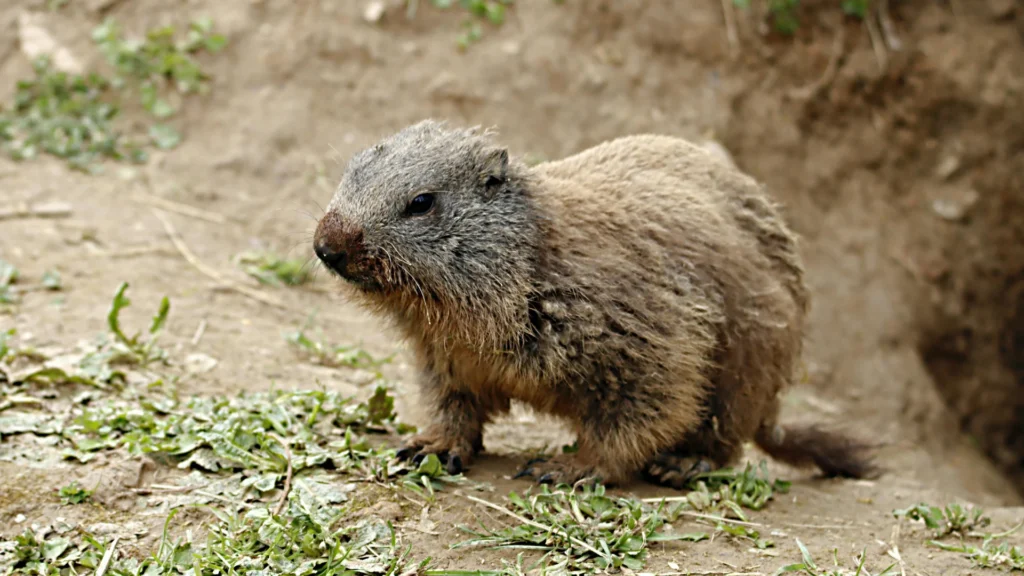
The woodchuck, also called a groundhog, is one of the animals most often mistaken for a badger in Maine. It is a stocky, burrowing rodent common throughout the state.
Interestingly, the woodchuck digs extensive burrow systems, much like a badger, and has a similar low, chunky build. However, it is a plant-eater and lacks the badger’s distinctive facial stripes.
Woodchucks inhabit fields, meadows, and forest edges across Maine, feeding on grasses, clover, and garden plants.
As prolific diggers, woodchucks aerate the soil and their old burrows shelter other animals. They are common and widespread in Maine.
Fun Fact: A single woodchuck can move several hundred pounds of soil when digging its burrow.
North American Porcupine
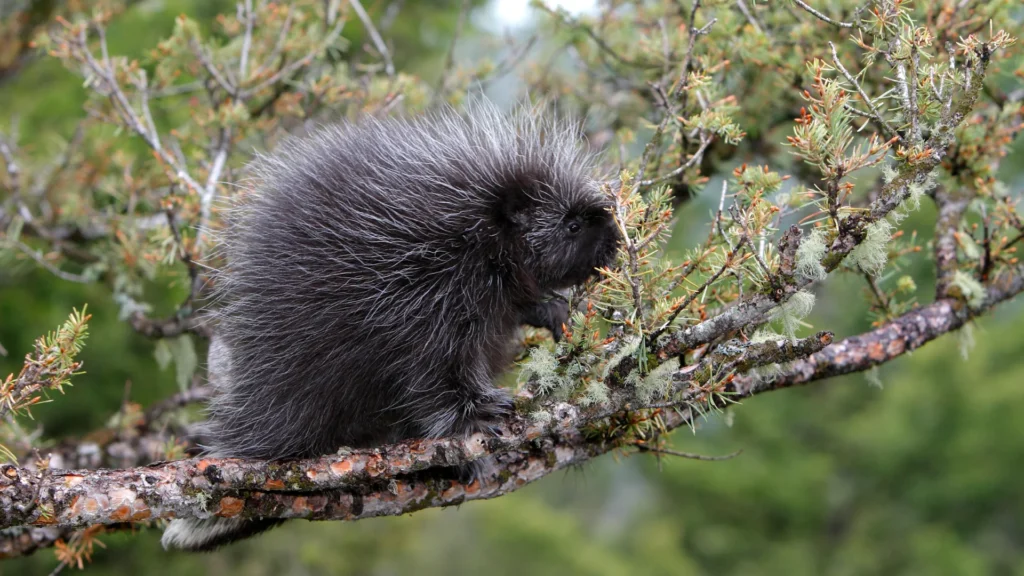
Scientific Name: Erethizon dorsatum
Class: Mammalia
Diet: Herbivore
The porcupine is another stocky, ground-dwelling Maine native sometimes confused with a badger from a distance. It is well known for its coat of sharp quills.
Moreover, the porcupine has a similar low, rounded body shape, but its quills make it unmistakable up close. Unlike the digging badger, it spends much of its time climbing trees.
Porcupines inhabit the forests of Maine, feeding on bark, leaves, twigs, and buds.
As tree-dwelling herbivores, porcupines are well suited to Maine’s woodlands. They are common throughout the state.
Fun Fact: A porcupine can have over 30,000 quills, which detach easily to defend it from predators.
Fisher
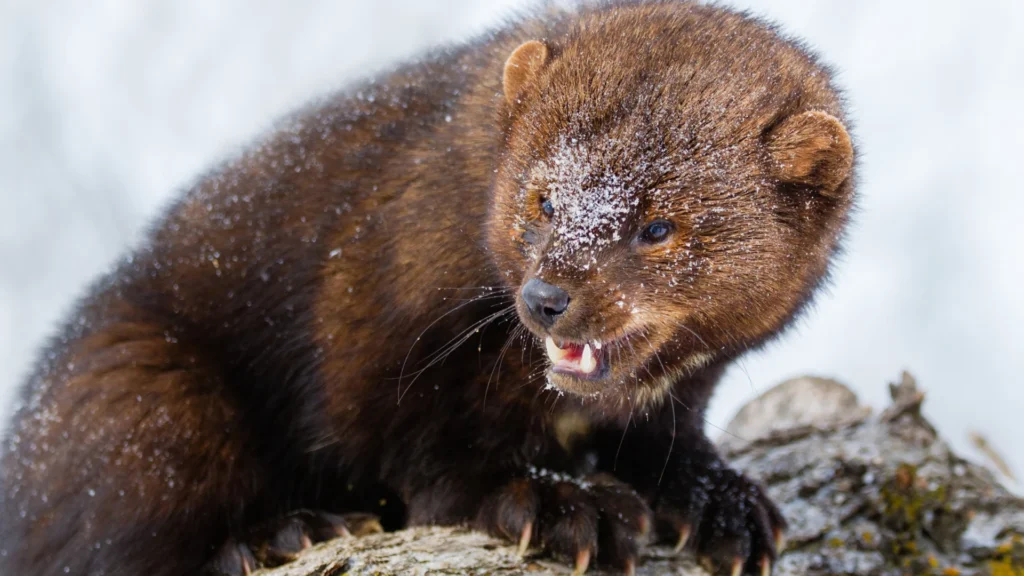
Scientific Name: Pekania pennanti
Class: Mammalia
Diet: Carnivore
The fisher is a large member of the weasel family — the same family as the badger — that is native to Maine. It is sometimes mistaken for a badger due to this relation.
Interestingly, the fisher is a powerful forest predator, though it is more slender and agile than the stocky badger. It is one of the few animals that can successfully hunt porcupines.
Fishers inhabit the dense forests of Maine, hunting small mammals, birds, and even porcupines.
As skilled predators, fishers help control prey populations. They are well established across Maine’s woodlands.
Fun Fact: The fisher is one of the only predators skilled enough to regularly hunt and kill porcupines.
Striped Skunk
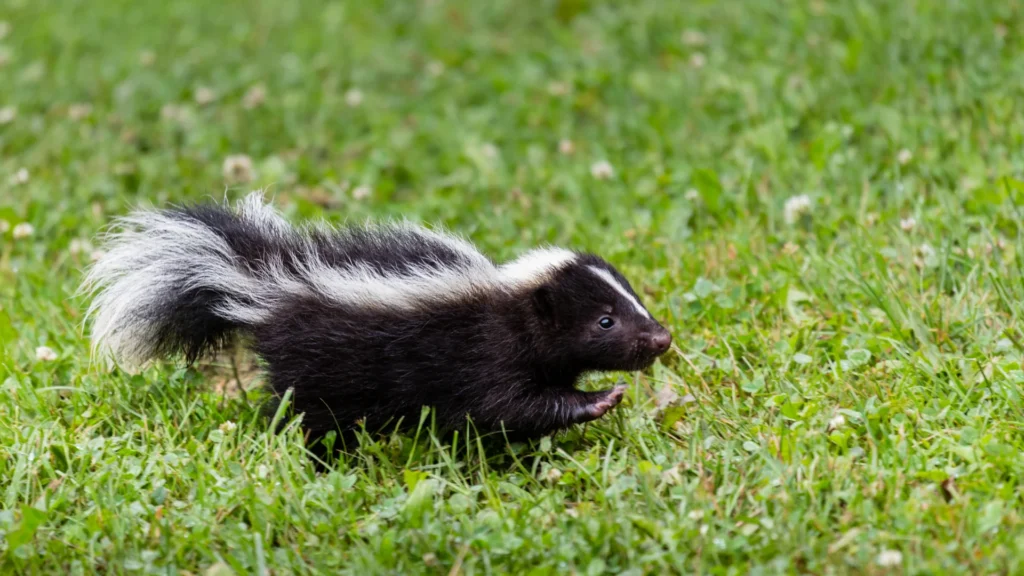
Scientific Name: Mephitis mephitis
Class: Mammalia
Diet: Omnivore
The striped skunk is a common Maine animal whose black-and-white markings can lead to confusion with a badger. Both have bold facial stripes.
Moreover, the skunk shares the badger’s habit of digging for insects and grubs. However, it is smaller and famous for the strong-smelling spray it uses in defense.
Striped skunks inhabit fields, forests, and suburbs across Maine, feeding on insects, small animals, and plants.
As adaptable omnivores, skunks help control insect pests. They are common and widespread in Maine.
Fun Fact: A skunk can spray its defensive scent accurately at targets up to 10 feet away.
What to Do If You Think You’ve Seen a Badger in Maine
Because badgers aren’t established in Maine, any suspected sighting is far more likely to be one of the animals above. If you do see an unusual animal:
– Observe from a distance and take a photo if it’s safe to do so.
– Note key features like facial stripes, body shape, and behavior.
– Report unusual wildlife to the Maine Department of Inland Fisheries and Wildlife, which tracks the state’s animal populations.
Comparing what you saw with the native animals above will usually solve the mystery.
Read: Loyal Animals in the World
Read: Animals That Live in Swamps
Read: Animals with Wings That Can’t Fly
Read: Animals That Can’t Swim
Read: Quiet Animals in the World
Frequently Asked Questions
Conclusion
So, are there badgers in Maine? The honest answer is no the American badger simply doesn’t call the Pine Tree State home. Maine’s dense forests and rocky ground fall outside the badger’s natural range of open grasslands and prairies. If you spot a stocky, digging animal in Maine, it’s far more likely to be a woodchuck, porcupine, fisher, or skunk.