
Can Wolves Purr? (What Wolves Really Do Instead)
Have you ever wondered whether a wolf can curl up and purr like a contented house cat? It’s a fascinating question, and the answer reveals just how differently wolves and cats have evolved to communicate. While wolves are highly vocal and deeply social animals, purring simply isn’t part of their repertoire.
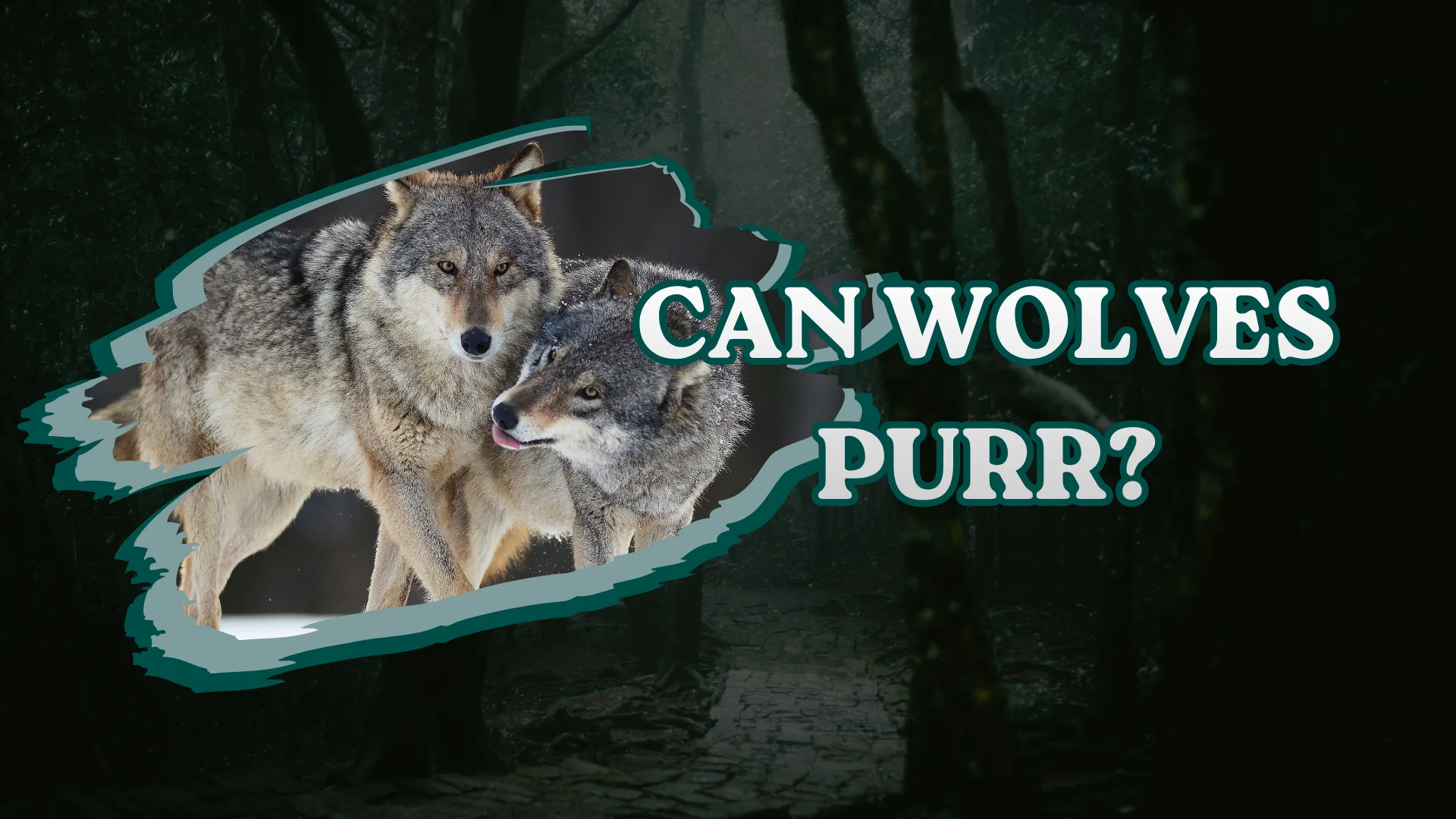
Instead, they rely on a rich language of howls, growls, whines, and body signals to bond with their pack and rule their territory. In this guide, we’ll explore whether wolves can purr, the science behind why they can’t, and the remarkable sounds they use instead to communicate in the wild.
Quick Answer: Can Wolves Purr?
No, wolves cannot purr. Wolves lack the specialized vocal anatomy and neural wiring that cats use to produce a continuous purr. Instead, wolves communicate through howls, growls, whines, barks, and whimpers, along with rich body language. What sometimes sounds like a “purr” from a wolf is actually a soft whine or a low, rumbling growl, not a true purr.
Wolf Sounds at a Glance
| Wolf Sound | What It Means |
|---|---|
| Howl | Gathers the pack, marks territory, long-distance contact |
| Growl | Warning, dominance, or defense |
| Whine / Whimper | Submission, affection, or greeting |
| Bark / Yap | Alarm, alertness, or defense |
| Body language | Tail, ears, and posture signal mood and rank |
Meet the Wolf

Scientific Name: Canis lupus (Gray Wolf)
Class: Mammalia
Diet: Carnivore
The gray wolf is the largest wild member of the dog family and one of the most social predators on Earth. Living in tightly bonded packs, it relies on constant communication to hunt, defend territory, and raise its young.
Interestingly, wolves have one of the richest vocal ranges of any land mammal, but purring is not among their abilities. Their sounds are built for cooperation and long-distance contact across vast, wild territories.
Gray wolves inhabit forests, tundra, and mountains across North America, Europe, and Asia, preying on deer, elk, and other large mammals.
As apex predators, wolves shape entire ecosystems by controlling prey. Recovering in some regions, they remain threatened by hunting and habitat loss elsewhere.
Why Can’t Wolves Purr?
Wolves cannot purr because they simply lack the physical tools required to make the sound. The reasons come down to anatomy, brain wiring, and evolution.
1. Different Vocal Anatomy
Cats have special pads of fatty tissue on their vocal cords that vibrate at a low frequency to create a purr. Wolves, like all dogs, do not have these pads. Their laryngeal structure is built for powerful, projecting sounds rather than a soft, continuous hum.
2. A Hardened Hyoid Bone
Wolves have a hardened hyoid bone in the throat, which prevents the rapid, continuous vibration needed to produce a purr. Purring cats rely on a more flexible arrangement that wolves simply do not share.
3. No Purring Brain Pattern
Purring also requires a special “oscillator” in the brainstem that rhythmically activates the throat muscles during both breathing in and breathing out. Wolves lack this continuous neural pattern, so their vocalizations come in discrete bursts timed to their breathing.
Fun Fact: A cat’s purr can continue smoothly as it breathes in and out, but a wolf’s sounds are produced mainly on the exhale.
What Do Wolves Do Instead of Purring?
Although wolves cannot purr, they are far from quiet. They use one of the most sophisticated vocal languages in the animal kingdom to express emotion and coordinate the pack.
Howling
Howling is the most iconic wolf sound. It gathers scattered pack members, warns rival packs, and strengthens social bonds. A howl can travel for miles across open wilderness, acting like a long-distance phone call.
Growling
A growl is a clear warning. Wolves use low, rumbling growls to signal dominance, defend food, or tell another wolf to back off.
Whining and Whimpering
Soft whines and whimpers express submission, affection, or excitement. These gentle sounds are often used in friendly greetings or between a mother and her pups, and they are the closest a wolf comes to a “content” sound.
Barking and Yapping
Wolves bark far less than domestic dogs, but they will give short barks or yaps to signal alarm or alertness, especially when startled or defending the den.
Fun Fact: No two wolves howl in exactly the same pitch, which may help pack members recognize one another by voice alone.
Do Wolves Ever Make Purr-Like Sounds?
Sometimes a wolf may produce a soft, rumbling whine or a gentle, breathy sound that can be mistaken for a purr. When a wolf is relaxed, greeting a packmate, or showing affection, these quiet noises can seem purr-like to human ears.
However, these are not true purrs. A real purr is a continuous, rhythmic vibration produced across the entire breathing cycle, and wolves are physically unable to create it. What we hear is simply a soft whine or low growl, part of their normal vocal range.
Fun Fact: Wolves also “talk” with their whole bodies, using ears, tails, and posture to add meaning that sound alone cannot express.
Wolves vs Cats: Why Only Cats Purr
Cats and wolves evolved for very different lifestyles, and their sounds reflect this. Cats developed the purr partly as a close-range signal of contentment, healing, and communication with kittens and companions.
Wolves, on the other hand, evolved as cooperative pack hunters spread across huge territories. Their communication favors bold, far-reaching signals like howls and growls that coordinate group behavior and carry over long distances, tasks a quiet purr could never accomplish.
Fun Fact: A wolf pack’s howl can be heard up to 10 miles away, coordinating members across vast stretches of wilderness.
Frequently Asked Questions
Conclusion
So, can wolves purr? The answer is a clear no. Wolves lack the vocal anatomy, hyoid structure, and brain wiring that give cats their signature purr. Yet this is no shortcoming, wolves possess one of the richest vocal languages in the animal kingdom, from haunting howls that echo for miles to soft whines that bond a pack together.